
- Set-up
- Under a minute
- Reading
- Some
The quick verdict
Full verdict ↓Great for Children of about 10 to 14 who are curious about how the body works or say they want to be doctors
Think twice if Your child is under 10; the maker rates it 10 and up, and the medical words are hard for younger children
How we rate it
Learning curve. The rules are a simple spin, read and answer loop, which puts it at 1 on our scale. The medical content is what makes it a game for 10 and up.
Luck & skill. Which stick comes up is luck, and a familiar organ is easier than a rare disease. Knowledge and careful reasoning, especially in Doctor's Decision, win most sticks.
Interaction. Players race each other to answer the caller, and patient cases often start a discussion; there is no blocking or attacking.
Set-up. Empty the sticks from the tube and you are ready; the puzzle is a separate activity for later.
Reading. The caller reads English questions and patient cases aloud, with medical terms; the others listen.
Learning curve: 1 = UNO or Connect 4; 3 = Catan; 5 = a heavy strategy game. These describe the experience, not an overall score.
Is Smart Sticks Medical Science right for you?
Great if
- Children of about 10 to 14 who are curious about how the body works or say they want to be doctors
- Families who like quiz rounds with a bit of discussion after each answer
- Biology lessons and science clubs, where the jigsaw doubles as a group activity
- A thoughtful birthday gift for an older child who has outgrown picture games
Skip it if
- Your child is under 10; the maker rates it 10 and up, and the medical words are hard for younger children
- Talk of diseases and symptoms would upset someone in your family
- You want a game for a big group; the maker says up to 4 players
How Smart Sticks Medical Science plays
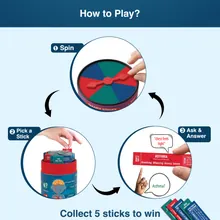
Pour the 60 sticks out of the tube. Each round begins with a spin: whoever spins becomes the caller and draws a stick in the colour the spinner shows. The caller reads it out, the first correct answer wins the stick, and the first player holding 5 sticks is the winner.
- Time to teach: about 5 minutes.
- Reading and language: The sticks are in English and use real medical words, such as the names of organs, diseases and tests, which the caller reads aloud. Answers can be given in any language, but children will need the English terms to follow the questions. We found no Hindi edition.
A turn, step by step
- 1Spin
Whoever spins becomes the caller and draws a stick in the colour the spinner lands on.
- 2Ask
The caller reads an Odd One Out, Don't Say It or Doctor's Decision question from the stick.
- 3Answer
The first player with the right answer takes the stick.
- 4Win
Collect 5 sticks to win, then turn them over to build the human-body puzzle.
The full explanation: how a game of Smart Sticks Medical Science goes
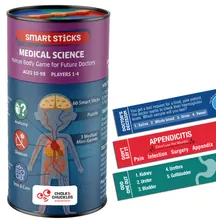
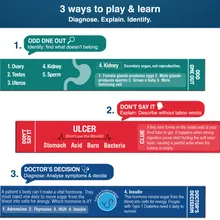
The maker gives three kinds of question. Odd One Out asks which item doesn't belong: of heart, lungs, kidney and fracture, the fracture is the odd one, because it is an injury and not an organ. Don't Say It has the caller describe a disease, organ or medical term without its forbidden words, such as getting people to say asthma without 'lungs', 'breathing' or 'airways'.
Doctor's Decision is the most unusual. The caller reads a short patient case and the others work out what is going on or what should happen next, for example whether the patient needs an X-ray, a blood test, an MRI or treatment. The maker's example describes wheezing, chest tightness and trouble breathing, and asks what the condition could be.
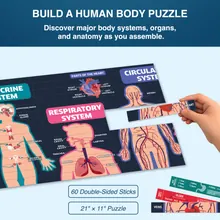
Turn all the sticks over and they make a 60-piece puzzle of the major body systems and organs, about 54 x 28.5 cm, which the maker calls Build the Human Body. It is a good way to see where each organ sits after a round of questions.
For parents: the maker counts more than 200 medical concepts on the sticks, so expect to stop and explain words like diagnosis or MRI the first few times. Pair a younger child with an adult, and remember it is a learning game, not a guide to anyone's real symptoms.
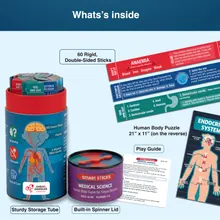
What's in the box
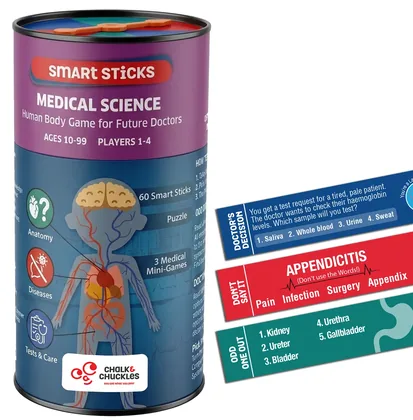
- 1Cylindrical tube with spinner
holds the sticks; the spinner chooses the colour of each question - 60Smart Sticks
medical questions on one side; the backs form a puzzle of the body's systems and organs - 1Play guide
the rules leaflet shown in the maker's picture
Box: 8 × 8 × 15 cm, 0.3 kg. Handy to know for gifting and travel.
Contents are from Chalk and Chuckles' product page for this tube (item code CCPPL067): a cylindrical tube with a spinner and 60 sticks whose backs make a puzzle of the major body systems and organs, about 54 x 28.5 cm. The maker's 'What's inside' picture also shows a play guide, which its written contents list leaves out; the rules are on its product page too. There is only one edition.
Where to buy
How to make sure you get a genuine copyEditions and the details worth checking.
What reviewers and players say
Smart Sticks Medical Science only appeared on the maker's shop in June 2026, and we found no independent reviews, videos or forum threads about it yet. Going by Chalk and Chuckles' description, it keeps the simple spin-and-answer rules of the Smart Sticks range and adds something new in Doctor's Decision, where players reason from symptoms to a diagnosis or a next test. The challenge is the vocabulary: it is for children who already enjoy science, and parents should expect to explain a few medical words along the way.
What people love
- Three different question styles keep rounds from feeling repetitive
- Doctor's Decision gets children reasoning from symptoms instead of only recalling facts
- The body-systems jigsaw on the back gives a second activity
- A compact tube that is easy to carry
Common complaints
- Medical words such as MRI or diagnosis will need explaining to younger players
- Topics such as diseases and symptoms may not suit every family
- So new that there is no independent feedback yet on how good the questions are
4 research sources
- Reference Smart Sticks- Medical Science: Human Body Game for Future Doctors (Chalk and Chuckles product page, October 2026) · Chalk and Chuckles
- Reference Smart Sticks- Medical Science product data (Chalk and Chuckles, June 2026) · Chalk and Chuckles
- Reference Our Story (Chalk and Chuckles, October 2026) · Chalk and Chuckles
- Reference Contact: registered office and factory address (Chalk and Chuckles, October 2026) · Chalk and Chuckles
Summarised in our own words from the sources above. We don't use Amazon reviews or ratings.
More like Smart Sticks Medical Science
Which game is the best fit?
Our picks if Smart Sticks Medical Science isn't quite right.
Swipe to compare every game
| Compare the games.The details that make a difference. |
YOU’RE VIEWING
 Smart Sticks Medical Science |
ANOTHER WAY TO PLAY
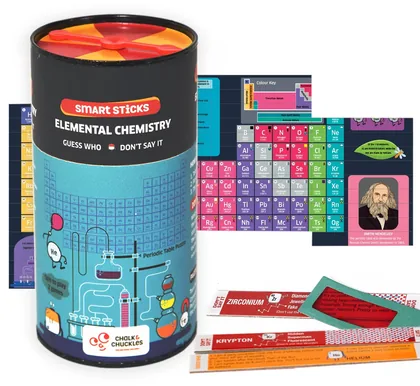 Smart Sticks Elemental Chemistry |
ANOTHER WAY TO PLAY
 Taboo |
ANOTHER WAY TO PLAY
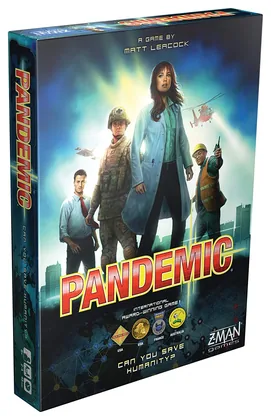 Pandemic |
|---|---|---|---|---|
| Why consider it | This game Quiz, describe and diagnose your way around the human body | A different fit Same tube and spinner, with periodic-table questions and puzzle, from age 9 | A different fit The classic describe-it-without-these-words game for teenagers and adults | A different fit A cooperative board game about stopping diseases, for older children and adults |
| Players | 2–4 | 2–4 | 4–10 | 2–4 |
| Best with | 3-4 | 3-4 | 6-8 | 2-4 |
| Play time | 15–25 min | 15–20 min | 20–60 min | 45 min |
| Age | 10+ | 9+ | 13+ | 8+ |
| Rules | Easy | Easy | Easy | Medium |
| Indian edition | Available | Available | Available | Imported |
| On this page | Explore Smart Sticks Elemental Chemistry | Explore Taboo | Explore Pandemic |
More from Chalk and Chuckles
Another way into their collection.
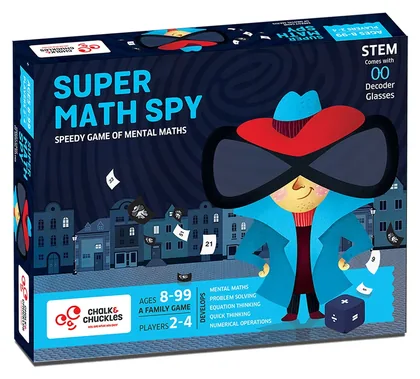
Super Math Spy
Race to build an equation that hits your mission number
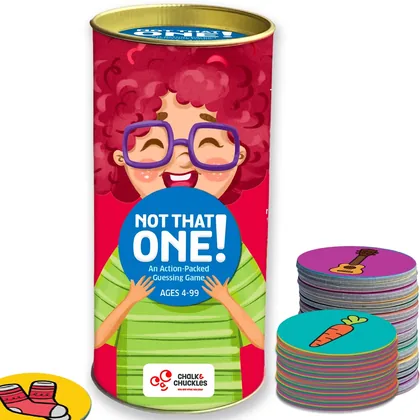
Not That One
Ask yes-or-no questions, grab tokens, and dodge the secret one
Smart Sticks Elemental Chemistry
Spin, pick a stick and race to name the element
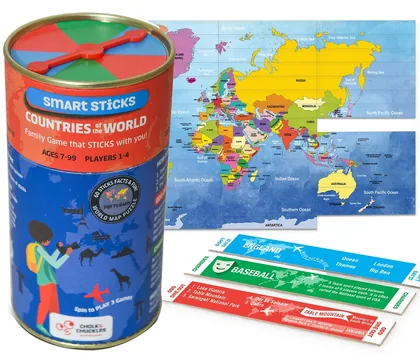
Smart Sticks Countries of the World
Act, describe and spot the odd one out across 60 countries
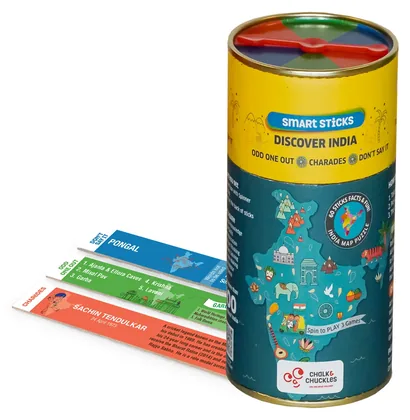
Smart Sticks Discover India
Charades, clues and odd-one-out rounds about India, plus a map puzzle
More clue-and-guess games
Different games. A familiar kind of fun.
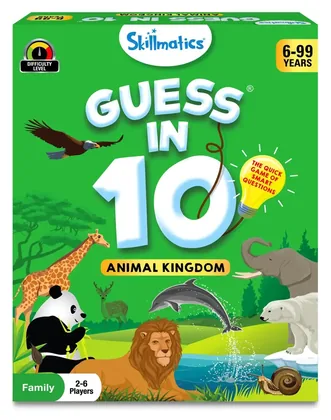
Guess in 10: Animal Kingdom
Ten yes-or-no questions to name the hidden animal
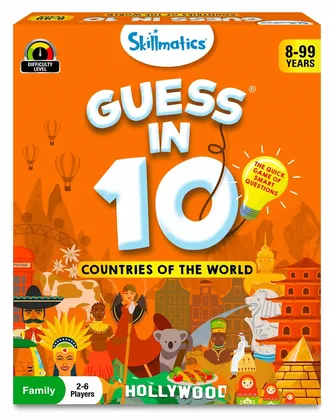
Guess in 10: Countries of the World
Ten yes-or-no questions to pin down the country on the card
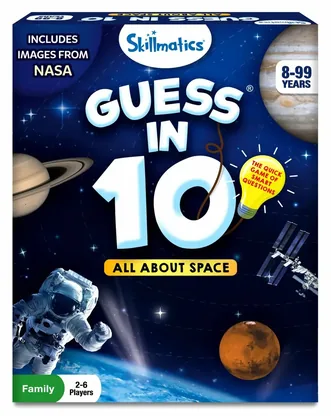
Guess in 10: All About Space
Guess the planet, star or spacecraft in ten yes-or-no questions
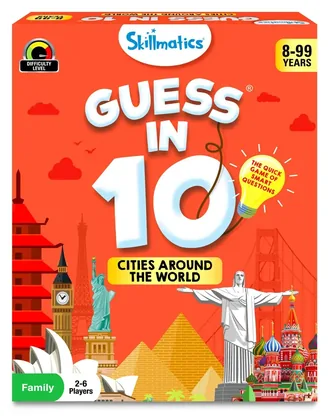
Guess in 10: Cities Around the World
Ask ten yes-or-no questions to name the hidden world city
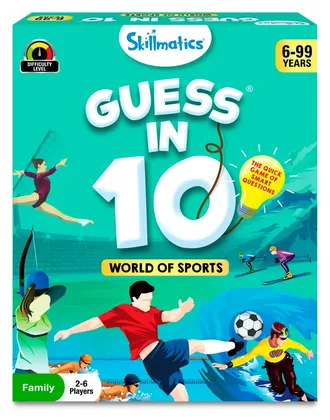
Guess in 10: World of Sports
Guess the sport, from karate to baseball, in ten questions
Also playable with two
For game nights with two players.
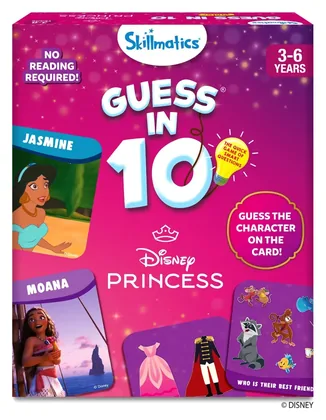
Guess in 10 Junior: Disney Princess
Picture tiles help little ones guess the Disney princess
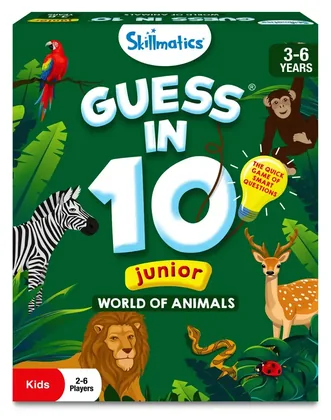
Guess in 10 Junior: World of Animals
Picture tiles help pre-schoolers ask their way to the hidden animal
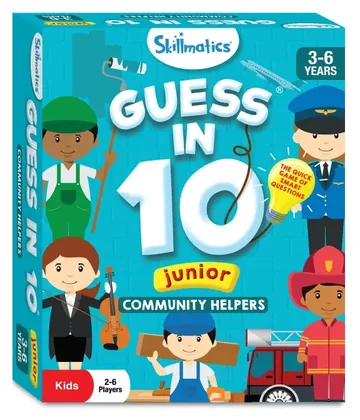
Guess in 10 Junior: Community Helpers
Ask about uniforms and workplaces to name the hidden community helper
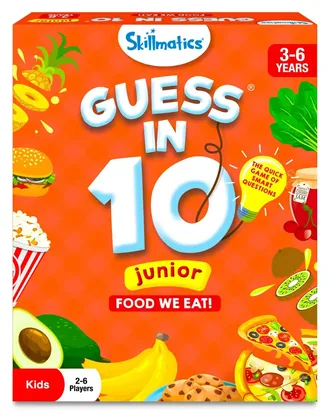
Guess in 10 Junior: Food We Eat!
Sweet or salty? Picture tiles lead small children to the hidden food
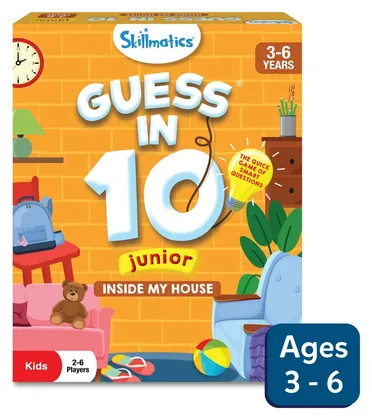
Guess in 10 Junior: Inside My House
Picture tiles help little ones guess everyday things from home
Questions people ask about Smart Sticks Medical Science
What age is Smart Sticks Medical Science for?
Chalk and Chuckles says 10 to 99 years, and the listing's age range is 10 to 16, although its title mentions 7 to 14. The medical words make 10 a sensible starting age; a younger child can play on a team with an adult.
Is Smart Sticks Medical Science good for a child who wants to be a doctor?
It is aimed at exactly that child: the questions cover organs, diseases, tests and treatments, and Doctor's Decision asks players to think through a patient's symptoms. It is a learning game for curious children, not exam preparation.
How many players can play Smart Sticks Medical Science?
The maker says 1 to 4 players. Each question needs a caller and at least one person answering, so it works best with 3 or 4; a child on their own can still read the sticks or build the body puzzle.
What is the human body puzzle in Smart Sticks Medical Science?
The backs of the 60 sticks fit together into an illustrated puzzle of the major body systems and organs, about 54 x 28.5 cm. The maker calls it Build the Human Body, and it shows where the organs from the questions sit.
Is Smart Sticks Medical Science made in India?
It comes from Chalk and Chuckles, an Indian company that lists its own factory in Kundli, Haryana. The maker's product page doesn't state the country of origin, so check the tube's label if it matters to you.
Game facts
- Publisher
- Chalk and Chuckles (Chalk and Chuckles Products Pvt Ltd, New Delhi, India)
- In India
- Chalk and Chuckles, an Indian company (registered office in New Delhi, factory in Kundli, Haryana), which makes and sells the game in India
- First published
- 2026
- Players
- The maker says 1 to 4 players. Every question needs a caller and at least one person answering, so we count 2 to 4; on their own, a child can read through the sticks or build the body puzzle.
- Barcode
- 8906045560672
- Language
- Some English – The sticks are in English and use real medical words, such as the names of organs, diseases and tests, which the caller reads aloud. Answers can be given in any language, but children will need the English terms to follow the questions. We found no Hindi edition.
- Box size and weight
- 8 × 8 × 15 cm, 0.3 kg
Sources & photo creditsThe references behind this guide.
Facts on this page come from the publisher, the Indian maker or distributor, and the sources below. Photos are credited under each one.
- Chalk and Chuckles - Smart Sticks Medical Science (how to play, contents, size)
- Chalk and Chuckles - Smart Sticks Medical Science product data (SKU CCPPL067, barcode)
- Chalk and Chuckles - Contact (registered office and factory address)
- Chalk and Chuckles - Our Story (founders, materials, safety standards)