
Board games for families in India
Family board games.Find the right fit.
The best family board game is the one everyone wants another turn at. Start with who will play: their ages, their language comfort and the kind of evening planned.
Compare family games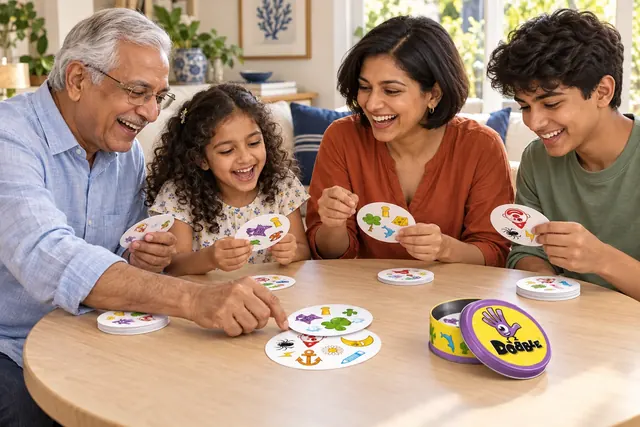
The short answer
One family. Several kinds of game night.
Count the people who will stay for a whole game. For a quick start, compare Dobble’s picture race with Monopoly Deal’s turn-by-turn card play. Ticket to Ride suits a settled group of up to five; Kingdomino fits a smaller table. With six or more, check Sequence’s equal-team rules and the exact edition of Dixit before buying.
People coming and going
Short rounds, a quick explanation and an easy moment to join.
Everyone settling in
A shared board and time to see your plans through.
A quieter little table
Less shouting. More “I was going to take that.”
Start with your actual group
Times are the catalogue ranges for these editions, before the first explanation. Player limits refer to a complete game; joining halfway through is a different question.
| Game | Group size | Usual play time | Reading or language | Main reason to skip |
|---|---|---|---|---|
| Dobble | 2–8 | 15 min | Pictures; shared symbol names | A large gap in reaction speed |
| Monopoly Deal | 2–5 | 15–30 min | English action cards | Property stealing feels personal |
| Sequence | 2–12; equal teams above 3 | 20–40 min | Card faces; learn the Jacks | Five, seven or eleven players |
| Ticket to Ride | 2–5 | 30–60 min | City names; colours and pictures | People may need to leave midway |
| Kingdomino | 2–4 | 15–25 min | Picture tiles; counting at the end | A larger group needs one shared game |
| Dixit | 3–8 in the refreshed base box | 30 min | A shared language for clues | Clue invention makes someone uncomfortable |
| Codenames | 4+ for classic teams | 15 min | Similar English vocabulary | A wide reading or vocabulary gap |
The boardgames.in shortlist
Family games for different kinds of evening
Compare pictures, words, teams and planning before choosing a box.
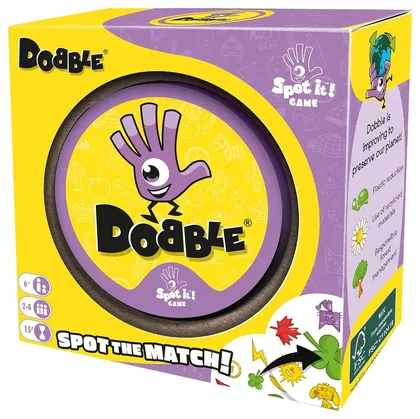
Spot the matching picture before someone else does. We would reach for this when you want to get playing quickly, with minimal reading and plenty of noise. Join a fresh mini-game between rounds rather than interrupting one in progress.
Reading: Pictures; agree on names in any shared language.
Fast eyes have an advantage. A wide gap in speed or confidence can leave someone on the sidelines.
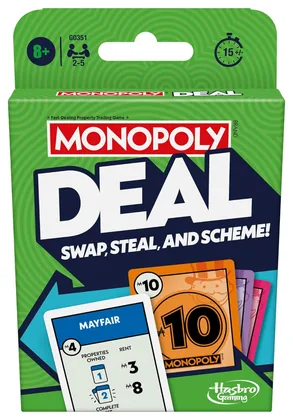
Collect three property sets while rent and action cards change who owns what. Consider it for two to five players who want a compact card game and enjoy competing over each other’s plans.
Reading: Short English instructions on action cards; numbers and symbols on money and properties.
Action cards can take properties or a complete set. Skip it if those reversals upset the group. The English pack also asks each player to understand the action cards in their own hand.
Check the edition
The standard English G0351 pack, ages 8+. Hindi and Tamil packs have separate pages; Monopoly Bid is a different game.
For families who enjoy playing in teams
Sequence
Individuals or equal teams
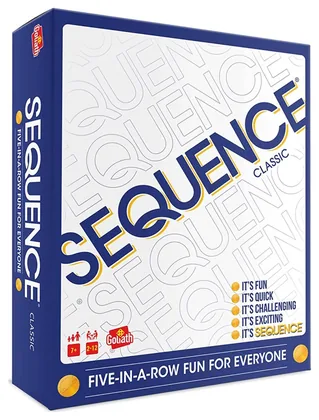
Play a card and place a chip, working towards a line of five. Consider Sequence when a larger family wants teams and a shared board, without a long negotiation on every turn.
Reading: Match card faces; learn the two kinds of Jacks and the sequence rules.
The group must split evenly into two or three teams once more than three people play. Team members cannot coach one another about their cards.
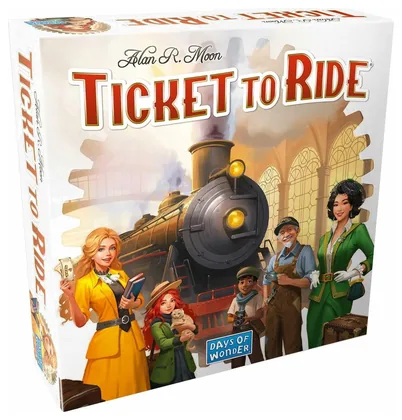
Collect train cards and connect destinations on a map. This is our starting point for a family ready to stay with one game rather than dip in and out. The visible routes give everyone something concrete to plan.
Reading: City names on tickets; most choices use colours and pictures.
Routes can be blocked. Allow time for the first explanation and make sure everyone can stay to the end.
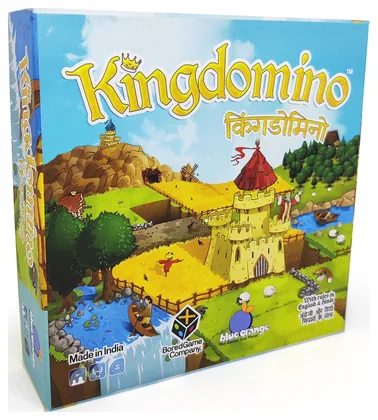
Choose landscape tiles and build your own little kingdom. We like this direction for a family that wants a compact puzzle with a clear finish, without constant negotiation.
Reading: No reading on landscape tiles; help may be needed with scoring.
Scoring needs counting and multiplication. An adult can help calculate without choosing a child’s tiles for them.
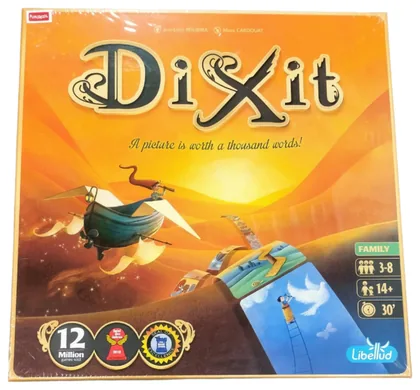
Give a clue to a dreamlike picture and see who follows your train of thought. Choose it when the pleasure is in the conversation and surprising associations, rather than finding one objectively correct answer.
Reading: Picture cards; clues can use a language everyone shares.
Inventing a clue can feel more difficult than taking a normal turn. Some younger or shy players may prefer a more concrete game.
Check the edition
The refreshed base game supports up to eight; some older boxes support six. Check the edition.
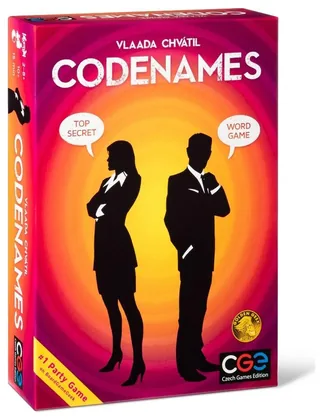
Two teams try to connect words through a spymaster’s clue. Consider it for older children and adults with similar English vocabulary who enjoy debating what someone meant.
Reading: English words and their meanings are central to play.
We recommend at least four for the classic team experience. The standard English game is a poor fit if reading confidence differs sharply.
Check the edition
Our catalogue entry is the older 14+ edition. CGE’s refreshed 2025 edition is labelled 10+; check the actual box, not just the name.
No matches in this shortlist.
Try “Any style” or reset the filters. We would rather show fewer choices than recommend a game above the selected age.
Player counts, starting ages and times refer to the editions in our catalogue; timings are not first-session estimates. Fit and watch-out notes are our editorial judgement. Product photographs and source credits are on each game page.
A little know-how
Will everyone get a turn they enjoy?
Start with the youngest player
A box age is a starting point. Ask what that person must do on each turn: read, react quickly, hold a plan in mind or wait patiently.
Make language a shared advantage
A game with picture cards can often be taught in Hindi or another shared language. That does not mean the supplied rulebook is in that language.
Plan for the real evening
Publisher play times do not include your whole first teaching session. If dinner, guests or bedtime may interrupt, favour separate short rounds.
Five, six and larger groups need different shortlists.
For five players, Ticket to Ride and Monopoly Deal both support the whole group. Kingdomino stops at four. Sequence needs equal teams above three players, so five is not a supported group size.
For six, Sequence can use two teams of three or three teams of two. Dobble and the refreshed Dixit base game also fit, but offer very different experiences: quick reactions versus imaginative clues. Check Dixit’s box because older editions can have a lower limit.
For more than eight, Sequence is the option here up to twelve, provided the players split evenly into two or three teams. Nine, ten and twelve can work; eleven cannot. If the group does not fit, use two smaller games instead of quietly changing the published player limit.
Younger children deserve their own decisions.
Pairing a child with an adult can be a pleasant introduction, but it is different from the child playing independently. If the adult has to make every meaningful decision, a junior or children’s game may be the more generous choice.
Our children’s hub separates what the child needs to do from what an adult helps with. Cooperative options are useful when everyone wants to work together, although losing as a team is still possible.
Keep the waiting and helping manageable.
If a child loses interest while others decide, choose short, clear turns and a smaller group before buying a more elaborate game. A longer listed player limit does not tell you how patiently your family will wait.
In Sequence, being on the same team does not permit coaching someone about their cards. If a younger player needs that help throughout, choose a different game or let them share an adult’s seat as an introduction; do not count that as independent play.
Before you roll
A few good questions.
Which games work for a family of five or six?
For five, compare Monopoly Deal, Ticket to Ride, Dobble and the appropriate Dixit edition. For six, Sequence supports two teams of three or three teams of two; Dobble and the refreshed Dixit base game also fit. Check ages, reading and edition limits before choosing.
Which family board games work without much English?
Dobble, Kingdomino and Dixit rely mainly on pictures during play. An adult still needs to learn and explain the rules. Dixit also needs a shared way to give clues; Codenames relies much more heavily on vocabulary.
What should we buy for a family with a five-year-old?
Start with the children’s hub rather than lowering the age guidance on a larger family game. Dragomino, Rhino Hero and Outfoxed! are candidates there for different kinds of play. Check the exact box age and the child’s comfort with the task.
Is Catan a good choice for a big family gathering?
The standard base game is for three or four players. It suits a settled group that enjoys negotiation and has time for a longer session. It is not the same proposition as a quick game for guests arriving at different times.
Is Monopoly Deal a shorter version of the Monopoly board game?
It is a separate card game for two to five players, built around collecting property sets and playing action cards. There is no board to move around. Choose it for short card-game sessions, provided everyone can read their cards and enjoys property-stealing surprises.
Behind the shortlist
A little homework. A clearer choice.
Original shortlist research: 14 October 2026, using publisher pages, official rules and our edition-specific catalogue. Updated 22 October 2026 with clearer comparisons and buying guidance; new recommendations use the existing researched catalogue and linked publisher evidence. These are editorial judgements, not claims of hands-on testing. Inclusion does not imply current availability in India.
Open the source shelf
- Zygomatic · Dobble ↗
- Days of Wonder · Ticket to Ride ↗
- Blue Orange · Kingdomino rules ↗
- Libellud · Dixit ↗
- CGE · Codenames, current edition ↗
- Funskool · Sequence rules ↗
- Hasbro India · Monopoly Deal G0351 ↗
Our game pages link further edition evidence. Where editions differ, use the actual box and rulebook as the final reference.