
Two-player board games in India
Board games for two.Couples, friends and rivals.
A quick duel, a quiet puzzle or one shared problem to solve. These board games work for exactly two—whether you’re a couple, friends or siblings claiming the table after dinner.
Compare two-player games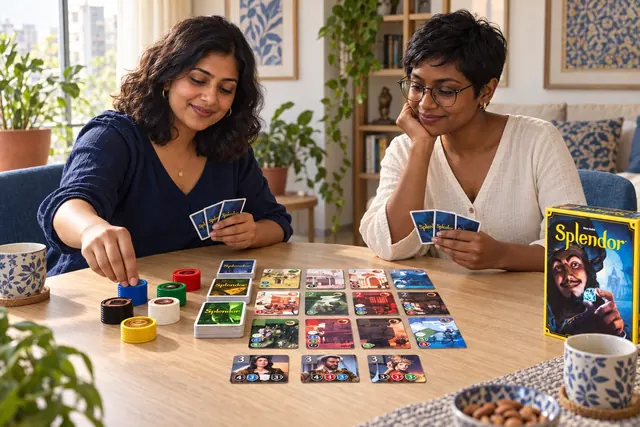
The short answer
First choose the kind of rivalry.
For a game made only for two, compare Splendor Duel’s gem-and-card contest with 7 Wonders Duel’s civilisation-building decisions. Azul offers a visual puzzle; original Splendor also supports larger groups. Choose Pandemic to work together. Jaipur remains in the guide for reference, but its Amazon buying link is paused.
Made for two
Dedicated contests with no extra seats.
A little quiet plotting
Your own plan, with one eye on theirs.
On the same side
One board. One shared win—or loss.
Compare what your evening will feel like
All six support exactly two. Times are the catalogue ranges, not promises for a first session. Jaipur remains a reference choice with its buying link paused.
| Game | Usual play time | What you watch at two | Choose another if… |
|---|---|---|---|
| Splendor Duel | 30–45 min | The shared gem board and three ways to win | You want very little direct interference |
| 7 Wonders Duel | 20–30 min | The cards your choice uncovers; military and science threats | An early sudden loss would spoil the evening |
| Azul | 30–45 min | The tiles your opponent needs and those left behind | You want a forgiving puzzle without penalties |
| Splendor | 30 min | The same cards and limited gems | You want a game designed only for two |
| Pandemic | 45 min | A shared board and each other’s role | One person is likely to direct every turn |
| Jaipur — buying paused | 30 min | The goods left in the market and when to sell | You need an enabled buying link on this site today |
The boardgames.in shortlist
Games made for two, and games that work with two
“Supports two” and “made for two” are different things. Here is what each choice brings to the table.
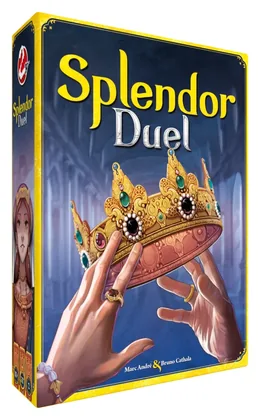
Take gems from a shared board and use them to buy cards. The limited supply makes an opponent’s next choice part of the puzzle. Consider it for a pair who enjoy planning purchases and watching each other’s progress.
Reading: Mostly colours, symbols and numbers; learn the card powers together.
Card powers and three victory conditions add details to learn. It is competitive, with opportunities to deny an opponent useful gems.
Check the edition
A standalone game. Original Splendor and the Counterfeiters expansion are different purchases.

Choose cards from a shared layout to build an ancient city. Military and science can end the game early, so collecting points is not the only concern. Consider it when both players enjoy keeping several possible threats in view.
Reading: Mainly symbols and numbers during play; keep the reference sheet nearby.
Symbols and victory conditions take a teaching session. A card choice can uncover a useful option for the opponent.
Check the edition
The standalone Duel base game. Original 7 Wonders, Pantheon and Agora are different boxes; the latter two are expansions.

Draft coloured tiles to build a patterned wall. We would choose it for people who like visual decisions and enjoy paying attention to what an opponent needs. It can be calm in tone while still being quite pointed.
Reading: No reading on tiles; someone needs to understand the scoring.
Unwanted tiles bring penalties. “Pretty” does not mean forgiving, and one player can deliberately leave the other awkward choices.
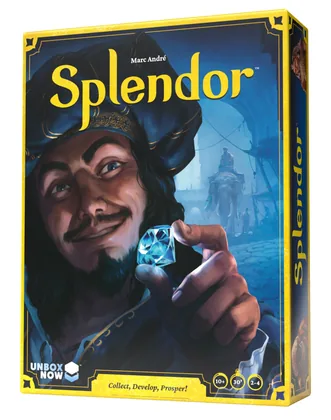
Collect gems and buy cards that make future purchases easier. Choose this if you enjoy improving a plan over successive turns and also want to use the box when friends visit.
Reading: Mostly colours, symbols and numbers during play.
There is competition for the same cards. More experienced players may spot efficient combinations much sooner.
Check the edition
This recommendation is for the original Splendor. Splendor Duel is a separate game, not a two-player mode in this box.
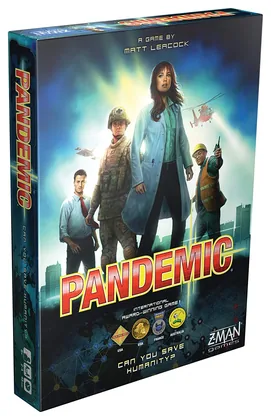
Coordinate your roles to discover cures before the board overwhelms you. We would choose Pandemic when conversation and a shared plan sound more appealing than beating each other.
Reading: City names and some card text; discuss and read aloud as needed.
It asks more of a first teach than Jaipur. Agree that each player owns their turn, so one confident player does not make every decision.

Trade goods in a shared market and decide when to sell. We would choose Jaipur for two people who want a proper contest without committing a whole evening. Taking something useful can also leave something useful behind.
Reading: Goods are pictured; learn the exchange and scoring rules together.
Buying link paused. See the game page for details.
The Amazon buying link is paused while we research an available matching edition. It remains a useful game to understand, but is not a currently enabled purchase recommendation. It is competitive throughout. A complete match uses a best-of-three-round structure, so leave room for the rematch within the match.
No matches in this shortlist.
Try “Any style” or reset the filters. We would rather show fewer choices than recommend a game above the selected age.
Player counts, starting ages and times refer to the editions in our catalogue; timings are not first-session estimates. Fit and watch-out notes are our editorial judgement. Product photographs and source credits are on each game page.
A little know-how
A good date-night game leaves room for both of you.
Agree on the mood
A cooperative game and a gentle-looking competitive one can feel very different. Pick together before the box is on the table.
Make the first round a welcome
Explain the goal and a normal turn, then demonstrate the choices. Offer help without announcing the “correct” move every time.
Leave room for learning
Set aside more than the listed play time for your first session. Choose a shorter game if the evening already has a hard stop.
A quiet game can still be a direct contest.
Azul and Splendor do not need shouting or negotiation to create tension. At two, you can pay close attention to the one person taking the pieces or cards you want. If that sounds fun, good. If it sounds tiring after a long day, choose something cooperative instead.
Splendor Duel and 7 Wonders Duel are designed for exactly two. Azul, original Splendor and Pandemic also support larger groups. Jaipur is another dedicated two-player game, with buying currently paused on this site.
What changes when there is only one opponent?
In Azul, the other person is the only rival who can take the tiles you want or leave you a difficult collection. In Splendor, both players are watching the same market of cards. A quiet table can still involve deliberate interference; choose it because you enjoy that attention, not because the artwork looks relaxing.
Dedicated games such as Splendor Duel and 7 Wonders Duel build their contest around that pair. Original Splendor and Azul keep the option of inviting more people later. Pandemic offers a shared problem instead; agree that each person makes their own final turn decisions.
For couples with different levels of experience.
Start with a game neither person knows well, or play an openly taught first session. Discuss what makes a move useful without turning the evening into a lesson with a score attached. This is a suggestion for your table, not a change to the official rules.
With Pandemic, ask before offering advice. A shared victory is more satisfying when both players helped shape it. If either person dislikes the disease theme, choose another theme rather than trying to sell them on the mechanics.
A half-hour window needs a margin.
A familiar game and a first lesson need different amounts of time. The shorter catalogue ranges here belong to 7 Wonders Duel and original Splendor, but learning either can overrun a thirty-minute slot. If the end time is firm, use a game both people already know or choose a shorter game from our quick-games guide.
Pandemic’s listed time is about forty-five minutes before learning. Jaipur’s time covers a match with a best-of-three-round structure; stopping after one round is not the same as completing the match.
Before you roll
A few good questions.
What is a good first board game for a couple?
Choose by the kind of contest both people enjoy: Azul for a visual puzzle, Splendor Duel for gem-and-card planning, or Pandemic for a shared challenge. 7 Wonders Duel suits a pair willing to learn several victory conditions. Allow extra time for the first explanation.
Which two-player game is cooperative?
Pandemic is the cooperative option in this shortlist. Both players coordinate roles and share the result. Azul, Splendor, Splendor Duel, 7 Wonders Duel and Jaipur are competitive, even when play feels quiet.
Can two people play Catan?
The standard Catan base game is for three or four players. Splendor Duel and 7 Wonders Duel are standalone games designed for exactly two; Azul, original Splendor and Pandemic also support two.
Is Splendor the same as Splendor Duel?
No. Original Splendor supports two to four players; Splendor Duel is a separate two-player game with its own board, cards and victory conditions. This guide links to both, with their differences explained.
Do I need Codenames Duet for two players?
Codenames Duet is a distinct cooperative game. Standard Codenames has special small-group rules in some editions, but its main team experience is different. Do not substitute one edition’s recommendation for the other’s listing.
Behind the shortlist
A little homework. A clearer choice.
Original shortlist research: 14 October 2026, using publisher pages, official rules and our edition-specific catalogue. Updated 22 October 2026 with clearer comparisons and buying guidance; new recommendations use the existing researched catalogue and linked publisher evidence. These are editorial judgements, not claims of hands-on testing. Inclusion does not imply current availability in India.
Open the source shelf
- Space Cowboys · Jaipur ↗
- Next Move · Azul rules ↗
- Space Cowboys · Splendor ↗
- Z-Man Games · Pandemic ↗
- Space Cowboys · Splendor Duel ↗
- Repos Production · 7 Wonders Duel ↗
Our game pages link further edition evidence. Where editions differ, use the actual box and rulebook as the final reference.