
- Set-up
- About 10 min
- Reading
- Some
The quick verdict
Full verdict ↓Great for Children of about 12 and up who hear about the Sensex and Nifty at home and want to know what shares are
Think twice if You want to read the rules before you buy; Ratna's doesn't publish them online
How we rate it
Learning curve. Buying and selling at a price on a chart is easy to grasp, but the percentage cards and market words add a layer that suits children of 12 and up; it sits with Ticket to Ride at 2 on our scale. This is an estimate, as the full rules weren't available.
Luck & skill. The news cards you draw move prices by chance, while deciding what to buy, how much and when to sell is where skill comes in.
Interaction. Everyone trades in the same companies, so one player's lucky card can lift or sink shares that others hold; how much players deal directly with each other depends on the rules in the box.
Set-up. Sort the money and cards, set every company's marker at its starting price on the chart, shuffle the information cards and choose a banker.
Reading. The news and special cards carry short English text with market terms; a grown-up can read and explain them.
Learning curve: 1 = UNO or Connect 4; 3 = Catan; 5 = a heavy strategy game. These describe the experience, not an overall score.
Is Stock Market right for you?
Great if
- Children of about 12 and up who hear about the Sensex and Nifty at home and want to know what shares are
- Families who enjoy Business and want a money game about share prices instead of property
- Practising percentages and big numbers, and the idea that prices move with the news
- Groups of up to six at a family get-together
Skip it if
- You want to read the rules before you buy; Ratna's doesn't publish them online
- Your children are under about 12 (the box age); the cards use market words and percentage maths
- You want a quick game; allow most of an hour or more
How Stock Market plays
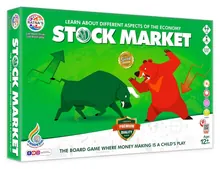
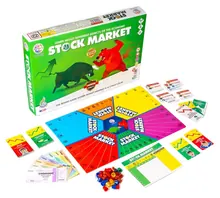
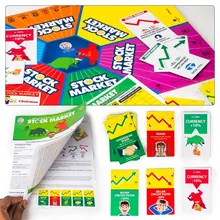
What's in the box: Ratna's doesn't publish a contents list. Indian store photos show a board with a share price chart, play money, share cards and 'Chairman' cards for well-known Indian companies, a deck of market information cards, a set of special cards and a rules booklet.
- Time to teach: about 15 minutes.
- Reading and language: The share and news cards are in English and use market words such as promoters, topline and circuit filter, so a grown-up may need to explain them. Working out rises and falls of 10 or 20 per cent, and adding up big sums of play money, is the main maths.
A turn, step by step
- 1Buy
Buy company shares from the bank at the price shown on the share price chart.
- 2News
Information and special cards push share prices up or down; move the markers on the chart.
- 3Sell
Sell when the price suits you; Ratna's booklet says how the game ends and who wins.
The full explanation: how a game of Stock Market goes
The idea, from the box and the start of the rules booklet seen in a store photo: everyone starts with money from the banker, each company's current share price is marked on the chart, and you buy shares at the market price and sell them later, hoping for a profit. Information cards move the prices: news such as copper prices rising, the dollar weakening against the rupee, weak sales figures, a good monsoon or tension in the Middle East pushes a company's price up or down by a set amount, and its marker moves on the chart.
Special cards add twists. The store photos show Fraud cards (a share's value at half its market price), Buyer and Seller cards, Currency cards that change values by 10 per cent up or down, and Circuit Filter cards that move a price by 20 per cent, named after the limits Indian exchanges put on how far a share can move in a day. Exactly when you play them, and how the game ends and who wins, is in Ratna's booklet; in most share-trading games the richest player, counting cash and shares at the final prices, wins after an agreed number of rounds, so agree the ending before you start.
How it differs from Business and Monopoly: there is no property to buy and no rent to collect. Your wealth rises and falls with share prices and market news, so it is about when to buy and sell rather than where the dice put you. The closest game we cover is Funskool's Big Bull Junior, a shorter share-market game for children from 8 whose rules are published online.
Is it a copy of a foreign game? We found nothing to suggest so. Its news cards and Chairman cards don't match Stock Ticker, where special dice move six commodity prices, or Acquire, where players found hotel chains with tiles on a grid, and the companies and market terms on the cards are Indian. A share price track moved by event cards is a common idea in share-trading games.
What's in the box
- 1Game board
with a share price chart, as store photos show - –Share and Chairman cards
for well-known Indian companies - –Information cards
market news that moves prices up or down - –Special cards
such as Fraud, Buyer, Seller, Currency and Circuit Filter - –Play money
- 1Rules booklet
Ratna's doesn't publish a contents list, and the Indian store listings we read don't give one. This list comes from store photos of the box contents; counts are unknown.
Where to buy
How to make sure you get a genuine copyEditions and the details worth checking.
What reviewers and players say
We found no reviews, parenting blogs, forum threads or videos about Ratna's Stock Market, so there is nothing yet to report on what families think of it. From the box and the store photos, it is a share-trading game with an Indian flavour, using well-known Indian company names and market news, that can start conversations about how share prices move. How well it plays depends on rules we could not read, so treat it as a curiosity for older children rather than a proven family favourite.
What people love
- Indian company names and market news make the share market feel close to home
- A money game about timing and prices rather than property and rent
- Good practice with percentages and big numbers
- Room for up to six players
Common complaints
- No rules online, so you can't check how it plays before buying
- Market words on the cards need explaining for younger players
- Likely to run long; allow most of an hour or more
5 research sources
- Reference Ratna's STOCK MARKET: maker and country of origin (read October 2026) · Kheliya Toys
- Reference Ratna's Stock Market Board Game: box and contents photos (read October 2026) · Kidsinfy
- Reference Stock Market Board Game: box and card photos (read October 2026) · Happy Toddlers
- Reference Stock Ticker · Wikipedia
- Reference Acquire · Wikipedia
Summarised in our own words from the sources above. We don't use Amazon reviews or ratings.
More like Stock Market
Which game is the best fit?
Our picks if Stock Market isn't quite right.
Swipe to compare every game
| Compare the games.The details that make a difference. |
YOU’RE VIEWING
 Stock Market |
ANOTHER WAY TO PLAY
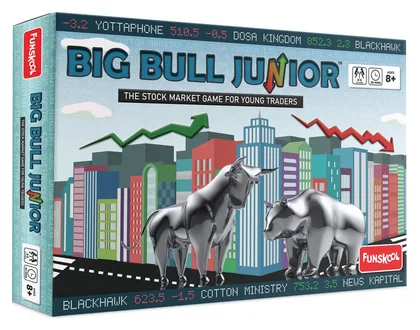 Big Bull Junior |
ANOTHER WAY TO PLAY
 Business |
ANOTHER WAY TO PLAY
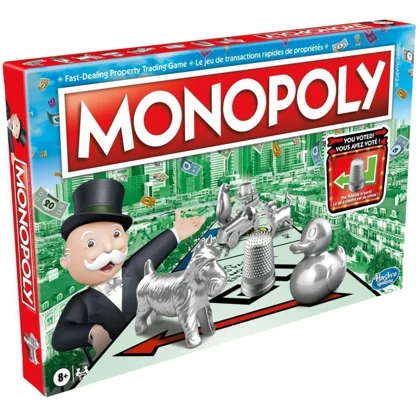 Monopoly |
|---|---|---|---|---|
| Why consider it | This game Buy and sell shares as market news pushes prices up and down | A different fit The closest game we cover: a 30-minute share-market game from 8, with its rules online | A different fit Ratna's best-known money game: buy cities and collect rent instead of trading shares | A different fit The classic buy-and-rent game, where the dice decide where you land |
| Players | 2–6 | 2–5 | 2–4 | 2–6 |
| Best with | 3-5 | 3-4 | 3-4 | 3-4 |
| Play time | 60 min (est.) | 30–40 min | 1–2.5 hrs | 1–6 hrs |
| Age | 12+ | 8+ | 8+ | 8+ |
| Rules | Medium | Easy | Medium | Easy |
| Indian edition | Available | Available | Available | Imported |
| On this page | Explore Big Bull Junior | Explore Business | Explore Monopoly |
More from Ratna's
Another way into their collection.
Business
India's own property game: buy cities, collect rent, build hotels

Ludo
India's favourite race game: roll a six, cut and race home
Tic Tac Toe
Three in a row wins: every child's first strategy game
International Cricket
Bowl, bat and chase runs on a cloth cricket ground at home
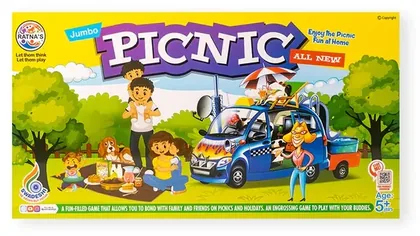
Jumbo Picnic
Ratna's big-board picnic trip: roll, pay your way and reach home
More money and property games
Different games. A familiar kind of fun.
Business
India's own property game: buy cities, collect rent, build hotels
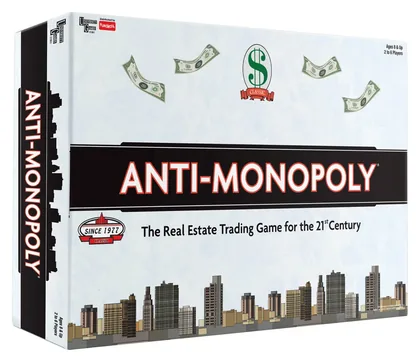
Anti-Monopoly
Two sides, two sets of rules: fair competitors against greedy monopolists
Monopoly
Roll, buy property, collect rent, and bankrupt everyone else
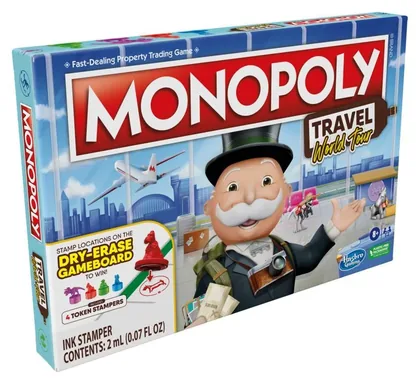
Monopoly Travel World Tour
Buy world destinations, stamp your travel goals, first to four wins
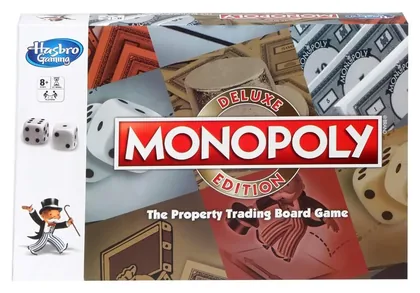
Monopoly Deluxe Edition
Classic Monopoly with wooden houses, ten tokens and a banker's tray
Also playable with two
For game nights with two players.
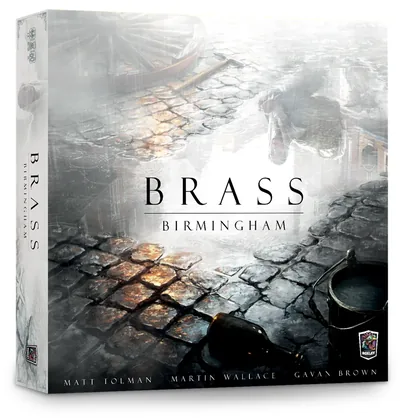
Brass: Birmingham
Build canals, railways and industries across Industrial Revolution England

Monopoly Junior
Monopoly for little ones: one die, simple rules, half an hour

Monopoly Junior: Peppa Pig Edition
Monopoly Junior with Pig family tokens and places from Peppa's world

Wingspan
Calm card game about birds where every new bird boosts your turns.
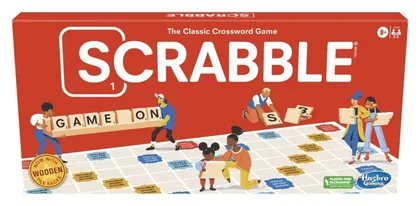
Scrabble
Build crossword words from letter tiles and chase the bonus squares
Questions people ask about Stock Market
How do you play Ratna's Stock Market game?
Players buy and sell shares in companies whose prices are tracked on a chart on the board. Information cards with market news push prices up or down, and special cards such as Fraud, Currency and Circuit Filter add twists. Ratna's full rules come in the box and aren't online, so read the booklet for how the game ends and who wins.
Does Stock Market teach children about the real share market?
It introduces the ideas: shares, a market price that changes with the news, buying low and selling high, and limits on big price moves. It is a simplified game, not a lesson in investing, and a grown-up will need to explain the market words on the cards.
What age is Ratna's Stock Market for?
The box says 12 and up, and the listing behind our Amazon.in link says 10 and up. Children should be comfortable with percentages and big numbers.
How is Stock Market different from Business or Monopoly?
Business and Monopoly are about buying property and collecting rent as you move round the board. In Ratna's game you trade company shares, and your wealth rises and falls with share prices and market news, so timing matters more than where you land.
Is Ratna's Stock Market made in India?
Ratna's is the brand of Prem Ratna Toys, a Mumbai toy and game maker, and an Indian toy shop names it as the manufacturer with India as the country of origin. We couldn't read a made-in-India line on the box photos we found, so check the box.
Game facts
- Publisher
- Ratna's (Prem Ratna Toys, Mumbai)
- In India
- Prem Ratna Toys, Mumbai (maker of Ratna's games)
- Players
- 2–6
- Barcode
- 8904114982462
- Language
- Some English – The share and news cards are in English and use market words such as promoters, topline and circuit filter, so a grown-up may need to explain them. Working out rises and falls of 10 or 20 per cent, and adding up big sums of play money, is the main maths.
Sources & photo creditsThe references behind this guide.
Facts on this page come from the publisher, the Indian maker or distributor, and the sources below. Photos are credited under each one.
- Kheliya Toys - Ratna's Stock Market (maker and country of origin)
- Kidsinfy - Ratna's Stock Market Board Game (box and contents photos)
- T-Rex Toys - Ratna's Stock Market Board Game (barcode)
- Happy Toddlers - Stock Market Board Game (box and card photos)
- Stock Ticker - Wikipedia
- Acquire - Wikipedia
- Prem Ratna Toys - official YouTube channel (about the maker)