
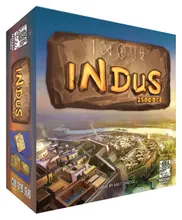
- Set-up
- About 5 min
- Reading
- Little
The quick verdict
Full verdict ↓Great for Families and friends who enjoy quiet, puzzly games where everyone works on their own map
Think twice if You dislike games that use up paper sheets; each player fills in one map per game
How we rate it
Learning curve. Each turn is simple, pick a card and draw it, so it sits near Ticket to Ride on our scale. What takes thought is fitting shapes into your city, deciding when to take resources instead of terrain, and building walls before the calamities come; there are several scoring rules to keep in mind.
Luck & skill. You choose from an open market, but the order of the cards and when the two calamities turn up are down to the shuffle, and a calamity can hit some cities harder than others. Good walls and spreading your risk help a lot.
Interaction. Everyone builds their own city. You affect others mainly by taking a card they wanted from the market and by racing them for the most of each terrain type.
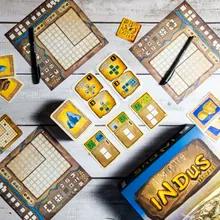
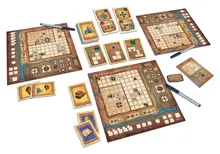
Set-up. Tear off a map for each player, hand out pens and city set-up cards, shuffle the two calamities into the deck, turn up two score cards and lay out the market. Drawing the starting features takes a minute or two. This is our estimate.
Reading. Score and calamity cards have short English text; terrain and resource cards are pictures and symbols.
Learning curve: 1 = UNO or Connect 4; 3 = Catan; 5 = a heavy strategy game. These describe the experience, not an overall score.
Is Indus 2500 BCE right for you?
Great if
- Families and friends who enjoy quiet, puzzly games where everyone works on their own map
- Fans of Cascadia or Kingdomino who want a city-building puzzle with a theme from Indian history
- Solo players: there is a one-player mode with its own scoring
- Groups of up to five, since the game plays as quickly with five as with two
Skip it if
- You dislike games that use up paper sheets; each player fills in one map per game
- You want lots of table talk, trading of blows or bluffing; this is mostly your own puzzle
- Your group hates bad luck, because a calamity can cross out part of a carefully planned city
How Indus 2500 BCE plays
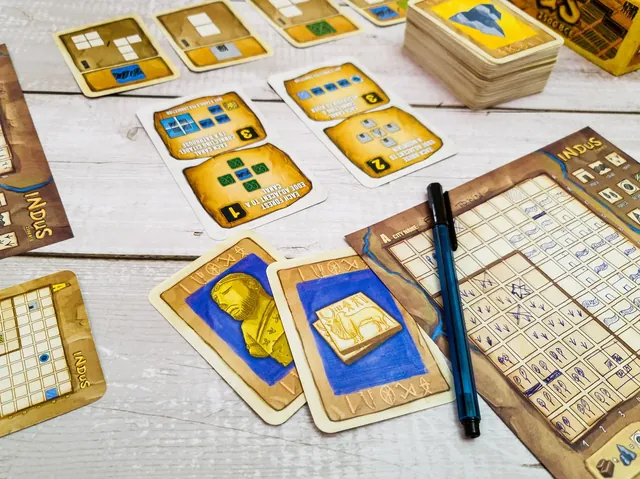
Everyone takes a fresh map from the booklet and a pen. Each map is the empty ground of an Indus city, with a raised upper town and a lower town. A city set-up card tells you what to draw before you start, side A for beginners and side B for a harder start, and two score cards are turned up in the middle; they change from game to game and say what earns bonus points.
- Time to teach: about 10 minutes.
- Reading and language: The rulebook and the short texts on the score and calamity cards are in English; the rest is drawing shapes and symbols. An English and a Hindi teaching video made with the publisher make it easy to learn in either language.
Indus 2500 BCE (ENGLISH) How to Play | By Chai & Games · DICE TOY LABS · Official
Choose a video · Watch right here
If this creator doesn’t allow embedded playback, watch on YouTube ↗.
A turn, step by step
- 1Pick
Take one terrain card from the market, or the top card of the deck for its resource or artefact.
- 2Draw
Draw the terrain's shape on your city map with any free wall, and spend resources on a reservoir, granary or bathhouse.
- 3Survive
When a calamity turns up, everyone crosses out what it destroys, and walls protect. The second calamity ends the game.
- 4Win
Score majorities in each terrain type, special buildings, artefact sets and the two score cards; the most points wins.
The full explanation: how a game of Indus 2500 BCE goes
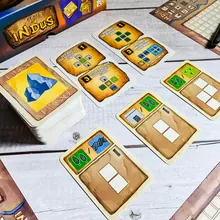
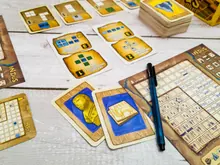
Each round, a market of terrain cards is laid out, one per player. In turn, each player takes one card: either a terrain from the market, whose shape you draw onto your map as houses, farms, forests or canals, sometimes with a free stretch of wall, or the top card of the deck, which you keep for its resource side. Resources pay for special buildings, a reservoir, or a granary or bathhouse that may only go in the upper town. Some resource cards are artefacts instead, sculptures, toys, jewellery and seals, which you collect for points.
Two calamity cards are hidden in the deck. When one turns up, everyone crosses out the parts of their city it strikes, a flood, a drought, an earthquake, plague, locusts or a landslide, and walls are your main protection. The game ends as soon as the second calamity has been dealt with, so you never know exactly how many rounds are left.
At the end, whoever has the most houses, farms, forests, canals or walls still standing scores 5 points for each of those types, and ties share them. Each special building is worth 3 points, artefacts score more the more different kinds you hold, and the two score cards add their bonuses. The most points wins. The box has a booklet of 200 maps, and Mozaic Games also sells a refill booklet of 200 more.
A note on history: the Indus Valley, or Harappan, civilisation flourished from roughly 2600 to 1900 BCE in what is now Pakistan and north-west India, in cities such as Harappa, Mohenjo-daro, Dholavira and Lothal. Archaeologists found planned streets, baked-brick houses, drains, large water reservoirs, the Great Bath of Mohenjo-daro and a big building often called a granary, along with seals, beads and terracotta toys. The game borrows these as buildings and artefacts. Its calamities are a game idea: why the cities declined is still debated, with changes in climate and rivers among the leading explanations.
What's in the box
- 1City map booklet
200 paper maps - 100Terrain and resource cards
double-sided - 10City set-up cards
side A for beginners, side B advanced - 10Score cards
- 10Calamity cards
- 1First-player marker
- 5Pens
- 1Rulebook
English
Box: 1.2 kg. Handy to know for gifting and travel.
The publisher gives no contents list. The booklet of 200 maps, the 10 city set-up cards and the rulebook are named on the listing behind our Amazon.in link; the card counts, the first-player marker and the pens follow the game's rules as published online. Mozaic Games' newer printing has an updated rulebook, and a refill booklet of 200 maps is sold separately.
Where to buy
How to make sure you get a genuine copyEditions and the details worth checking.
What reviewers and players say
Indus 2500 BCE came out in 2020 as one of the first modern games from a new Bengaluru publisher, and coverage is mostly on video: English and Hindi teaching videos made with the publisher, and a run-through and final-thoughts video from the independent channel Rahdo Runs Through. We found no written review we could read, so this summary rests on the publisher's information and the rules as published online, not on reviewers' opinions. On paper it is a calm, puzzly flip-and-write: quick turns, plenty of spatial planning, and calamities that keep everyone a little nervous.
What people love
- Quick turns: pick one card and draw, so even five players keep moving
- Calamities that can wipe out part of your city, which make walls and planning ahead matter
- A theme rarely seen in games: the brick cities, reservoirs, seals and toys of the Indus Valley
- A solo mode, and teaching videos in both English and Hindi
Common complaints
- The paper maps get used up: 200 come in the box, and after that you need the refill booklet
- Mostly your own puzzle, with little direct interaction beyond taking cards others want
- Rules are not online, and the newer printing's updated rulebook may differ in small details from the older videos
5 research sources
- Video Indus 2500 BCE | Rahdo's Final Thoughts (Rahdo, July 2021) · Rahdo Runs Through (YouTube)
- Reference Indus 2500 BCE Gameplay Runthrough (Rahdo, July 2021) · Rahdo Runs Through (YouTube)
- Reference Indus 2500 BCE HINDI How to Play (July 2020, sponsored by Dice Toy Labs) · Chai & Games (YouTube)
- Reference Dice Toy Labs debuts two new games in Amit Ghadge's Indus 2500 BCE and Franz Dias' Seas the Day (Billy Langsworthy, July 2020) · Mojo Nation
- Reference INDUS 2500BCE (publisher's game page, read October 2026) · Mozaic Games
Summarised in our own words from the sources above. We don't use Amazon reviews or ratings.
More like Indus 2500 BCE
Which game is the best fit?
Our picks if Indus 2500 BCE isn't quite right.
Swipe to compare every game
| Compare the games.The details that make a difference. |
YOU’RE VIEWING
 Indus 2500 BCE |
ANOTHER WAY TO PLAY
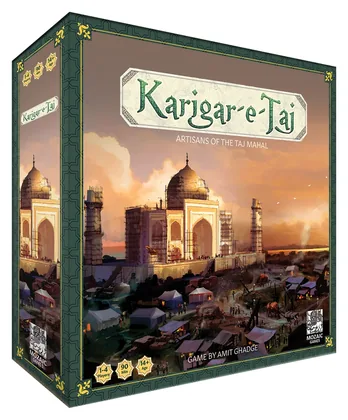 Karigar-e-Taj |
ANOTHER WAY TO PLAY
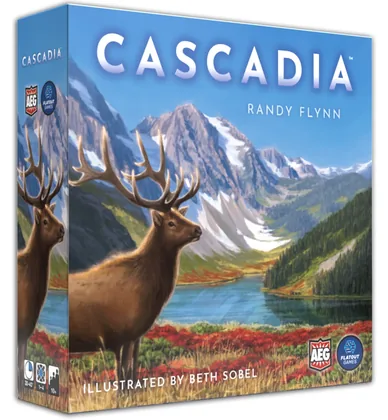 Cascadia |
ANOTHER WAY TO PLAY
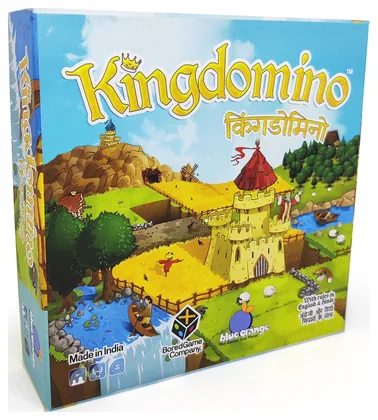 Kingdomino |
|---|---|---|---|---|
| Why consider it | This game Draw your own Indus Valley city and protect it from calamities | A different fit Same designer and publisher: a bigger strategy game about building the Taj Mahal | A different fit Also pick from a small market and build patterns on your own area, with scoring goals that change each game | A different fit A quicker, lighter game of building your own little kingdom out of terrain types |
| Players | 1–5 | 1–4 | 1–4 | 2–4 |
| Best with | 2-4 | 3-4 | 2-4 | 2 or 4 |
| Play time | 30–60 min | 60–90 min | 30–45 min | 15–25 min |
| Age | 14+ | 14+ | 10+ | 8+ |
| Rules | Medium | Medium | Easy | Easy |
| Indian edition | Available | Available | Imported | Available |
| On this page | Explore Karigar-e-Taj | Explore Cascadia | Explore Kingdomino |
More by Amit Ghadge
Another way into their collection.
More from Mozaic Games
Another way into their collection.

Uninvited Guests at a Wedding
Wedding crashers bluff and blame each other to escape the shaadi.
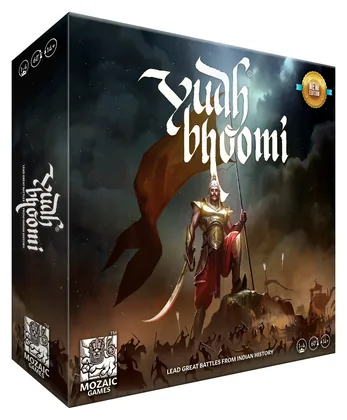
Yudhbhoomi
Lead Indian armies through three dice-driven fort campaigns, Rani Abbakka's included
Karigar-e-Taj
Gather Mughal-era materials in the bazaar and build the Taj Mahal

Furry Pawlitics
Juggle squabbling pets in a busy vet clinic to become Best Doctor
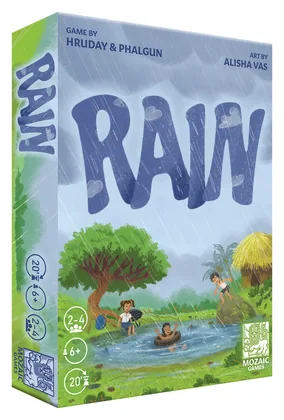
Rain
Lay cards to build little nature scenes of clouds, rain and land
More pattern-building games
Different games. A familiar kind of fun.
Cascadia
Build a Pacific Northwest landscape and fill it with wildlife
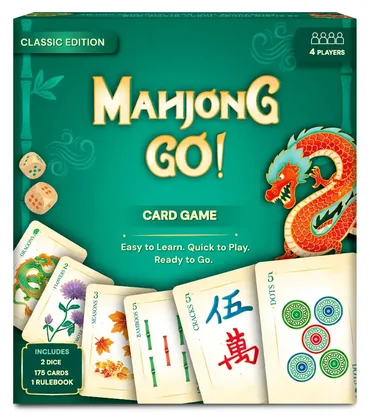
Mahjong Go!
Classic four-player mahjong, played with cards instead of tiles

Azul
Draft colourful tiles and build the best-scoring palace wall
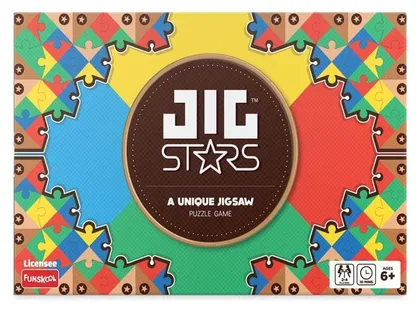
Jig Stars
Grab jigsaw pieces fast and build the highest-scoring puzzle

Jiggle
Copy the spinning picture with your tiles before your rival does
Questions people ask about Indus 2500 BCE
Is Indus 2500 BCE an Indian game?
Yes. It was designed by Amit Ghadge, with art by his Crimzon Studio, and published in 2020 by DICE Toy Labs, a Bengaluru company that publishes Indian designers' games. The company has called its games label Mozaic Games since 2022.
Are DICE Toy Labs and Mozaic Games the same company?
Yes. Mozaic Games says it was previously called DICE Toy Labs and rebranded in 2022, and its website is run by DICE Toy Labs Pvt Ltd in Bengaluru. So a box or listing under either name is the same publisher's game; newer boxes carry the Mozaic Games name.
Can you play Indus 2500 BCE alone?
Yes. It plays 1 to 5, and the solo game uses the two-player set-up with its own scoring: instead of comparing with rivals, you aim to fill more than 15 spaces of each terrain type.
What happens when the map sheets run out?
Each player uses one paper map per game, and the box comes with a booklet of 200. Mozaic Games sells a refill booklet of 200 more maps, so the game keeps going for a long time.
What age is Indus 2500 BCE for?
The listing behind our Amazon.in link says 14 and up, though its own description also mentions 10+, and a 2020 teaching video gave 8+. The drawing is simple, but planning around score cards and calamities suits teenagers and adults best; younger puzzle fans may manage with an adult's help.
Game facts
- Designed by
- Amit Ghadge
- Publisher
- Mozaic Games (DICE Toy Labs Pvt Ltd, Bengaluru)
- In India
- Mozaic Games, the Bengaluru publisher (DICE Toy Labs Pvt Ltd), which first released the game under the DICE Toy Labs name
- First published
- 2020
- Players
- 1 to 5 players; with one player you use the solo scoring rules.
- Language
- Little reading – The rulebook and the short texts on the score and calamity cards are in English; the rest is drawing shapes and symbols. An English and a Hindi teaching video made with the publisher make it easy to learn in either language.
- Box size and weight
- 1.2 kg
Sources & photo creditsThe references behind this guide.
Facts on this page come from the publisher, the Indian maker or distributor, and the sources below. Photos are credited under each one.
- Mozaic Games - INDUS 2500BCE game page
- Mozaic Games - About us (rebrand from DICE Toy Labs)
- Mozaic Games - Terms of service (DICE Toy Labs Pvt Ltd company details)
- Mozaic Games - Indus maps booklet add-on
- Mojo Nation - Dice Toy Labs debuts two new games in Amit Ghadge's Indus 2500 BCE and Franz Dias' Seas the Day (July 2020)
- Mojo Nation - Designer Amit Ghadge on India's thriving board game scene (November 2021)
- Crimzon Studio - Indus portfolio page (game and art design)
- Shuffle Games - Indus (Indian store listing: players, age, time, how it ends)
- RulesPal - Indus 2500 BCE rulebook text (third-party rules page)