
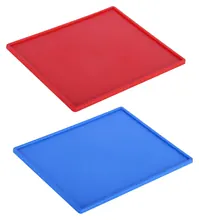
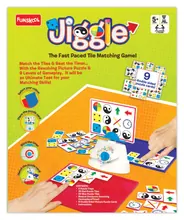
- Set-up
- Under a minute
- Reading
- None
The quick verdict
Full verdict ↓Great for Children from 5 who like puzzles and a race against the clock
Think twice if You want a game for a big group; it is one side against the other
How we rate it
Learning curve. The rules take a minute. The challenge is in the harder picture cards and fewer turns of the knob, not in the rules.
Luck & skill. No dice or cards to draw: the faster, sharper-eyed player wins, though a lucky glance at the turning card helps.
Interaction. Each side builds its own picture; the only contact is the race and the shout of 'Jiggle!'.
Set-up. Hand out the trays and tiles by colour, slot in a picture card and wind the centrepiece.
Reading. Pictures and coloured tiles only; the rules sheet is in English.
Learning curve: 1 = UNO or Connect 4; 3 = Catan; 5 = a heavy strategy game. These describe the experience, not an overall score.
Is Jiggle right for you?
Great if
- Children from 5 who like puzzles and a race against the clock
- A parent and child, or two small teams of cousins, side by side
- Practising quick looking and remembering, since the picture keeps turning away
- Families with mixed languages: everything is pictures
Skip it if
- You want a game for a big group; it is one side against the other
- Your child gets frustrated by time pressure or by losing on a wrong call
- You want a game with choices and planning; it is all about speed and a sharp eye
How Jiggle plays
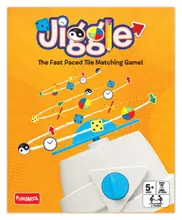
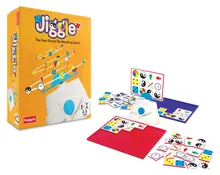
One player is blue and the other red, or two teams take a colour each. Each side takes its puzzle tray and its 20 tiles in that colour. Choose one of the 9 picture cards, starting with a simpler one, and slot it into the clockwork centrepiece; every card has a blue side and a red side.
- Time to teach: about 2 minutes.
- Reading and language: Nothing to read during play: the puzzles are pictures and the tiles are colour-coded. The one-page rules sheet is in English.
A turn, step by step
- 1Wind
Slot a picture card into the clockwork centrepiece and wind it: 4 turns for a normal game, 3 or 2 for harder ones.
- 2Build
Each time your side of the card swings round, copy it on your tray with your tiles, flipping tiles if you need to.
- 3Call
Shout 'Jiggle!' when your tray matches: right and you win, wrong and you lose.
The full explanation: how a game of Jiggle goes
Wind the centrepiece's knob: four full turns for a normal game, three for a harder one and two for the hardest. As soon as you let go, the card starts to revolve. Both players must stay seated, so you can only study your own picture each time it swings round to face you.
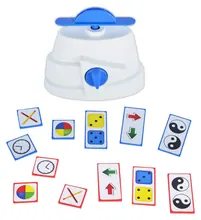
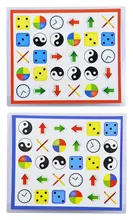
Build the same picture on your tray with your tiles. On harder cards some pieces look alike, and the tile you need may turn out to be printed on the underside of one you have already placed, so you have to 'jiggle' the tiles about until the whole picture matches.
When you think your tray matches your card, shout 'Jiggle!'. If you are right, you win. Once you call, you can't change any tiles, and if your picture is wrong, you lose.
A tip: each time your picture faces you, place the pieces that are easy to tell apart first, and leave look-alike pieces until the end, checking both sides of your tiles before you call.
What's in the box
- 2Puzzle trays
one for each colour - 20Red puzzle tiles
printed on both sides - 20Blue puzzle tiles
printed on both sides - 1Musical clockwork revolving centrepiece
the wind-up timer that turns the picture card - 9Double-sided picture puzzle cards
a blue side and a red side, from simpler to harder - 1Instructions
From the contents list on Funskool's rules sheet and box ('2 Puzzle Trays, 20 Red Puzzle Tiles, 20 Blue Puzzle Tiles, Musical Clockwork Revolving Centrepiece (Timer), 9 Double Sided Picture Puzzle Cards'). That the tiles are printed on both sides comes from the rules' note about pieces on the underside. Funskool's product page doesn't list the contents.
Where to buy
How to make sure you get a genuine copyEditions and the details worth checking.
What reviewers and players say
No independent reviews, forum threads or videos about Jiggle could be found, so this rests on Funskool's own material. Funskool sells it as a fast-paced tile matching game and an ultimate test of matching skills, with nine levels of puzzle cards and a musical clockwork timer that spins the picture. The rules add two twists that make it harder than it looks: you only see your picture as it swings round, and the piece you need may be on the back of a tile you have already used. It suits young children who enjoy puzzles and racing a parent or sibling, and calling too early is a real risk, because a wrong call loses the game.
What people love
- A wind-up timer and spinning picture that young children find exciting
- Nine picture cards running from simpler to harder
- Adjustable challenge: fewer turns of the knob mean less time
- Two teams can play, so four children can join in
Common complaints
- Only two sides, so bigger groups have to take turns
- Losing on a wrong call can upset younger players
- No independent reviews yet, so how well the clockwork lasts is untested
Based on 4 reviews and discussions
- Reference Jiggle (Funskool, read October 2026) · Funskool
- Reference Jiggle instructions (Funskool, 2020, read October 2026) · Funskool
- Reference Seven Towns brand page (Funskool, read October 2026) · Funskool
- Reference Jiggle box back (Funskool product photo, read by OCR October 2026) · Funskool
Summarised in our own words from the sources above. We don't use Amazon reviews or ratings.
More like Jiggle
Which game is the best fit?
Our picks if Jiggle isn't quite right.
Swipe to compare every game
| Compare the games.The details that make a difference. |
YOU’RE VIEWING
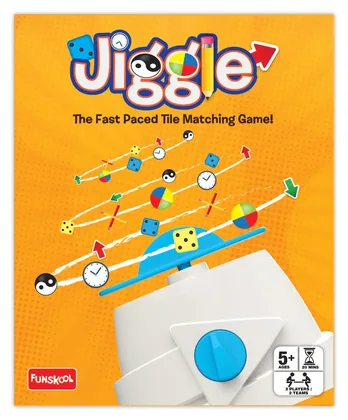 Jiggle |
ANOTHER WAY TO PLAY
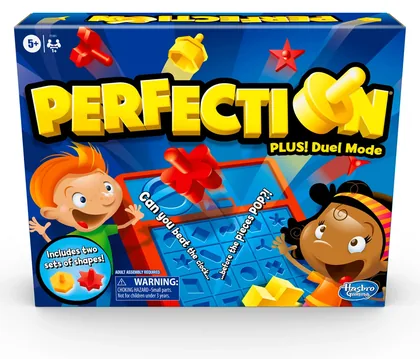 Perfection |
ANOTHER WAY TO PLAY
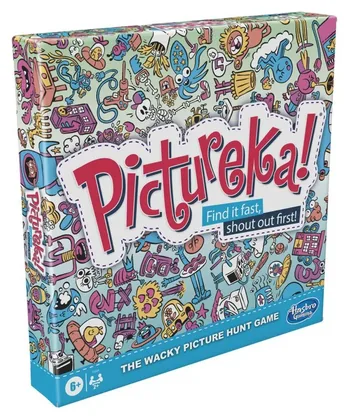 Pictureka! |
ANOTHER WAY TO PLAY
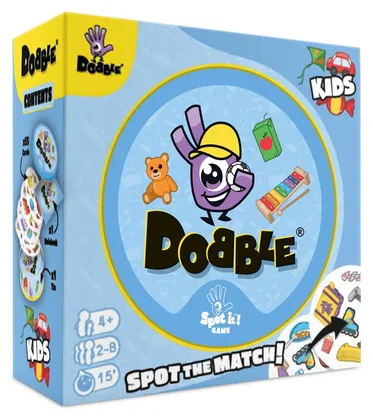 Dobble Kids |
|---|---|---|---|---|
| Why consider it | This game Copy the spinning picture with your tiles before your rival does | A different fit Another race against a timer, fitting shapes before the tray pops | A different fit Fast picture-spotting for 2 to 6 players, where sharp eyes win | A different fit A speed-matching race with pictures, playable from age 4 and by more players |
| Players | 2 | 1+ | 2–6 | 2–8 |
| Best with | 2 | 2 | 3-5 | 3-6 |
| Play time | 5–20 min | 5–10 min | 20–30 min | 10–15 min |
| Age | 5+ | 5+ | 6+ | 4+ |
| Rules | Easy | Easy | Easy | Easy |
| Indian edition | Available | Available | Available | Available |
| On this page | Explore Perfection | Explore Pictureka! | Explore Dobble Kids |
More from Funskool
Another way into their collection.
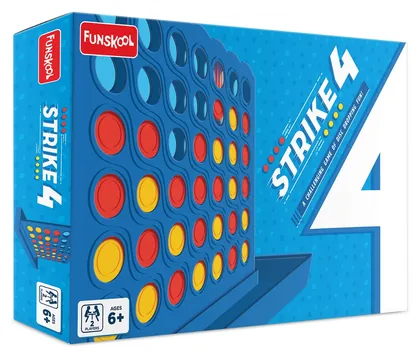
Strike 4
Drop discs, block your rival and line up four first
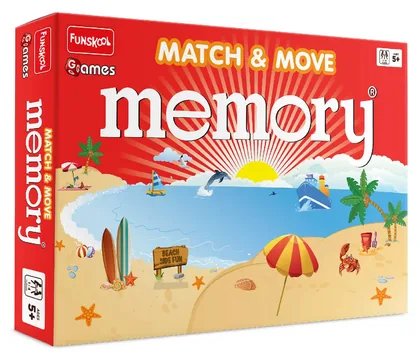
Match & Move Memory
Remember where each picture hides and race your piece home
Snakes and Ladders
Climb the ladders, dodge the snakes, first to 100 wins
Chess
The two-player battle of wits that began in India as chaturanga
Housie (Tambola)
Strike off called numbers and shout first for lines and Full House
More speed games
Different games. A familiar kind of fun.
Jig Stars
Grab jigsaw pieces fast and build the highest-scoring puzzle
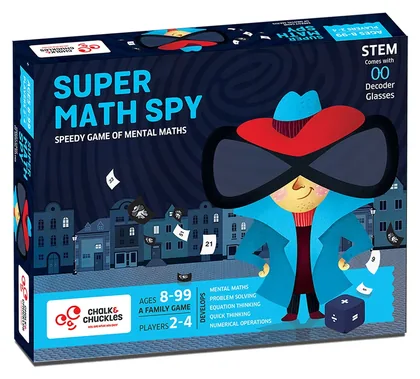
Super Math Spy
Race to build an equation that hits your mission number
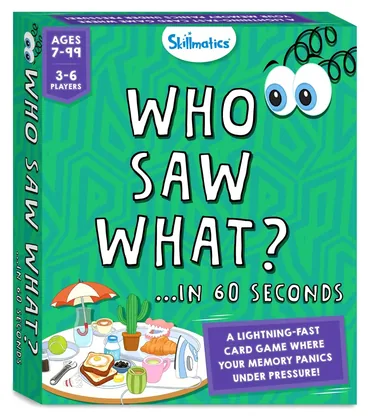
Who Saw What? in 60 Seconds
Study a busy picture for 60 seconds, then shout what you saw
Perfection
Race the clock, or a friend, before the shape tray pops
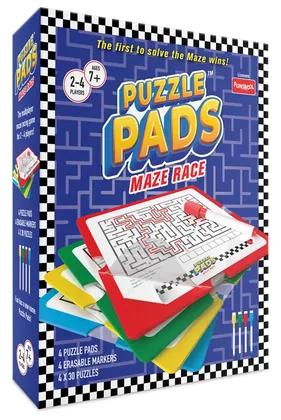
Puzzlepads Maze Race
Race to solve the same maze first with erasable markers
Questions people ask about Jiggle
How do you play Jiggle?
Put a picture card in the clockwork centrepiece and wind it up, and the card starts to turn. Each player copies their own side of the card on a tray using their coloured tiles. The first to shout 'Jiggle!' with a correct picture wins, but a wrong call loses.
Can more than two play Jiggle?
The game is for two sides, blue and red. Funskool says 2 players, and the rules let players or teams take a colour, so four children can play as two pairs.
Does Jiggle need batteries?
The rules describe a clockwork centrepiece that you wind up by turning its knob, and neither the rules nor Funskool's page mentions batteries. The number of turns sets how long the picture keeps spinning.
What age is Jiggle suitable for?
Funskool says 5 years and up. The easier picture cards suit five-year-olds, and older children can make it harder by winding the knob fewer times.
Who makes Jiggle?
Funskool makes and distributes it in India under licence from Seven Towns Ltd, the licensor that is also behind Funskool's Triple Cross and Heads or Tails.
Game facts
- Publisher
- Funskool, under licence from Seven Towns Ltd
- In India
- Funskool (India) Ltd, Chennai, which makes and distributes it under licence from Seven Towns Ltd
- Players
- 2
- Language
- No reading – Nothing to read during play: the puzzles are pictures and the tiles are colour-coded. The one-page rules sheet is in English.
Sources & photo creditsThe references behind this guide.
Facts on this page come from the publisher, the Indian maker or distributor, and the sources below. Photos are credited under each one.