

- Set-up
- About 5 min
- Reading
- Little
The quick verdict
Full verdict ↓Great for A regular group of exactly four: family, friends or a mahjong circle
Think twice if You rarely have exactly four players: the box is made for four
How we rate it
Learning curve. The basic idea, four sets and a pair, is quick to grasp, but claiming discards, the honours and bonus cards and the scoring take a few games to settle in. That puts it at 3 on our scale, beside Catan.
Luck & skill. The cards you draw matter a lot in any one hand, but over four rounds, players who plan their hand, read the discards and know when to change course win more often.
Interaction. You play your own hidden hand, but every discard can be grabbed by someone else, so you watch what others throw away and avoid feeding the player who is close to winning.
Set-up. Shuffle the 144 cards, throw the dice and, in classic rules, deal 13 cards each (the dealer takes 14); a few minutes, with no wall of tiles to build.
Reading. The cards use numbers and symbols; only the instruction guide needs reading, and it is in English.
Learning curve: 1 = UNO or Connect 4; 3 = Catan; 5 = a heavy strategy game. These describe the experience, not an overall score.
Is Mahjong Go! right for you?
Great if
- A regular group of exactly four: family, friends or a mahjong circle
- Beginners curious about the mahjong revival in Indian cities who want to learn at home first
- Holidays and trips: a box of cards is lighter and quieter than a case of tiles
- Rummy and Rummikub players ready for a deeper game of sets
Skip it if
- You rarely have exactly four players: the box is made for four
- You love the look, weight and clack of real tiles
- You want a quick game: Gouda puts a full game of four Wind rounds at 60 to 90 minutes
How Mahjong Go! plays
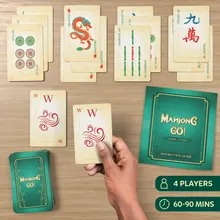
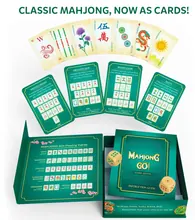
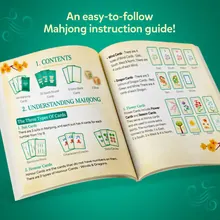
The deck: the 144 mahjong cards follow the standard mahjong set. There are three suits, Dots, Bamboos and Cracks, each numbered 1 to 9 with four copies of every card; four copies each of the East, South, West and North winds and of the Red, Green and White dragons, which mahjong calls honours; and eight flower and season cards that count as bonuses. The box also holds 6 blank cards and 25 South Round cards. Each South Round card shows a special winning hand, such as Dragon's Run (a run from 1 to 9 in one suit, one of each dragon and a pair of winds) or All Pairs (seven pairs in one suit, with no honours); going by the name, they belong to the South round, and the guide in the box explains how they are used.
- Time to teach: about 30 minutes.
- Reading and language: Little reading during play: the cards are picture cards (Dots, Bamboos and Cracks numbered 1 to 9, plus winds, dragons, flowers and seasons), and Gouda's pictures suggest the suit names are printed on them in English. The instruction guide is in English, and a first game goes faster if one player reads it beforehand.
Mahjong Go! Easy to Learn. Quick to Play. Ready to Go. · Gouda Games India · Official
If this creator doesn’t allow embedded playback, watch on YouTube ↗.
A turn, step by step
- 1Draw
Take a card, so you hold one more than your usual 13.
- 2Discard
Throw one card away face up. Anyone may claim it to finish three or four of a kind; only the next player may take it for a run.
- 3Win
Complete a hand of four sets and a pair, 14 cards in all, and call 'Mahjong!'. A full game runs over four Wind rounds.
The full explanation: how a game of Mahjong Go! goes
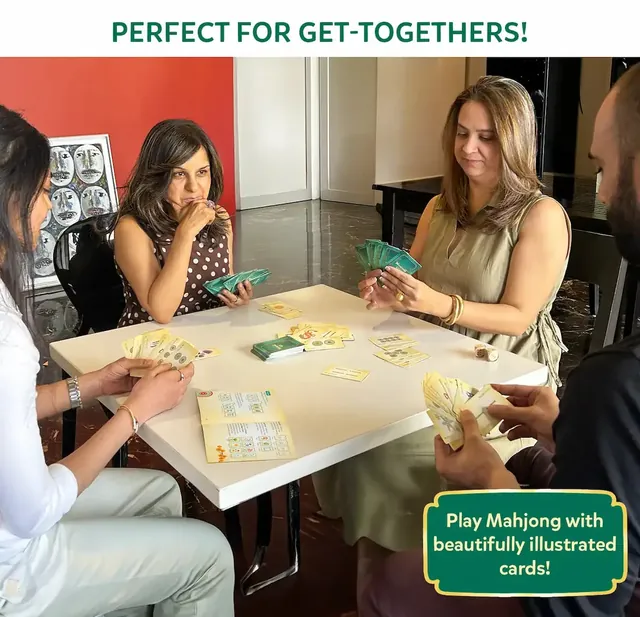
A turn: in classic mahjong, which Gouda says Mahjong Go! follows, each player starts with 13 cards, kept hidden. On your turn you take a card and then throw one away face up. Any player may grab that discard to finish three or four of a kind, but only the player whose turn comes next may take it to finish a run, such as 4-5-6 of Bamboos. A set made with a claimed card is laid face up.
Winning a hand: a winning hand has 14 cards, made of four sets and one pair. For example: 2-3-4 of Dots, three East winds, three 7s of Bamboos, 5-6-7 of Cracks and a pair of Red dragons. The first to complete one calls 'Mahjong!' and wins the hand. Flower and season cards are put aside when you draw them and replaced with a fresh card, adding bonus points. How hands score depends on the rules you play, so follow Gouda's guide.
A full game: Gouda's guide takes you through four Wind rounds, East, South, West and North, which the maker says bring new twists as you go, and puts a full game at 60 to 90 minutes. In classic mahjong the dice are thrown at the start of each hand to decide where the deal begins. For a shorter evening, you could agree to play just the East round.
Mahjong and Rummikub: both are about sets and runs, but they play very differently. In Rummikub you lay sets on the open table, anyone can rearrange them, and you win by emptying your rack. In mahjong your hand stays hidden until you win, nobody touches anyone else's sets, and watching what others throw away matters as much as your own cards. Mahjong also adds honours, bonus cards and a game played over rounds.
What's in the box
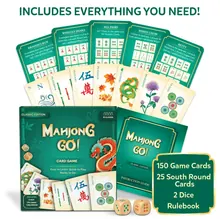
- 144Mahjong cards
the standard set: Dots, Bamboos and Cracks numbered 1 to 9 (four of each), four each of the four winds and three dragons, and 8 flower and season bonus cards - 25South Round cards
each shows a special winning hand, such as Dragon's Run, Wriggly Snake or All Pairs - 6Blank cards
- 2Dice
- 1Instruction guide
Box: 18.5 × 16.5 × 5.5 cm, 0.82 kg. Handy to know for gifting and travel.
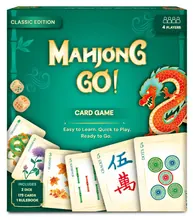
Gouda's box front says 175 cards, 2 dice and 1 rulebook, and a maker picture lists 150 game cards, 25 South Round cards, 2 dice and a rulebook; the guide pictured on the maker's page mentions 6 extra blank cards (144 + 6 = 150). The split of the 144 cards is the standard mahjong set and matches the card types in the maker's pictures; we could not count them. The maker doesn't say what the blank cards are for.
Where to buy
How to make sure you get a genuine copyEditions and the details worth checking.
What reviewers and players say
We found no independent reviews, forum threads or videos about Mahjong Go!, which Gouda launched in early 2026, so this rests on the maker's description and pictures and on what mahjong is known for. Mahjong itself is a 19th-century Chinese game with a long following, and Indian newspapers in 2025 described a revival in Delhi, Mumbai and Bengaluru. On paper, Mahjong Go! is the full classic deck in card form, with a guide for four Wind rounds, which should suit beginners and travellers. Players who love tiles may miss them, and the 25 South Round cards, which show special winning hands, are explained only in the printed guide.
What people love
- The full standard mahjong set in a box of cards that is light enough to take on holiday
- Comes with an English guide for four Wind rounds, aimed at beginners
- No wall of tiles to build, so a hand starts faster
- Made in India by an Indian brand
Common complaints
- Strictly for four players
- Cards lack the weight and feel of tiles that many mahjong players enjoy
- The scoring and the South Round special hands are explained only in the printed guide
5 research sources
- Reference Mahjong Go! product page and FAQ (Gouda Games, 2026) · Gouda Games
- Reference Mahjong Go! Easy to Learn. Quick to Play. Ready to Go. (Gouda Games India, April 2026) · YouTube
- Reference Mahjong (Wikipedia) · Wikipedia
- Reference Mahjong: stylish comeback redefining leisure across Indian cities (Anjali Kochhar, September 2025) · Free Press Journal
- Reference Mahjong in Delhi (Udit Hinduja, August 2025) · ThePrint
Summarised in our own words from the sources above. We don't use Amazon reviews or ratings.
More like Mahjong Go!
Which game is the best fit?
Our picks if Mahjong Go! isn't quite right.
Swipe to compare every game
| Compare the games.The details that make a difference. |
YOU’RE VIEWING
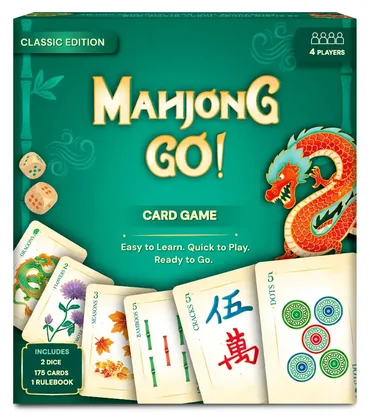 Mahjong Go! |
ANOTHER WAY TO PLAY
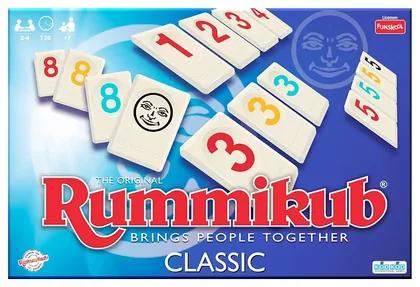 Rummikub |
ANOTHER WAY TO PLAY
 Phase 10 |
ANOTHER WAY TO PLAY
 Azul |
|---|---|---|---|---|
| Why consider it | This game Classic four-player mahjong, played with cards instead of tiles | A different fit Tile rummy: sets and runs again, but on an open table that anyone can rearrange | A different fit A lighter rummy-style card game of sets and runs for the whole family | A different fit A calm tile game for 2 to 4 where you collect matching pieces to build patterns |
| Players | 4 | 2–4 | 2–6 | 2–4 |
| Best with | 4 | 3-4 | 3-5 | 2-4 |
| Play time | 60–90 min | 20–60 min | 45–90 min | 30–45 min |
| Age | 10+ | 7+ | 7+ | 8+ |
| Rules | Medium | Easy | Easy | Easy |
| Indian edition | Available | Available | Available | Available |
| On this page | Explore Rummikub | Explore Phase 10 | Explore Azul |
More from Gouda Games
Another way into their collection.
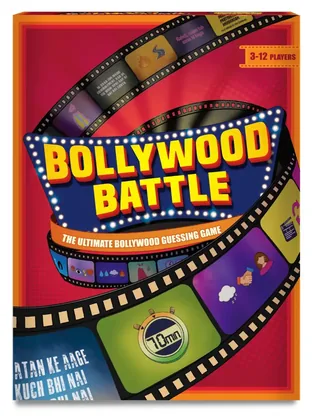
Bollywood Battle
Guess the film, song or star before anyone else does
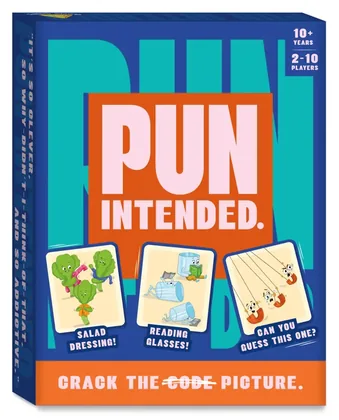
Pun Intended
Crack the picture pun before anyone else shouts it out
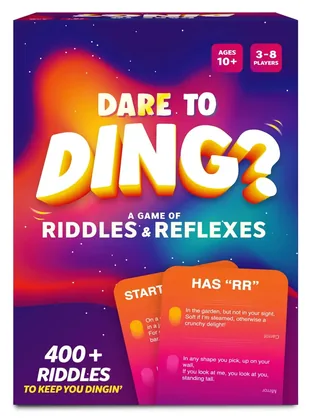
Dare to Ding
Crack the riddle, slam the dinger, keep the card
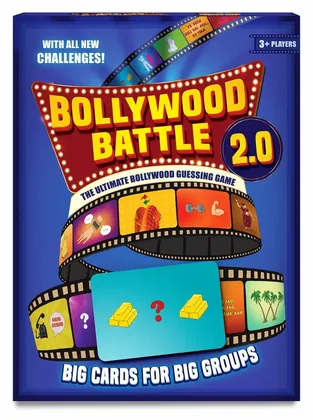
Bollywood Battle 2.0
140 new Bollywood cards: name the film, song or star first

Bollywood Beats
Spin a decade, act out a Bollywood song, beat the clock
More set-collecting games
Different games. A familiar kind of fun.
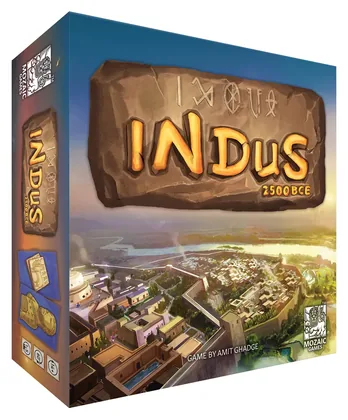
Indus 2500 BCE
Draw your own Indus Valley city and protect it from calamities

Furry Pawlitics
Juggle squabbling pets in a busy vet clinic to become Best Doctor

Wingspan
Calm card game about birds where every new bird boosts your turns.

Pandemic
Work together to cure four diseases before time runs out

7 Wonders
Build an ancient city by picking one card and passing the rest.
Also playable with two
For game nights with two players.
Indus 2500 BCE
Draw your own Indus Valley city and protect it from calamities
Wingspan
Calm card game about birds where every new bird boosts your turns.
Pandemic
Work together to cure four diseases before time runs out
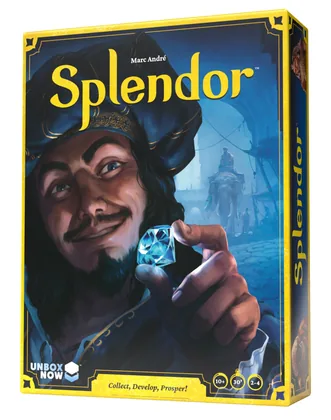
Splendor
A quick gem-trading race where every card makes the next easier.
Azul
Draft colourful tiles and build the best-scoring palace wall
Questions people ask about Mahjong Go!
How is Mahjong Go! different from a tile mahjong set?
It swaps the tiles for cards: the 144 standard mahjong pieces become 144 cards, and the box adds 25 South Round cards, 6 blank cards, 2 dice and a guide. Gouda says it keeps the usual mahjong rules and sets; the cards are lighter, quieter and easier to carry than tiles.
Which mahjong rules does Mahjong Go! use?
Gouda calls it the Classic Edition and says it follows the familiar mahjong rules, played over four Wind rounds; its website doesn't name a rule set or explain the scoring. Many Indian mahjong groups play their own variations, and because the deck is the standard 144-piece set you can use the rules your group already knows.
Is mahjong like rummy or Rummikub?
It is a cousin: you collect sets and runs, as in rummy. But a winning mahjong hand is exactly four sets and a pair, your hand stays hidden, you can grab another player's discard to finish a set, and nobody rearranges the table as in Rummikub.
Can two or three people play Mahjong Go!?
The maker says 4 players, as in most traditional mahjong, and its website gives no rules for fewer. Three-player mahjong variants exist, but you would need rules from elsewhere.
What age is Mahjong Go! for?
Gouda's shop says 10 and up, while some listings say 15 and up. Children of 10 or more can learn it with an adult at the table, but expect a first full game to take a while.
Game facts
- Publisher
- Gouda Games (Grasper Global Pvt Limited, Mumbai, India)
- In India
- Grasper Global Pvt Limited, Mumbai, which Gouda Games' product page names as the manufacturer
- First published
- 2026
- Players
- 4
- Barcode
- 8904279517806
- Language
- Little reading – Little reading during play: the cards are picture cards (Dots, Bamboos and Cracks numbered 1 to 9, plus winds, dragons, flowers and seasons), and Gouda's pictures suggest the suit names are printed on them in English. The instruction guide is in English, and a first game goes faster if one player reads it beforehand.
- Box size and weight
- 18.5 × 16.5 × 5.5 cm, 0.82 kg
Sources & photo creditsThe references behind this guide.
Facts on this page come from the publisher, the Indian maker or distributor, and the sources below. Photos are credited under each one.
- Gouda Games - Mahjong Go! (contents, players, age, FAQ, box size, manufacturer, country of origin)
- Gouda Games India (YouTube) - Mahjong Go! Easy to Learn. Quick to Play. Ready to Go.
- Wikipedia - Mahjong (history, the standard set, melds and the winning hand)
- Free Press Journal - Mahjong: stylish comeback redefining leisure across Indian cities (Anjali Kochhar, September 2025)
- ThePrint - Mahjong among Delhi's players (Udit Hinduja, August 2025)
- Skillmatics - Contact (Grasper Global Private Limited)