
- Set-up
- Under a minute
- Reading
- Some
The quick verdict
Full verdict ↓Great for Children of about 9 to 13 who like science and ask 'why' about everything
Think twice if Your children are under 9: the original Smart Sticks Scavenger Hunt, with simple describing words, suits them better
How we rate it
Learning curve. The rules are as simple as the original's, but many prompts need real science knowledge, so it sits at 2 on our scale. The clues and definitions on the sticks help.
Luck & skill. Which prompt you draw is luck, but knowing what an alloy or a thermal insulator is decides most rounds, along with quick eyes.
Interaction. Everyone races for the same prompt at once, and the group often has to agree whether an example really counts.
Set-up. Agree the play area and the no-go shelves (medicines, cleaning products, matches), then put the tube and spinner in the middle.
Reading. Short English prompts that use science words; each stick has a definition on the back.
Learning curve: 1 = UNO or Connect 4; 3 = Catan; 5 = a heavy strategy game. These describe the experience, not an overall score.
Is Smart Sticks STEM Scavenger Hunt right for you?
Great if
- Children of about 9 to 13 who like science and ask 'why' about everything
- Parents and teachers who want school science, such as magnets, mixtures and simple machines, to show up in real life
- Weekends and holidays at home, in a garden or in a park, where there is plenty to find
- A birthday gift for a curious child, from an Indian maker
Skip it if
- Your children are under 9: the original Smart Sticks Scavenger Hunt, with simple describing words, suits them better
- You want a quiet game at the table: everyone runs off to find things
- Your child doesn't enjoy reading English science words and no adult is free to explain them
How Smart Sticks STEM Scavenger Hunt plays
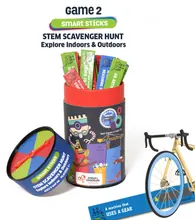
Each of the 75 sticks asks you to find a real example of a science idea, from physics, chemistry, biology, technology and maths. The maker's answer sheet lists prompts such as a thermal insulator, a magnetic object, a simple machine, an acid, a chemical reaction, a non-Newtonian fluid, something you can eat that grows on a creeper, an arthropod and a tessellation pattern.
- Time to teach: about 5 minutes.
- Reading and language: The prompts are short English phrases, but they use real science words such as 'thermal insulator', 'non-Newtonian fluid' or 'arthropod'. Each stick has a definition on the back, and an adult can explain a word in Hindi or your home language. Confident readers of about 9 and up can play on their own.
Chalk and Chuckles Smart Sticks STEM Scavenger Hunt For Kids 8+ · Chalk and Chuckles · Official
If this creator doesn’t allow embedded playback, watch on YouTube ↗.
A turn, step by step
- 1Spin
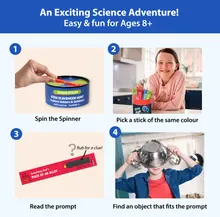
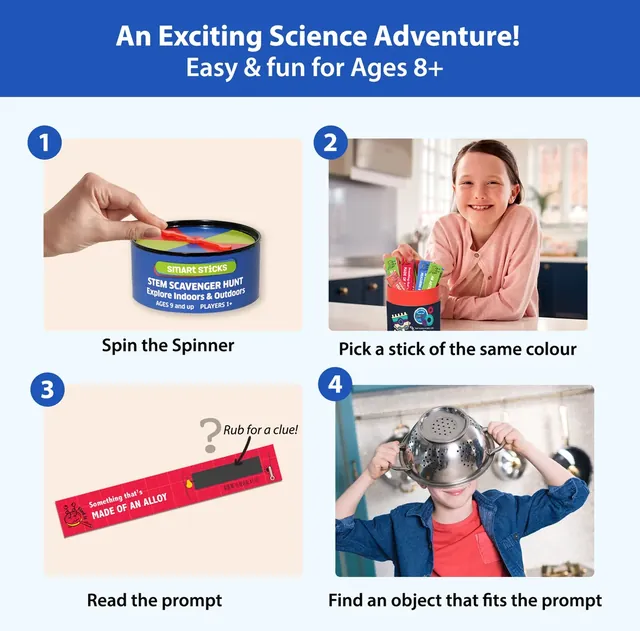
Spin the spinner to choose a colour, then draw a stick of that colour from the tube.
- 2Hunt
Read the prompt, such as 'a thermal insulator', rub the strip for a clue if you need one, and everyone races to find an example.
- 3Win
The first player to find a fitting object wins the stick; the first to collect five sticks wins the game.
The full explanation: how a game of Smart Sticks STEM Scavenger Hunt goes
A turn: spin the spinner to choose a colour and draw a stick of that colour. Read the prompt aloud, and everyone rushes to find an object that fits. The first player to find one wins the stick, and the first to collect five sticks wins the game.
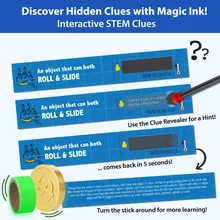
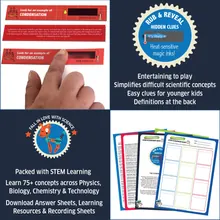
Stuck? Each prompt has a black strip printed in heat-sensitive ink: rub it with a warm finger, or the Rub-a-Clue pencil shown in the maker's picture, and the ink clears to show a clue. Turn the stick over for a definition, so children learn the idea even when they can't find an example.
Chalk and Chuckles' product page links a free 8-page PDF: a recording sheet for writing or drawing what you found, example answers for the prompts, and a page on how the rub-to-reveal ink works. The maker says its answers are not complete, and a few are loose (melting ice is listed under evaporation), so treat the sheet as ideas, not a marking key.
Some prompts send children towards the kitchen, the bathroom cabinet or the balcony: an acid, an antiseptic, something highly flammable. Agree first that pointing to or naming an object counts, and that nobody opens bottles, medicines, cleaning products or matches. A garden or park gives more answers for the nature prompts, such as a sign that an animal has passed by, and with mixed ages, pair a younger child with an older one.
What's in the box
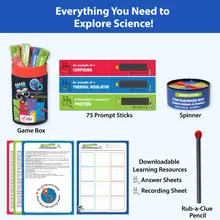
- 75Prompt sticks
each has a science prompt with a rub-to-reveal clue, and a definition on the back - 1Cylindrical tube with spinner
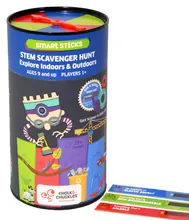
about 18 x 9.5 x 9.5 cm; holds the sticks, and the spinner picks which colour of stick to draw - 1Rub-a-Clue pencil
for revealing the hidden clues
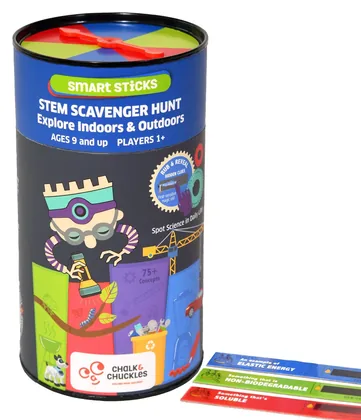
Box: 18 × 9.5 × 9.5 cm, 0.46 kg. Handy to know for gifting and travel.
Contents are from Chalk and Chuckles' product page for the box we link (item CCPPL065): 75 prompt sticks and a cylindrical tube with a spinner. The recording and answer sheets are not in the tube: they are a free 8-page PDF linked from the maker's product page ('Download Recording & Answer Sheets and more'). The rules are on the same page. The maker's 'Everything you need' picture also shows a Rub-a-Clue pencil for the hidden clues, although its written contents list leaves it out.
Where to buy
How to make sure you get a genuine copyEditions and the details worth checking.
What reviewers and players say
We found no independent reviews, teacher or parent blogs, or forum threads about Smart Sticks STEM Scavenger Hunt; what is online is Chalk and Chuckles' own information and store listings. On paper it is a clever way to take school science out of the textbook: each prompt asks for a real example, a hidden clue helps when children are stuck, and the definition on the back teaches the word either way. The maker's free answer sheet covers the prompts but is loose in places, so a parent who knows some science helps. It works best with children who already read English comfortably.
What people love
- Turns science words from school into a hunt around the house, garden or park
- Rub-to-reveal clues and definitions on the back mean nobody stays stuck for long
- A free recording sheet and answer sheet from the maker, handy for teachers and for solo play
- A clear winning rule: the first to five sticks wins
Common complaints
- Some prompts are hard for 8-year-olds without an adult to explain them
- The maker's answer sheet is loose in places and uses a few examples from abroad, such as a US nickel
- No independent reviews yet, so it is hard to say how well it holds children's interest
5 research sources
- Reference Smart Sticks- STEM Scavenger Hunt (Chalk and Chuckles product page, January 2023) · Chalk and Chuckles
- Reference STEM Scavenger Hunt recording and answer sheets (Chalk and Chuckles PDF, 2022) · Chalk and Chuckles
- Reference Chalk and Chuckles Smart Sticks STEM Scavenger Hunt For Kids 8+ (Chalk and Chuckles, March 2023) · YouTube (Chalk and Chuckles)
- Reference STEM Combo (Ages 8+) (Chalk and Chuckles product page, October 2024) · Chalk and Chuckles
- Reference Contact: registered office and factory address (Chalk and Chuckles) · Chalk and Chuckles
Summarised in our own words from the sources above. We don't use Amazon reviews or ratings.
More like Smart Sticks STEM Scavenger Hunt
Which game is the best fit?
Our picks if Smart Sticks STEM Scavenger Hunt isn't quite right.
Swipe to compare every game
| Compare the games.The details that make a difference. |
YOU’RE VIEWING
 Smart Sticks STEM Scavenger Hunt |
ANOTHER WAY TO PLAY
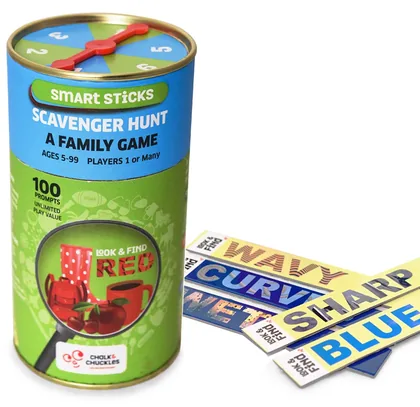 Smart Sticks Scavenger Hunt |
ANOTHER WAY TO PLAY
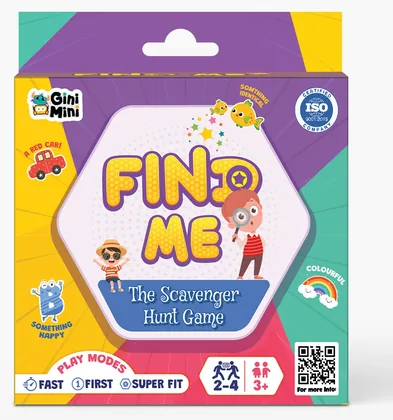 Find Me |
ANOTHER WAY TO PLAY
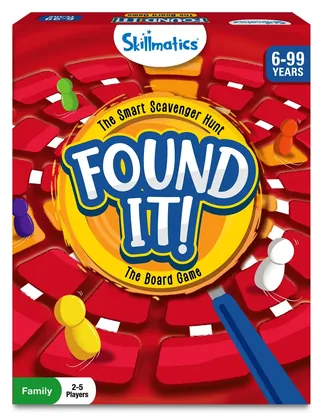 Found It! Board Game |
|---|---|---|---|---|
| Why consider it | This game Race to find real examples of science around the house | A different fit The original hunt for ages 5 and up, with simple describing words like 'red' or 'hard' | A different fit A simpler scavenger hunt for 3 and up: find something that gives light, or something you can count | A different fit Skillmatics' scavenger hunt board game from 6: find one object that fits several clues |
| Players | 1+ | 1+ | 2–4 | 2–5 |
| Best with | 2-4 | 2-4 | 2-4 | 3-5 |
| Play time | 15–30 min | 10–30 min | 10–30 min | 15–20 min |
| Age | 9+ | 5+ | 3+ | 6+ |
| Rules | Easy | Easy | Easy | Easy |
| Indian edition | Available | Available | Available | Available |
| On this page | Explore Smart Sticks Scavenger Hunt | Explore Find Me | Explore Found It! Board Game |
More from Chalk and Chuckles
Another way into their collection.
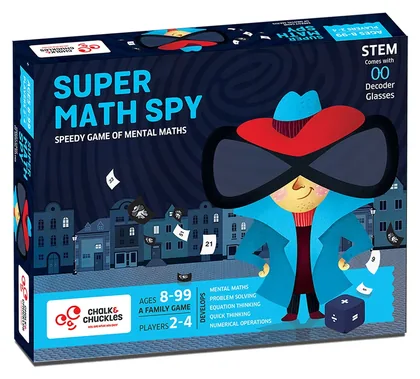
Super Math Spy
Race to build an equation that hits your mission number
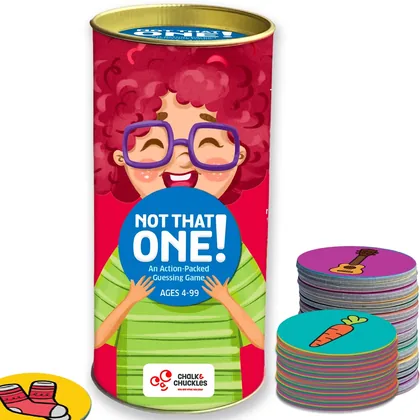
Not That One
Ask yes-or-no questions, grab tokens, and dodge the secret one
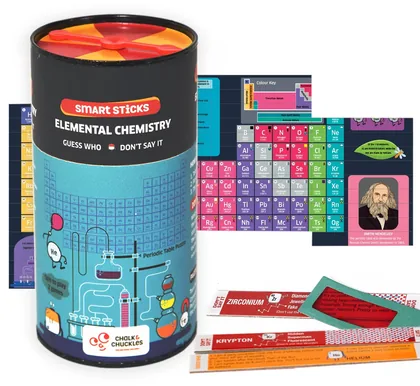
Smart Sticks Elemental Chemistry
Spin, pick a stick and race to name the element
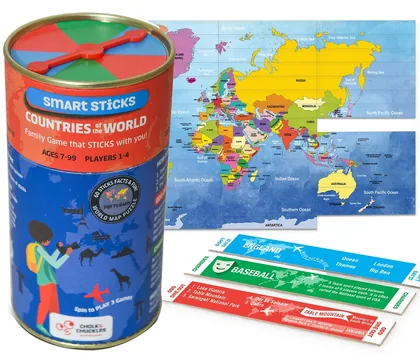
Smart Sticks Countries of the World
Act, describe and spot the odd one out across 60 countries
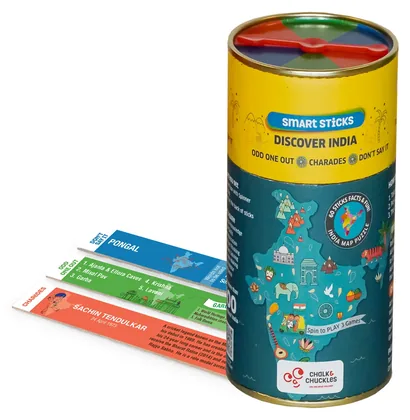
Smart Sticks Discover India
Charades, clues and odd-one-out rounds about India, plus a map puzzle
More speed games
Different games. A familiar kind of fun.

Taboo
Get your team to guess the word without saying the obvious ones
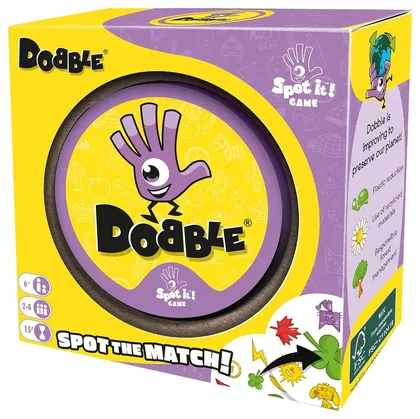
Dobble
Race to spot the one picture any two cards share
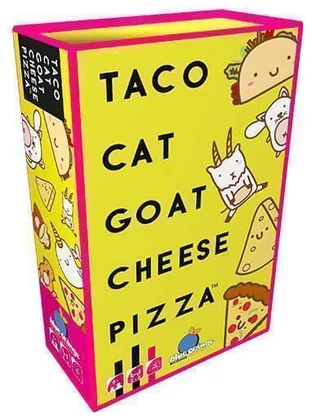
Taco Cat Goat Cheese Pizza
Say the word, watch the card, slap the pile before everyone else
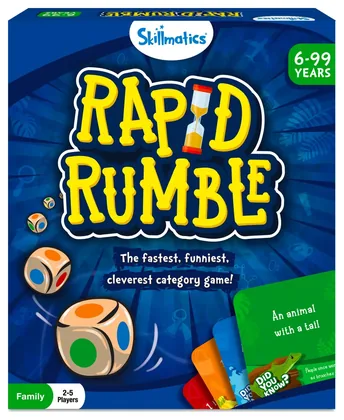
Rapid Rumble
Roll, flip a category, and shout words before the timer ends.
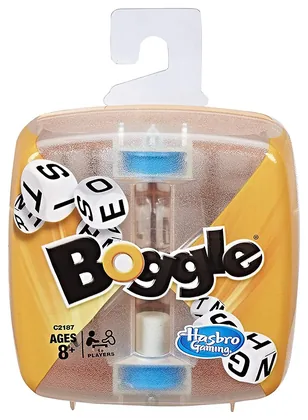
Boggle
Shake the letter cubes and find words before time runs out
Questions people ask about Smart Sticks STEM Scavenger Hunt
How do you play Smart Sticks STEM Scavenger Hunt?
Spin the spinner for a colour, draw a stick of that colour and read the prompt, such as 'a magnetic object'. Everyone races to find a real example; the first to find one wins the stick, and the first to collect five sticks wins.
Where are the STEM Scavenger Hunt answer sheets?
They are a free PDF linked from Chalk and Chuckles' product page for the game ('Download Recording & Answer Sheets and more'), not a printed sheet in the tube. Its 8 pages hold a recording sheet, example answers for the prompts, and a page explaining the rub-to-reveal ink.
What age is STEM Scavenger Hunt for?
The tube says 9 and up, while Chalk and Chuckles' product page says 8 to 14 and one of its pictures 8 and up. The prompts use real science words, such as 'non-Newtonian fluid' and 'arthropod', so children of about 9 to 13 can play on their own, and an 8-year-old will need an adult to explain some of them.
What is the difference between STEM Scavenger Hunt and the original Smart Sticks Scavenger Hunt?
The original, for ages 5 and up, has 100 simple describing words such as 'red' or 'hard' and three loose ways to play. STEM Scavenger Hunt, for ages 9 and up, has 75 science prompts with rub-to-reveal clues and definitions on the back, and the first to win five sticks wins.
How does the rub-to-reveal clue work?
The clue is hidden under a black strip printed in thermochromic ink, which turns clear when it warms up. Rub it with a finger and the clue shows through; if it won't appear, rub your fingertips together first, as the maker suggests.
Game facts
- Publisher
- Chalk and Chuckles (Chalk and Chuckles Products Pvt Ltd, New Delhi, India)
- In India
- Chalk and Chuckles, an Indian company (registered office in New Delhi, factory in Kundli, Haryana), which publishes and sells the game in India
- First published
- 2023
- Players
- 1 or more players, with no upper limit from the maker (the tube says 'Players 1+'). The race needs at least two; one child can hunt alone and note finds on the maker's free recording sheet.
- Language
- Some English – The prompts are short English phrases, but they use real science words such as 'thermal insulator', 'non-Newtonian fluid' or 'arthropod'. Each stick has a definition on the back, and an adult can explain a word in Hindi or your home language. Confident readers of about 9 and up can play on their own.
- Box size and weight
- 18 × 9.5 × 9.5 cm, 0.46 kg
Sources & photo creditsThe references behind this guide.
Facts on this page come from the publisher, the Indian maker or distributor, and the sources below. Photos are credited under each one.
- Chalk and Chuckles - Smart Sticks- STEM Scavenger Hunt (how to play, contents, size, ages)
- Chalk and Chuckles - Smart Sticks- STEM Scavenger Hunt product data (item CCPPL065, weight)
- Chalk and Chuckles - STEM Scavenger Hunt recording and answer sheets (PDF, 8 pages)
- Chalk and Chuckles - STEM Combo (Super Math Spy, Elemental Chemistry and STEM Scavenger Hunt)
- Chalk and Chuckles - Contact (registered office and factory address)
- Chalk and Chuckles Smart Sticks STEM Scavenger Hunt For Kids 8+ (maker's video, March 2023)
- Chalk and Chuckles - Smart Sticks- Scavenger Hunt (the younger-children version, for comparison)