
- Set-up
- About 2 min
- Reading
- None
The quick verdict
Full verdict ↓Great for Pre-schoolers of 3 to 5 who need a first game with big cards and no reading
Think twice if Your children are 7 or older: with 30 cards the memory challenge is small, and they will soon know every card
How we rate it
Learning curve. Roll, look for the food, feed the animal. A three-year-old can join in with an adult and a five-year-old plays alone, so it sits at 1 on our scale with UNO and Connect 4.
Luck & skill. The dice decide which animal and how many tries, and the first few cards are pure luck. After that, remembering where the foods are helps a lot.
Interaction. Everyone watches each card that is turned, and the act-and-sound cards draw the whole group in. In the team game, teammates talk to each other all the time.
Set-up. Stand up the four animals, mix the food and act-and-sound cards and lay them face down on a rug or clear floor.
Reading. Animals, foods and actions are all pictures, colour-coded for the youngest; only the play guide is in English.
Learning curve: 1 = UNO or Connect 4; 3 = Catan; 5 = a heavy strategy game. These describe the experience, not an overall score.
Is Hungry Four right for you?
Great if
- Pre-schoolers of 3 to 5 who need a first game with big cards and no reading
- Birthday parties and playdates: the eye-mask team game keeps four to six children busy
- Rainy afternoons when children need to move and make noise, not just sit at a table
- Parents who want memory, turn-taking and listening practice that feels like play
Skip it if
- Your children are 7 or older: with 30 cards the memory challenge is small, and they will soon know every card
- You want a quiet game: the act-and-sound cards mean roaring, swinging and lots of giggling
- You have no clear floor space for the big cards and the blindfold game
How Hungry Four plays
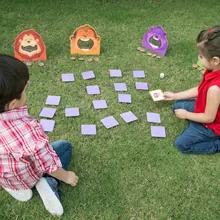
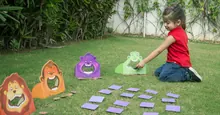
Stand up the four cardboard animals, a monkey, a lion, a bear and a crocodile, where everyone can reach them. Mix the 20 food cards with the 10 act-and-sound cards and lay them all face down. The cards are big 7 cm squares made for small hands, and the maker calls them floor cards, so a rug or a clear patch of floor works well.
- Time to teach: about 3 minutes.
- Reading and language: Nothing needs reading: the animals and foods are pictures, and the maker says the cards are colour-coded for younger children. The act-and-sound cards ask children to move or sound like an animal, and the team game runs on spoken directions, so it works in Hindi, Tamil or any home language. Only the play guide is in English.
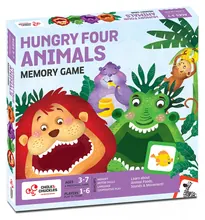
Chalk and Chuckles Hungry Four, Memory Game, 3-7 Years, Preschool Educational and Movement Activity · Chalk and Chuckles · Official
Choose a video · Watch right here
If this creator doesn’t allow embedded playback, watch on YouTube ↗.
A turn, step by step
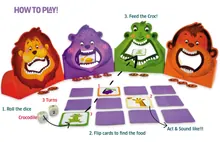
- 1Roll
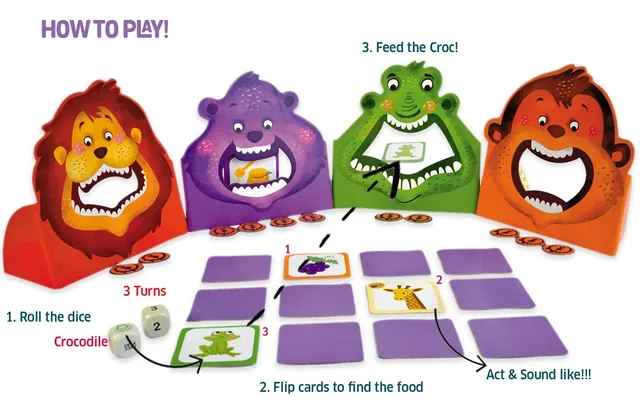
Roll both dice: one picks the hungry animal, the other says how many cards you may turn over.
- 2Flip
Turn cards to find that animal's food. Turn up an act-and-sound card and you act or sound like the animal shown, such as roaring like the lion.
- 3Win
Found the food? Feed the animal and take a feeder token. The first to collect five tokens wins.
The full explanation: how a game of Hungry Four goes
On your turn, roll the two wooden dice. One shows which animal is hungry and the other how many cards you may turn over; the maker's example is the crocodile with three tries. Turn cards one at a time, looking for the crocodile's food. Find it, feed the crocodile and take a feeder token. The foods are colour-coded to their animals, which helps the youngest.
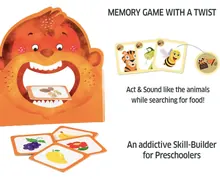
If you turn up an act-and-sound card, you must act or sound like the animal on it: roar like the lion or swing like the monkey. The maker calls these distraction cards, and they get everyone laughing. The first player to collect five feeder tokens wins.
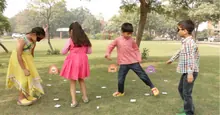
The eye masks are for the team game. With four or more children, split into two teams and put a mask on one player from each team. Teammates call out directions to guide their blindfolded player to the right food card and then to the animal. The first team to reach the animal and feed it takes the feeder token, and the first team to five tokens wins. Clear the floor first and keep an adult close by, as blindfolded children will be moving about.
For parents: with 3-year-olds, start with the maker's simple matching game, giving each animal its food with the cards face up, and run the dice and turns yourself. By 5 most children can play the full game on their own, and a child can also play alone. The wooden dice and tokens are small, so keep them away from babies.
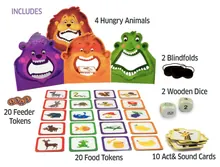
What's in the box
- 4Cardboard animal stands
a monkey, a lion, a bear and a crocodile - 20Food cards
jumbo 7 x 7 cm cards, colour-coded to the animals - 10Act-and-sound cards
turn one up and you act or sound like the animal on it - 20Feeder tokens
collect five to win - 2Wooden dice
one picks the animal, the other the number of tries - 2Eye masks
for the team game, one for each team's blindfolded player - 1Play guide
Box: 28 × 28 × 5.5 cm, 0.84 kg. Handy to know for gifting and travel.
Contents are from Chalk and Chuckles' product page and its 'Includes' picture for the box we link (item CCPPL021, barcode 8906045560214). The picture calls the eye masks 'blindfolds' and the food cards 'food tokens'. The US distributor's listing gives the same parts. There is one edition.
Where to buy
How to make sure you get a genuine copyEditions and the details worth checking.
What reviewers and players say
We found no independent reviews, parenting blogs or forum threads about Hungry Four that we could cite; what is online comes from Chalk and Chuckles itself, store listings and family videos with young children on camera. On paper it takes the classic memory game and gets pre-schoolers off the sofa: big cards on the floor, dice that set the challenge, and act-and-sound cards that turn a miss into a giggle. The blindfolded team game makes it a party game too, though it needs space and an adult watching. The memory challenge is small, so it suits 3 to 6 year olds best.
What people love
- Big 7 cm cards and stand-up animals that are easy for small hands
- No reading at all, with colour-coded foods for the youngest
- Act-and-sound cards that get the whole group laughing and moving
- Several ways to play: alone, as a race, as a team game, or as simple matching for 3-year-olds
Common complaints
- Children of 7 and up will soon know every card
- The blindfold team game needs a clear floor and an adult close by
- No independent reviews yet, so it is hard to say how long it keeps children interested
5 research sources
- Reference Hungry Four (Chalk and Chuckles product page, July 2022) · Chalk and Chuckles
- Reference Chalk and Chuckles Hungry Four, Memory Game, 3-7 Years (Chalk and Chuckles, October 2021) · YouTube (Chalk and Chuckles)
- Reference Chalk and Chuckles Hungry Four, Memory Game For Kids-Unboxing (Chalk and Chuckles, October 2021) · YouTube (Chalk and Chuckles)
- Reference Chalk & Chuckles Hungrrrry Four Game (US distributor listing, January 2025) · Safari Ltd
- Reference Contact: registered office and factory address (Chalk and Chuckles) · Chalk and Chuckles
Summarised in our own words from the sources above. We don't use Amazon reviews or ratings.
More like Hungry Four
Which game is the best fit?
Our picks if Hungry Four isn't quite right.
Swipe to compare every game
| Compare the games.The details that make a difference. |
YOU’RE VIEWING
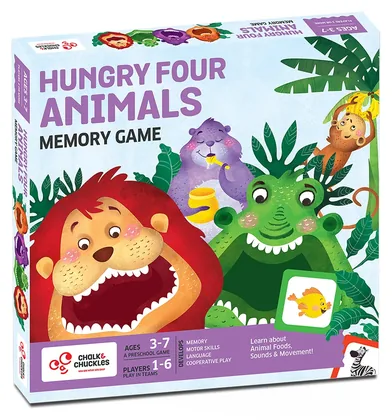 Hungry Four |
ANOTHER WAY TO PLAY
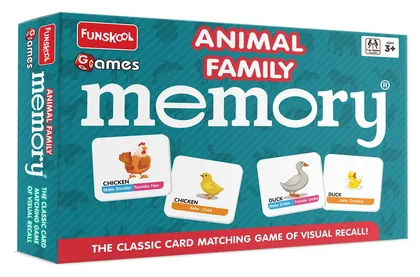 Memory Animal Family |
ANOTHER WAY TO PLAY
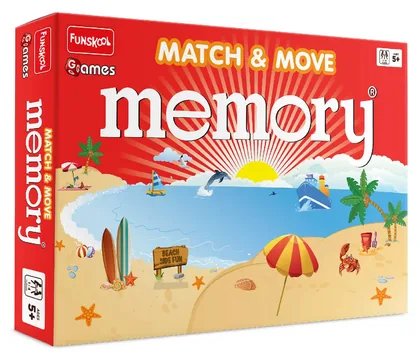 Match & Move Memory |
ANOTHER WAY TO PLAY
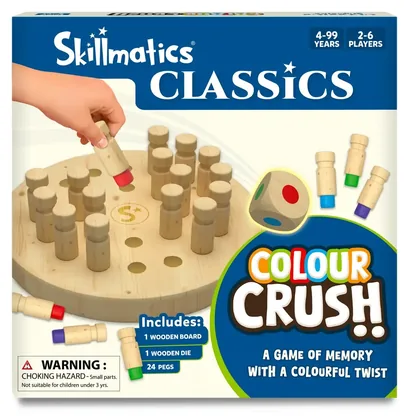 Colour Crush |
|---|---|---|---|---|
| Why consider it | This game Roll a hungry animal, then flip cards to find its food | A different fit Funskool's classic pairs game: match each animal's parents to its baby, from 3 | A different fit Turn up hidden picture cards to race round a board; a step up for 5 to 8 | A different fit The same roll-then-remember idea: roll a colour and lift hidden pegs to find it |
| Players | 1–6 | 1–4 | 1–4 | 2–6 |
| Best with | 2-4 | 2-3 | 2-3 | 2-4 |
| Play time | 10–20 min | 10–20 min | 15–20 min | 10–15 min |
| Age | 3+ | 3+ | 5+ | 4+ |
| Rules | Easy | Easy | Easy | Easy |
| Indian edition | Available | Available | Available | Available |
| On this page | Explore Memory Animal Family | Explore Match & Move Memory | Explore Colour Crush |
More from Chalk and Chuckles
Another way into their collection.
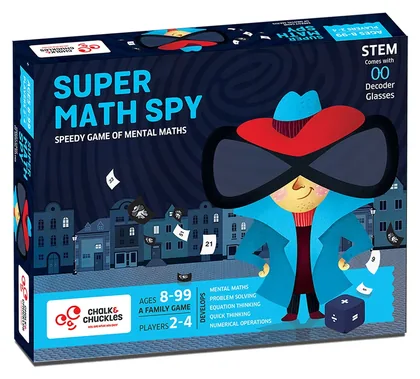
Super Math Spy
Race to build an equation that hits your mission number
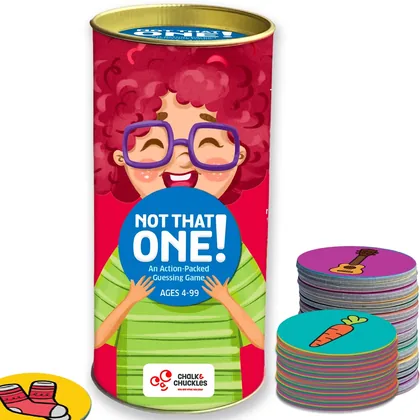
Not That One
Ask yes-or-no questions, grab tokens, and dodge the secret one
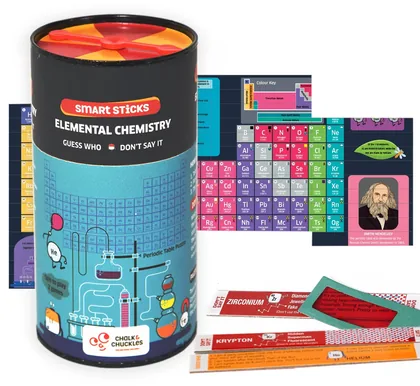
Smart Sticks Elemental Chemistry
Spin, pick a stick and race to name the element
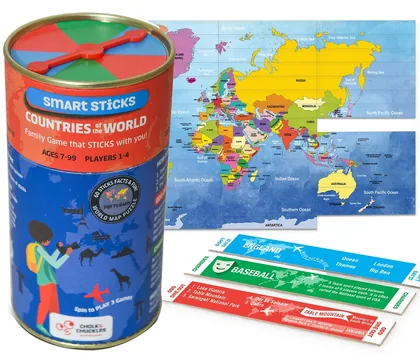
Smart Sticks Countries of the World
Act, describe and spot the odd one out across 60 countries
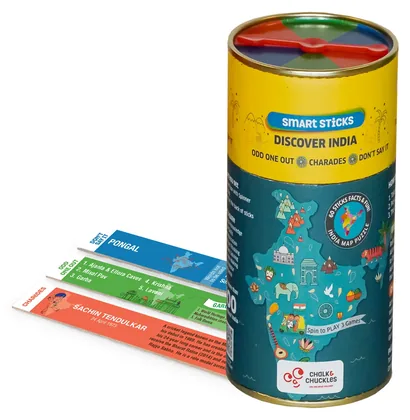
Smart Sticks Discover India
Charades, clues and odd-one-out rounds about India, plus a map puzzle
More memory games
Different games. A familiar kind of fun.
Colour Crush
Roll a colour, lift a hidden peg, and remember the rest
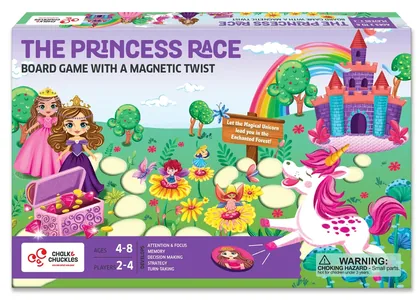
Princess Race
A race to the castle where a magnetic unicorn tests your memory
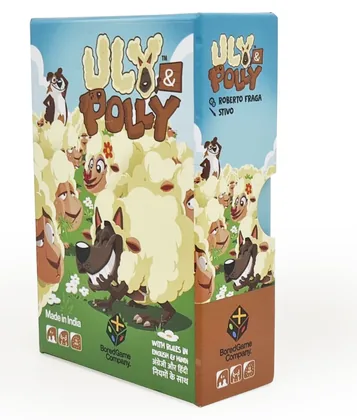
Uly & Polly
Hide the wolf among the sheep, or help the sheepdog find it
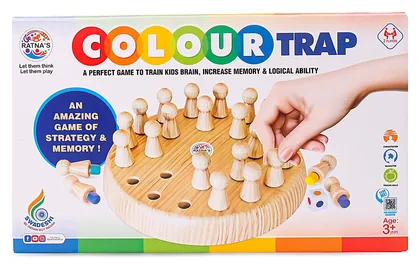
Colour Trap
Roll a colour, then find the hidden pawn that matches it
Match & Move Memory
Remember where each picture hides and race your piece home
Questions people ask about Hungry Four
How do you play Hungry Four?
Roll the two dice to find out which animal is hungry and how many cards you may turn over. Turn cards to find that animal's food, feed it and take a feeder token; the first to five tokens wins. Turn up an act-and-sound card and you act or sound like the animal on it.
What are the eye masks for in Hungry Four?
They are for the team game. One player from each team wears an eye mask, and teammates call out directions to guide them to the right food and then to the animal. Clear the floor and keep an adult close by while children play blindfolded.
What age is Hungry Four for?
Chalk and Chuckles says 3 to 7 years. Three-year-olds can start with the maker's simple matching game and need an adult to run turns; by 7 most children find it too easy.
How many players can play Hungry Four?
The box says 1 to 6. One child can play alone, two to four can race to five tokens, and the team game needs at least four children in two teams. Some listings give other counts, such as 2 to 8.
Is Hungry Four made in India?
It comes from Chalk and Chuckles, an Indian company that lists its own factory in Kundli, Haryana. The maker's page for this game doesn't state the country of origin, so check the box label if it matters to you.
Game facts
- Publisher
- Chalk and Chuckles (Chalk and Chuckles Products Pvt Ltd, New Delhi, India)
- In India
- Chalk and Chuckles, an Indian company (registered office in New Delhi, factory in Kundli, Haryana), which publishes and sells the game in India
- Players
- The box and the maker's page say 1 to 6 players. One child can play alone, two to four can race each other, and the team game needs at least four children in two teams. The maker's video description says 2 to 4 and the listing says 2 to 8.
- Barcode
- 8906045560214
- Language
- No reading – Nothing needs reading: the animals and foods are pictures, and the maker says the cards are colour-coded for younger children. The act-and-sound cards ask children to move or sound like an animal, and the team game runs on spoken directions, so it works in Hindi, Tamil or any home language. Only the play guide is in English.
- Box size and weight
- 28 × 28 × 5.5 cm, 0.84 kg
Sources & photo creditsThe references behind this guide.
Facts on this page come from the publisher, the Indian maker or distributor, and the sources below. Photos are credited under each one.
- Chalk and Chuckles - Hungry Four (how to play, contents, size, ages)
- Chalk and Chuckles - Hungry Four product data (item CCPPL021, barcode, weight)
- Chalk and Chuckles - Contact (registered office and factory address)
- Chalk and Chuckles Hungry Four, Memory Game, 3-7 Years (maker's video, October 2021)
- Chalk and Chuckles Hungry Four, Memory Game For Kids - Unboxing (maker's video, October 2021)
- Safari Ltd - Chalk & Chuckles Hungrrrry Four Game (US distributor listing)