
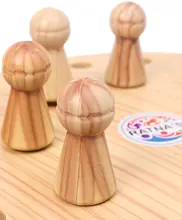
- Set-up
- Under a minute
- Reading
- None
The quick verdict
Full verdict ↓Great for Children of about 3 to 6 who are learning their colours and how to take turns
Think twice if Your child is 7 or older: once memory is good, it soon gets repetitive
How we rate it
Learning curve. Roll, choose a pawn, remember: a 3-year-old can follow it with a grown-up, so it sits with UNO and Connect 4 at 1 on our scale.
Luck & skill. The die picks the colour and the first few choices are guesses; after that, remembering where colours turned up wins more pawns.
Interaction. Nobody can spoil the other player's turn; the only interaction is watching each other's wrong guesses so you remember where each colour is.
Set-up. Push the 24 pawns into the board in any order, trying to remember where the colours go: about a minute.
Reading. Nothing to read during play; a grown-up reads the four lines of rules on the box once.
Learning curve: 1 = UNO or Connect 4; 3 = Catan; 5 = a heavy strategy game. These describe the experience, not an overall score.
Is Colour Trap right for you?
Great if
- Children of about 3 to 6 who are learning their colours and how to take turns
- A quick game a grandparent or older sibling can play with a small child, with nothing to read
- Practising memory and concentration in short bursts
- A return gift for a young child's birthday
Skip it if
- Your child is 7 or older: once memory is good, it soon gets repetitive
- Babies or toddlers who still put things in their mouths are around: the 24 pawns and the die are small pieces
- You want a game for a group: the listing says it is for two players
How Colour Trap plays
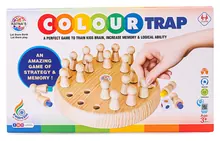
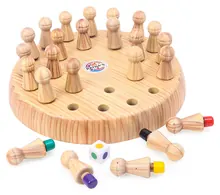
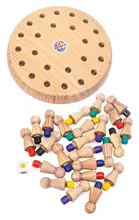
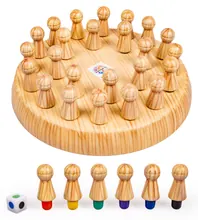
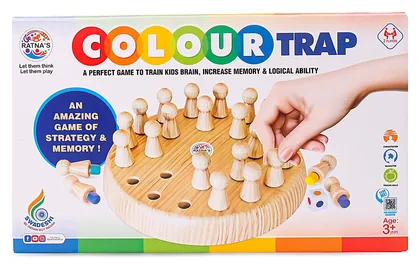
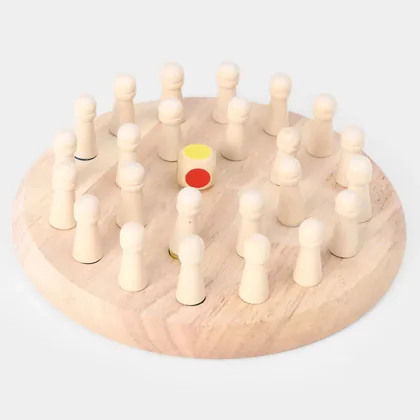
What's in the box: a round plastic board with holes, 24 plastic pawns in different colours and a colour die. Once a pawn sits in its hole its colour is hidden, so from above the pawns all look alike.
- Time to teach: about 2 minutes.
- Reading and language: Nothing to read during play: you only need to know the colours, so it works in Hindi, Gujarati or any language the family speaks. The short rules are printed on the box in English.
A turn, step by step
- 1Roll
Throw the colour die: that is the colour you are hunting for.
- 2Choose
Lift out the pawn you think is hiding that colour, and keep it if you guessed right.
- 3Return
A wrong pawn goes back where it came from, and both players note its colour.
- 4Win
Once the board is empty, whoever holds more pawns wins.
The full explanation: how a game of Colour Trap goes
Set-up: push the pawns into the holes in any order. Ratna's box suggests trying to remember the colour and position of each pawn as it goes in, so both players have something to remember from the very first turn.
A turn: the younger player starts by rolling the die. Then lift out the pawn you think is hiding that colour. If you are right, you keep it; if not, it goes back in the same hole, and both of you have now seen its colour. If a colour has run out, simply roll again. Carry on taking turns until the board is empty: the player who has collected more pawns wins.
How it differs from memory chess: if you know the wooden memory chess toys, Colour Trap is the same idea in a different form. Memory chess sets have a small wooden board and wooden pegs (often called match sticks) with the colour painted on the bottom, come from many brands and have rules that vary. Colour Trap is Ratna's own boxed version, with a plastic board about 21 cm across, plastic pawns and its rules printed on the box, and both players fill the board themselves while trying to remember the colours.
For parents: a 3-year-old can play with a grown-up helping to roll the die and name the colours; by 4 or 5 many children can take turns on their own. With a very young child, forget about who wins and simply cheer each colour found.
What's in the box
- 1Round plastic board
with holes for the pawns; about 21 cm across, by one store's measure - 24Plastic pawns
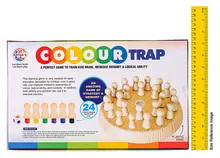
in six colours (red, yellow, green, purple, blue and black, shown on the box back); each hides its colour once it is in the board - 1Colour die
Box: 39 × 23 × 5 cm, 0.48 kg. Handy to know for gifting and travel.
From the back of Ratna's box, seen in a store photo: 24 plastic coloured pawns with a die, on a plastic base, and the four-line rules. Two Indian store listings give the same contents (1 plastic tray, 24 plastic pawns and 1 dice).
Where to buy
How to make sure you get a genuine copyEditions and the details worth checking.
What reviewers and players say
We found no independent reviews, parent blogs, videos or forum threads about Colour Trap, so this summary rests on Ratna's box and two Indian store listings. On paper it is a simple, screen-free colour and memory game for small children from an Indian toy maker, and it plays just like the wooden memory chess toys many families already know. Like them it is quick to learn, short to play and soon outgrown, so it suits children of about 3 to 6.
What people love
- Nothing to read and almost nothing to explain
- Practises colours, memory and taking turns
- Short games that suit a small child's attention span
- The rules are printed on the box, so they can't get lost
Common complaints
- The die adds a lot of luck, so older children lose interest
- Listed for two players only
- Many small pieces to keep together and away from babies
4 research sources
- Reference Ratnas Color Trap Board Game (store listing, October 2026) · FirstCry
- Reference Ratna's Color Trap Strategy & Memory Game for Kids (store listing, May 2024) · Kidsinfy
- Reference Ratna's Color Trap, without box packing (store listing, October 2025) · Kidsinfy
- Reference Indian Standards on Toys - Ensuring your child's safety (BIS, April 2023) · Bureau of Indian Standards
Summarised in our own words from the sources above. We don't use Amazon reviews or ratings.
More like Colour Trap
Which game is the best fit?
Our picks if Colour Trap isn't quite right.
Swipe to compare every game
| Compare the games.The details that make a difference. |
YOU’RE VIEWING
 Colour Trap |
ANOTHER WAY TO PLAY
 Memory Chess |
ANOTHER WAY TO PLAY
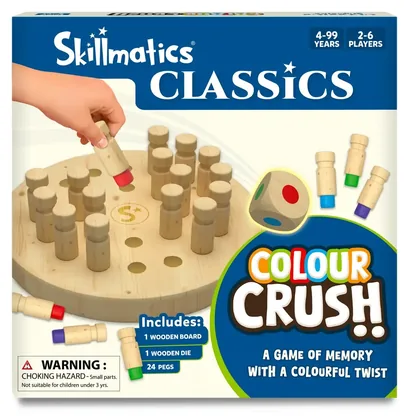 Colour Crush |
ANOTHER WAY TO PLAY
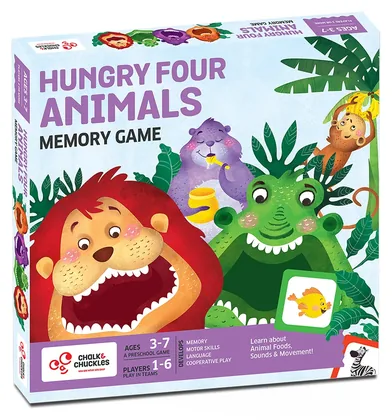 Hungry Four |
|---|---|---|---|---|
| Why consider it | This game Roll a colour, then find the hidden pawn that matches it | A different fit The wooden version of the same hidden-colour idea, sold by many brands | A different fit Skillmatics' wooden hidden-peg game, for up to six players from 4 | A different fit Another dice-and-memory game from 3, with big cards to turn over |
| Players | 2 | 2–4 | 2–6 | 1–6 |
| Best with | 2 | 2-3 | 2-4 | 2-4 |
| Play time | 10–15 min | 10–15 min | 10–15 min | 10–20 min |
| Age | 3+ | 3+ | 4+ | 3+ |
| Rules | Easy | Easy | Easy | Easy |
| Indian edition | Available | – | Available | Available |
| On this page | Explore Memory Chess | Explore Colour Crush | Explore Hungry Four |
More from Ratna's
Another way into their collection.

Business
India's own property game: buy cities, collect rent, build hotels

Ludo
India's favourite race game: roll a six, cut and race home
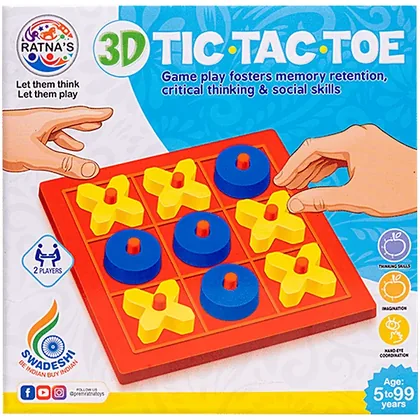
Tic Tac Toe
Three in a row wins: every child's first strategy game
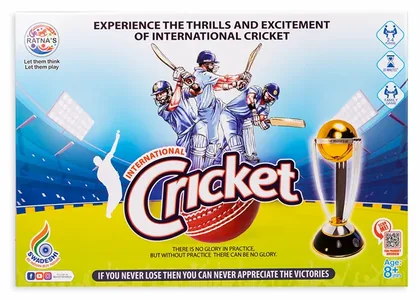
International Cricket
Bowl, bat and chase runs on a cloth cricket ground at home
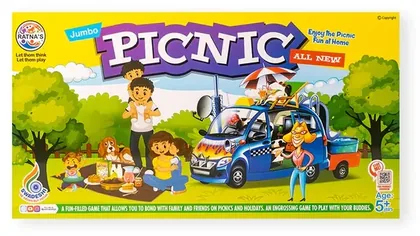
Jumbo Picnic
Ratna's big-board picnic trip: roll, pay your way and reach home
More memory games
Different games. A familiar kind of fun.
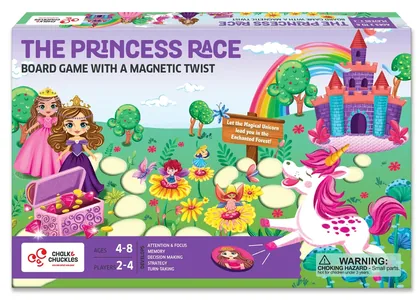
Princess Race
A race to the castle where a magnetic unicorn tests your memory
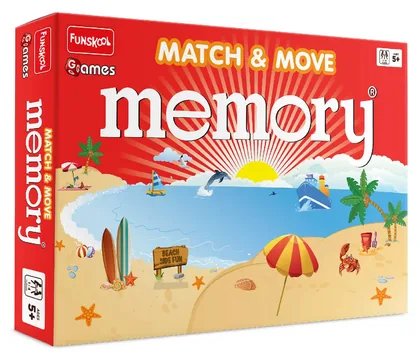
Match & Move Memory
Remember where each picture hides and race your piece home
Memory Chess
Remember where the colours hide and pull out the right peg

SKYJO
Swap and flip cards to finish each round with the lowest score
Colour Crush
Roll a colour, lift a hidden peg, and remember the rest
Questions people ask about Colour Trap
How do you play Colour Trap?
Fill the round board with the 24 pawns so their colours are hidden. On your turn roll the colour die and lift out the pawn you think is that colour: keep it if you are right, put it back if you are wrong. When the board is empty, the player with more pawns wins.
How is Colour Trap different from memory chess?
They are the same kind of game: roll a colour, find a hidden piece of that colour and keep it if you are right. Memory chess sets usually have a wooden board and wooden pegs and come from many brands; Colour Trap is Ratna's boxed version with a plastic board, 24 plastic pawns and its rules printed on the box.
What age is Colour Trap for?
Ratna's box says 3 and up, and it suits children of about 3 to 6 best; some store listings say 5 and up. The pawns and the die are small, so keep them away from babies and toddlers.
How many players can play Colour Trap?
Ratna's listing says two players, and the rules on the box start with the younger player, so a grown-up and a child, or two brothers and sisters, is the natural set-up.
Is Colour Trap made in India?
Ratna's is an Indian toy maker and Indian store listings give India as the country of origin, but we couldn't read a made-in-India line on the box in the pictures we found, so we don't mark it made in India.
Game facts
- Publisher
- Ratna's (Prem Ratna Toys, Mumbai)
- In India
- Prem Ratna Toys, Mumbai (maker of Ratna's games)
- Players
- 2
- Barcode
- 8904114989560
- Language
- No reading – Nothing to read during play: you only need to know the colours, so it works in Hindi, Gujarati or any language the family speaks. The short rules are printed on the box in English.
- Box size and weight
- 39 × 23 × 5 cm, 0.48 kg
Sources & photo creditsThe references behind this guide.
Facts on this page come from the publisher, the Indian maker or distributor, and the sources below. Photos are credited under each one.
- FirstCry - Ratnas Color Trap Board Game (contents, board and box size, age, box pictures)
- Kidsinfy - Ratna's Color Trap Strategy & Memory Game for Kids (contents, how to play, barcode, box pictures)
- Bureau of Indian Standards - Indian Standards on toys: ensuring your child's safety (Toys QCO and the ISI mark)