
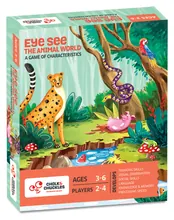
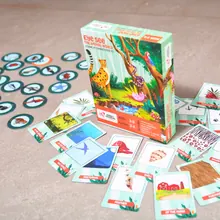
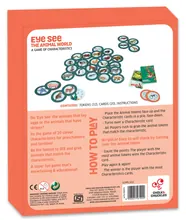
- Set-up
- Under a minute
- Reading
- Little
The quick verdict
Full verdict ↓Great for Children of 3 to 6 who love animals and enjoy sorting them: which ones lay eggs, which ones have stripes
Think twice if Your child is under 3: the box warns of small parts
How we rate it
Learning curve. Turn a card, grab the animals that fit, count your points. A three-year-old can follow it after one round with an adult's help, so it sits with UNO and Connect 4 at 1 on our scale.
Luck & skill. Which card comes up next is luck. Knowing your animals and grabbing quickly decide the rest, so the 4 means mostly skill in the sense of knowledge and speed, not planning.
Interaction. Everyone grabs from the same spread of tokens at the same moment, so children race each other's hands for every animal.
Set-up. Tip the 32 tokens out face up in the middle of the table and put the shuffled cards face down beside them.
Reading. The tokens are pictures. Each card names one animal feature, which an adult reads aloud for children who can't read yet.
Learning curve: 1 = UNO or Connect 4; 3 = Catan; 5 = a heavy strategy game. These describe the experience, not an overall score.
Is Eye See: The Animal World right for you?
Great if
- Children of 3 to 6 who love animals and enjoy sorting them: which ones lay eggs, which ones have stripes
- An adult reading the cards for two or three little ones, or grandparents joining in at a family get-together
- Playschool and homeschool groups of up to four: everyone plays at once, so nobody waits for a turn
- A birthday return gift or Diwali present from an Indian maker, in a small flat box
Skip it if
- Your child is under 3: the box warns of small parts
- You want a calm, turn-by-turn game: everyone grabs at the same moment
- Your child is 7 or older and already knows animal facts well; 20 cards may not hold their interest for long
How Eye See: The Animal World plays
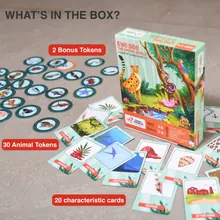
Tip all 32 tokens out face up in the middle of the table. Thirty of them show animals, a mix of wild animals, farm animals, water animals and birds, and two are bonus tokens. Shuffle the 20 characteristic cards and put them face down to one side. Each card names one feature to look for, such as animals that lay eggs or animals that have stripes.
- Time to teach: about 2 minutes.
- Reading and language: The 30 animal tokens are pictures, so children can name each animal in Hindi, Tamil, Bengali or any language they like. Each card names one animal feature; an adult reads it out for children who can't read yet and can say it in whatever language the family uses. The instructions are in English.
A turn, step by step
- 1Flip
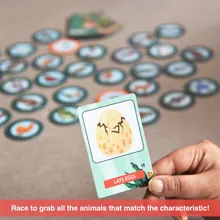
Turn over the top characteristic card, for example 'animals that lay eggs'.
- 2Grab
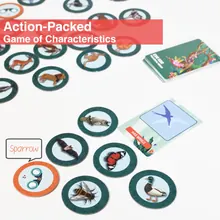
Everyone grabs, all at once, every animal token they think fits. Name a fitting animal that isn't on the table to take a bonus token.
- 3Check
Turn your tokens over to check them. Each right animal scores 1 point and a bonus token 2; the top score wins the card.
- 4Win
Put the tokens back and flip the next card. On the maker's page, the first player to win 5 cards wins.
The full explanation: how a game of Eye See: The Animal World goes
Turn over the top card and everyone grabs at the same time, picking up every animal they think fits. There are no turns, so quick eyes help, but so does knowing that a hen lays eggs and a zebra has stripes. If a child can think of an animal that fits the card but isn't on the table, they say its name out loud and grab a bonus token.
When the grabbing stops, everyone turns their tokens over to check them; the maker designed the tokens so children can check their own picks. On the maker's page, each right animal scores 1 point, wrong picks score nothing and a bonus token scores 2. The highest score wins the card. Put all the tokens back face up and turn the next card.
The maker's web page says the first player to win 5 cards wins the game. The box back puts it a little differently: whoever has collected the most cards at the end wins. Agree which rule you're using before you start; first to 5 cards keeps the game short enough for three- and four-year-olds.
For parents: read each card aloud, call 'stop' when a round has gone on long enough, and help settle arguments over borderline animals. The box warns of small parts and says it is not for children under 3. Eye See: Things that Go is the same game with vehicles instead of animals, and it has 18 cards about transport where this box has 20 about animals.
What's in the box
- 30Animal tokens
picture tokens of wild animals, farm animals, water animals and birds; turn one over to check your pick - 2Bonus tokens
take one when you name a fitting animal that isn't on the table; worth 2 points - 20Characteristic cards
each names one animal feature, such as laying eggs or having stripes - 1Instruction manual
Box: 19 × 15 × 3.8 cm, 0.21 kg. Handy to know for gifting and travel.
Contents are from Chalk and Chuckles' product page and its photo of the box back ('TOKENS (32), CARDS (20), INSTRUCTIONS'), which match the Amazon.in listing facts for item CCPPL102. The split of the 32 tokens comes from the maker's 'What's inside' picture, which labels 2 bonus tokens, leaving 30 animal tokens. Eye See: Things that Go has the same 32 tokens but 18 cards.
Where to buy
How to make sure you get a genuine copyEditions and the details worth checking.
What reviewers and players say
We found no independent reviews, parenting blogs, videos or forum threads about Eye See: The Animal World, so this rests on Chalk and Chuckles' own pages and its photos of the box. On paper it is a quick, simple race for preschoolers that mixes spotting with animal knowledge: a child has to know which animals lay eggs or have stripes, not just match two pictures. Self-checking tokens should mean fewer arguments, and the bonus token rewards children who know animals beyond the box. The web page and the box back give slightly different winning rules, so agree one before you start.
What people love
- Turns animal facts that preschoolers love (who lays eggs, who has stripes) into a race
- Everyone plays at once, so little ones never wait for a turn
- Tokens can be turned over to check, so children can see for themselves whether they were right
- A small, light box from an Indian maker that suits return gifts
Common complaints
- The rules are short and loose: they don't say when a round ends, and the web page and box back end the game differently
- Only 20 cards, so children who know their animals well may tire of it
- No independent reviews or videos yet, so it is hard to say how long it holds children's interest
5 research sources
- Reference Eye See- The Animal World (Chalk and Chuckles product page, April 2023) · Chalk and Chuckles
- Reference Photo of the Eye See: The Animal World box back (Chalk and Chuckles) · Chalk and Chuckles
- Reference Eye See- Things that Go, the sibling box (Chalk and Chuckles product page, March 2023) · Chalk and Chuckles
- Reference Contact: registered office and factory address (Chalk and Chuckles) · Chalk and Chuckles
- Reference FAQs: safety standards and age range (Chalk and Chuckles) · Chalk and Chuckles
Summarised in our own words from the sources above. We don't use Amazon reviews or ratings.
More like Eye See: The Animal World
Which game is the best fit?
Our picks if Eye See: The Animal World isn't quite right.
Swipe to compare every game
| Compare the games.The details that make a difference. |
YOU’RE VIEWING
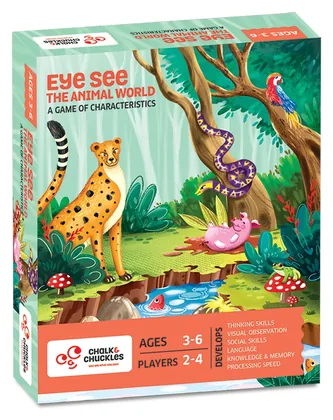 Eye See: The Animal World |
ANOTHER WAY TO PLAY
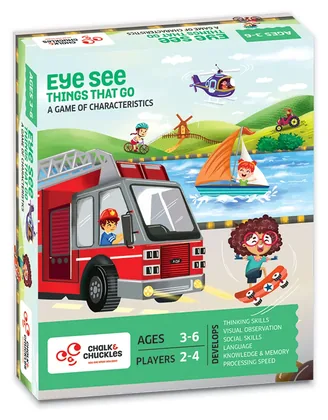 Eye See: Things that Go |
ANOTHER WAY TO PLAY
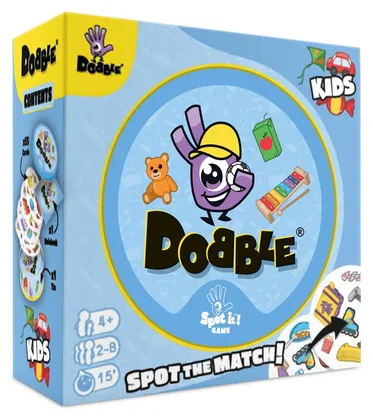 Dobble Kids |
ANOTHER WAY TO PLAY
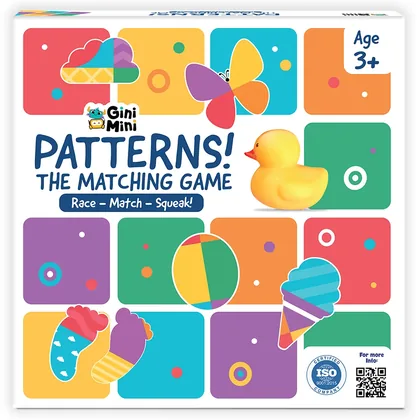 Pattern! |
|---|---|---|---|---|
| Why consider it | This game Flip a card, then race to grab every animal that fits it | A different fit The same grab-and-check race with 30 vehicle tokens and 18 transport cards | A different fit Another speed-spotting picture race for little ones, for 2 to 8 from age 4 | A different fit Another picture-spotting game for pre-schoolers, with a board each and a squeaky buzzer |
| Players | 2–4 | 2–4 | 2–8 | 2 |
| Best with | 3-4 | 3-4 | 3-6 | 2 |
| Play time | 10–20 min | 10–20 min | 10–15 min | 10–15 min |
| Age | 3+ | 3+ | 4+ | 3+ |
| Rules | Easy | Easy | Easy | Easy |
| Indian edition | Available | Available | Available | Available |
| On this page | Explore Eye See: Things that Go | Explore Dobble Kids | Explore Pattern! |
More from Chalk and Chuckles
Another way into their collection.
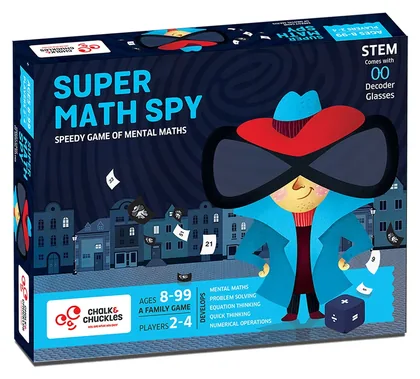
Super Math Spy
Race to build an equation that hits your mission number
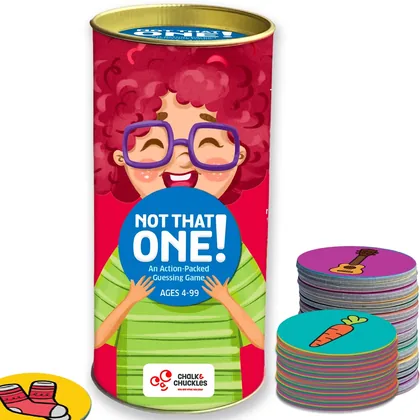
Not That One
Ask yes-or-no questions, grab tokens, and dodge the secret one
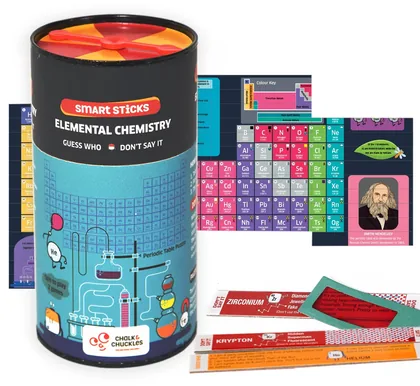
Smart Sticks Elemental Chemistry
Spin, pick a stick and race to name the element
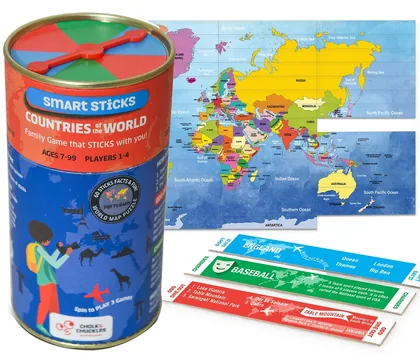
Smart Sticks Countries of the World
Act, describe and spot the odd one out across 60 countries
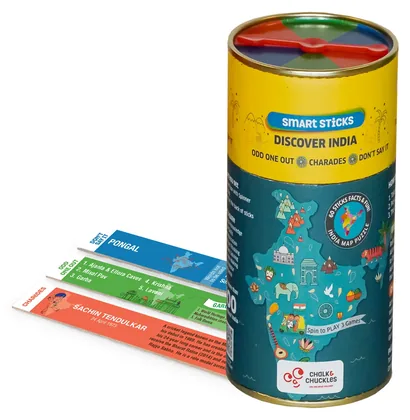
Smart Sticks Discover India
Charades, clues and odd-one-out rounds about India, plus a map puzzle
More speed games
Different games. A familiar kind of fun.

Taboo
Get your team to guess the word without saying the obvious ones
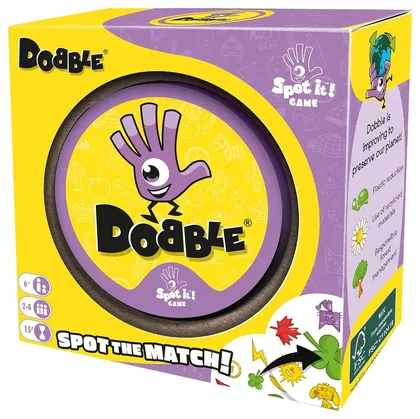
Dobble
Race to spot the one picture any two cards share
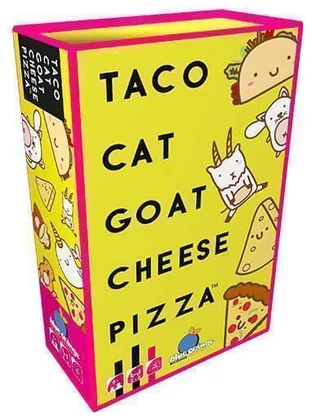
Taco Cat Goat Cheese Pizza
Say the word, watch the card, slap the pile before everyone else
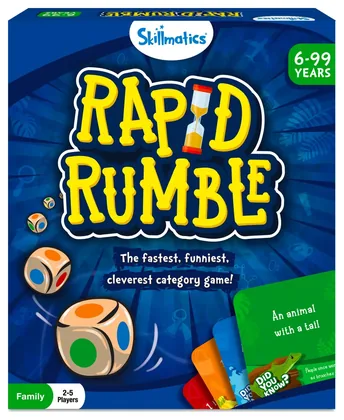
Rapid Rumble
Roll, flip a category, and shout words before the timer ends.
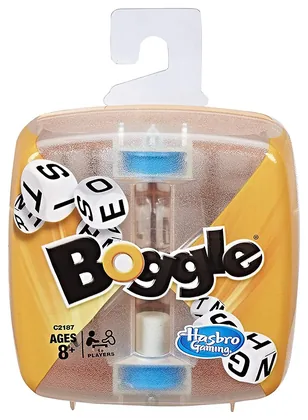
Boggle
Shake the letter cubes and find words before time runs out
Also playable with two
For game nights with two players.
Boggle
Shake the letter cubes and find words before time runs out
Super Math Spy
Race to build an equation that hits your mission number
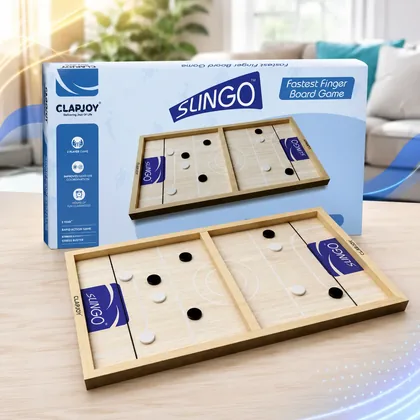
Sling Puck
Two players, ten pucks, one slot: clear your side first
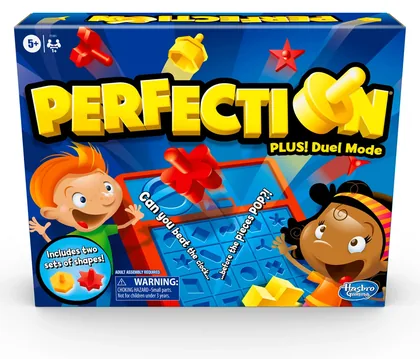
Perfection
Race the clock, or a friend, before the shape tray pops
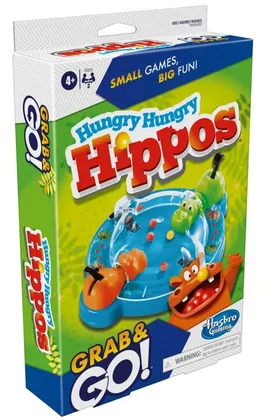
Hungry Hungry Hippos Grab and Go
Travel-size Hungry Hungry Hippos for two: chomp the most marbles
Questions people ask about Eye See: The Animal World
What age is Eye See: The Animal World for?
The box front and the maker's page say 3 to 6 years. The box warns that it has small parts and is not for children under 3, so keep the tokens away from babies and toddlers.
How many children can play Eye See: The Animal World?
The box front shows 2 to 4 players, and everyone plays at the same time. The maker's page also mentions playing alone: one child can turn a card and sort out every animal that fits, but there is no score that way.
What is the difference between Eye See: The Animal World and Eye See: Things that Go?
They use the same rules and the same 32 tokens in the same size of box. The Animal World has animal tokens and 20 cards about animal features, such as laying eggs or having stripes; Things that Go has vehicle tokens and 18 cards about transport, such as rescue vehicles.
Can Eye See: The Animal World be played in Hindi?
Yes. The tokens are animal pictures, so children can name them in any language. Each card names one animal feature; an adult can read it out and say it in Hindi or whatever language the family speaks.
Is Eye See: The Animal World made in India?
Yes. Chalk and Chuckles' own photo of the box back prints 'Made in India' with the company's factory address in Kundli, Haryana.
Game facts
- Publisher
- Chalk and Chuckles (Chalk and Chuckles Products Pvt Ltd, New Delhi, India)
- In India
- Chalk and Chuckles, an Indian company (registered office in New Delhi, factory in Kundli, Haryana), which makes and sells the game in India
- First published
- 2023
- Players
- The box front shows 2 to 4 players; the maker's web page and the listing say 1 to 4. With one child it becomes a sorting activity (turn a card, find every animal that fits, turn the tokens over to check) with no score, so we count the game from 2.
- Barcode
- 8906045561020
- Language
- Little reading – The 30 animal tokens are pictures, so children can name each animal in Hindi, Tamil, Bengali or any language they like. Each card names one animal feature; an adult reads it out for children who can't read yet and can say it in whatever language the family uses. The instructions are in English.
- Box size and weight
- 19 × 15 × 3.8 cm, 0.21 kg
Sources & photo creditsThe references behind this guide.
Facts on this page come from the publisher, the Indian maker or distributor, and the sources below. Photos are credited under each one.
- Chalk and Chuckles - Eye See- The Animal World (how to play, contents, size, ages)
- Chalk and Chuckles - Eye See- The Animal World product data (item CCPPL102, weight, images)
- Chalk and Chuckles - photo of the Eye See: The Animal World box back (contents, rules, safety warning, made in India)
- Chalk and Chuckles - Eye See- Things that Go (the sibling box, for comparison)
- Chalk and Chuckles - Contact (registered office and factory address)
- Chalk and Chuckles - FAQs (safety standards)
- Carrefour UAE - Chalk and Chuckles Eye See Animal World (barcode in the product address, ages)