
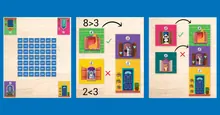
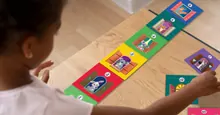
- Set-up
- About 2 min
- Reading
- None
The quick verdict
Full verdict ↓Great for Children of about 4 to 7 who are learning numbers up to 50 and which is bigger
Think twice if Your child can't yet compare numbers past 20 and you'd rather not make up simpler rules
How we rate it
Learning curve. One rule, a new floor must be higher than the last, which a five-year-old can follow after one round. It sits at 1 on our scale with UNO and Connect 4, though children need to compare numbers up to 50.
Luck & skill. Which numbers you happen to flip is luck. Remembering where numbers lie and not climbing too high too early are skill, so a careful child usually does better.
Interaction. You can't block anyone directly, but every token another player shows and puts back tells you where a number is, and taking a token means nobody else gets it.
Set-up. Each player takes a starting building, then mix the 49 floor tokens and spread them face down on the table.
Reading. The tokens show numbers only; there are no words to read during play.
Learning curve: 1 = UNO or Connect 4; 3 = Catan; 5 = a heavy strategy game. These describe the experience, not an overall score.
Is Critter Heights right for you?
Great if
- Children of about 4 to 7 who are learning numbers up to 50 and which is bigger
- A first game where a small choice matters: take this floor now, or wait for a better one
- A short after-school game with a parent that needs no reading
- A birthday gift or return gift from an Indian maker
Skip it if
- Your child can't yet compare numbers past 20 and you'd rather not make up simpler rules
- You want a game for more than four players
- Your children are 9 or older; one rule and one kind of decision will soon feel too simple
How Critter Heights plays
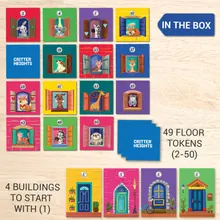
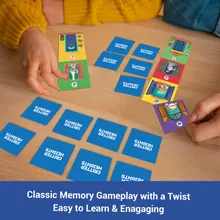
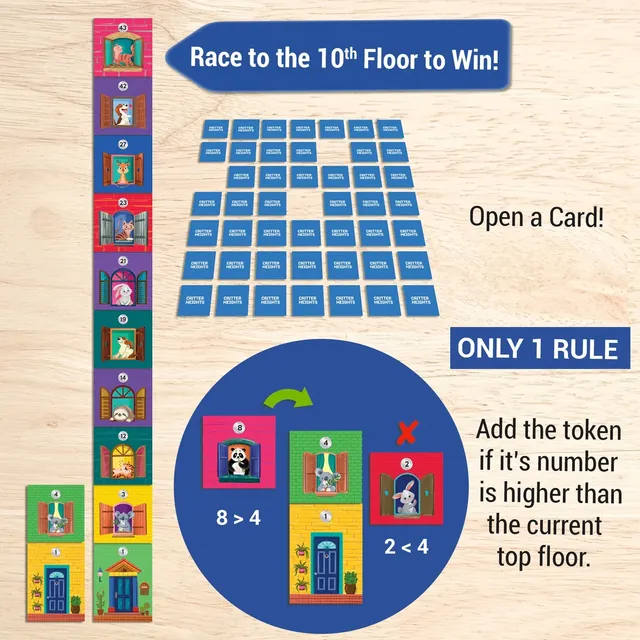
Set-up: each player takes one of the four starting buildings, which is the ground floor of their tower (it counts as 1). Mix the 49 floor tokens, numbered 2 to 50, and spread them face down on the table.
- Time to teach: about 3 minutes.
- Reading and language: The tokens show numbers from 2 to 50, so nobody reads words during play, but children do need to recognise numbers up to 50 and say which is bigger. Table talk can be in Hindi, Tamil or any home language. The instructions are in English as far as we can tell; we found no Hindi edition.
Critter heights explanation video · Chalk and Chuckles · Official
If this creator doesn’t allow embedded playback, watch on YouTube ↗.
A turn, step by step
- 1Flip
Turn over any face-down floor token so you can see its number.
- 2Build
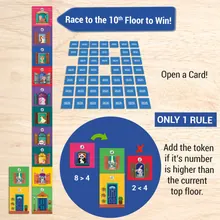
If the number is higher than your top floor, you may add it to your tower. If not, show it to everyone and put it back face down.
- 3Win
The first player to build a tower of ten floors wins.
The full explanation: how a game of Critter Heights goes
On your turn, flip over any one token. If its number is higher than the top floor of your building, you may put it on top as a new floor. If you don't want it, or it is too low, show it to everyone and put it back face down in the same place. That is the whole game: there is only one rule, and the floor you add must always be higher than the one below it.
The first player to build a tower of 10 floors (10 tokens) wins, and the game ends there.
The thinking part: don't jump too high too early. If your top floor is 45, only five numbers are left above it, so you can never reach ten floors. Children soon learn to take a middle number early, leave a big one for later, and remember where the numbers that others put back are lying.
For parents: a child needs to compare numbers up to 50, so sit beside a 4-year-old for the first games and read the numbers together. The maker says the rules can be adapted for younger children; one easy way is to play with only the tokens from 2 to 20 and a shorter tower. From about 5 or 6, most children can play on their own once they have the 'higher than' rule.
What's in the box
- 4Starting buildings
one ground floor for each player, counting as 1 - 49Floor tokens
numbered 2 to 50 - 1Instructions
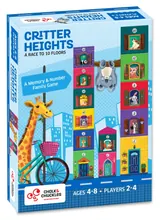
Box: 22.8 × 16.5 × 4.5 cm, 0.41 kg. Handy to know for gifting and travel.
Contents are from Chalk and Chuckles' product page for this box (item code CCPPL119): 4 starting buildings, 49 floor tokens numbered 2 to 50, and instructions. The listing gives the same list, and the maker's 'In the Box' picture (OCR) shows the same tokens and buildings. There is only one edition.
Where to buy
How to make sure you get a genuine copyEditions and the details worth checking.
What reviewers and players say
We found no independent reviews, parenting blogs or forum threads about Critter Heights, which Chalk and Chuckles added to its shop in 2024, so there is little to go on beyond the maker's own description and a short explanation video. On paper it is a neat twist on memory games: children remember where numbers lie rather than pictures, and each turn asks a small question, take this floor now or wait for a better one. The rule is easy, but children need to compare numbers up to 50, so the youngest players will want an adult beside them at first.
What people love
- One simple rule that young children can learn in a round
- Number practice, bigger and smaller up to 50, that doesn't feel like homework
- Each turn has a real choice, so it is more than luck
- No reading, so grandparents and children can play in any language
Common complaints
- Children who can't yet compare numbers up to 50 need an adult or simpler house rules
- The maker's web page says 1 to 4 players but gives no rules for playing alone
- No independent feedback yet on how long children stay interested
5 research sources
- Reference Critter Heights: Memory & Number Game (Chalk and Chuckles product page, October 2026) · Chalk and Chuckles
- Reference Critter Heights product data (Chalk and Chuckles, April 2024) · Chalk and Chuckles
- Reference Chalk & Chuckles Critter Heights Memory Game (US distributor listing, January 2025) · Safari Ltd
- Reference Our Story (Chalk and Chuckles, October 2026) · Chalk and Chuckles
- Reference Contact: registered office and factory address (Chalk and Chuckles, October 2026) · Chalk and Chuckles
Summarised in our own words from the sources above. We don't use Amazon reviews or ratings.
More like Critter Heights
Which game is the best fit?
Our picks if Critter Heights isn't quite right.
Swipe to compare every game
| Compare the games.The details that make a difference. |
YOU’RE VIEWING
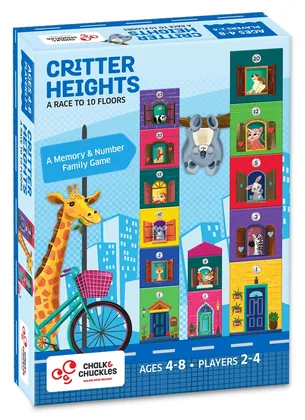 Critter Heights |
ANOTHER WAY TO PLAY
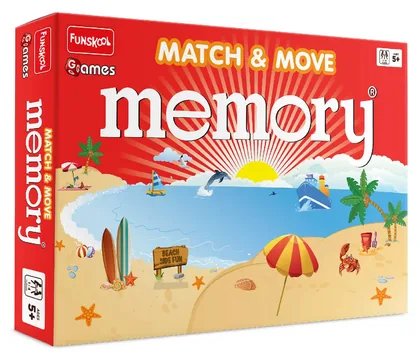 Match & Move Memory |
ANOTHER WAY TO PLAY
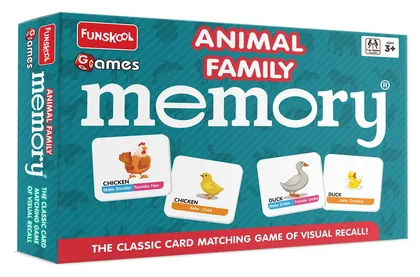 Memory Animal Family |
ANOTHER WAY TO PLAY
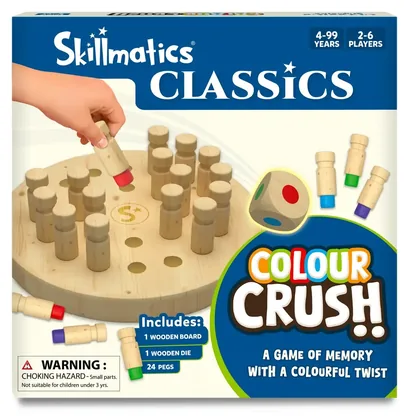 Colour Crush |
|---|---|---|---|---|
| Why consider it | This game Flip number tokens and race to build a ten-floor tower | A different fit Another memory race for young children: turn hidden cards to move your piece home | A different fit The classic pairs memory game, for children from 3 | A different fit Lift hidden pegs and remember the colours, for 2 to 6 players from 4 |
| Players | 2–4 | 1–4 | 1–4 | 2–6 |
| Best with | 2-3 | 2-3 | 2-3 | 2-4 |
| Play time | 10–20 min | 15–20 min | 10–20 min | 10–15 min |
| Age | 4+ | 5+ | 3+ | 4+ |
| Rules | Easy | Easy | Easy | Easy |
| Indian edition | Available | Available | Available | Available |
| On this page | Explore Match & Move Memory | Explore Memory Animal Family | Explore Colour Crush |
More from Chalk and Chuckles
Another way into their collection.
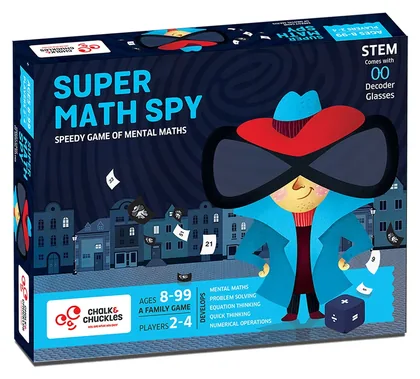
Super Math Spy
Race to build an equation that hits your mission number
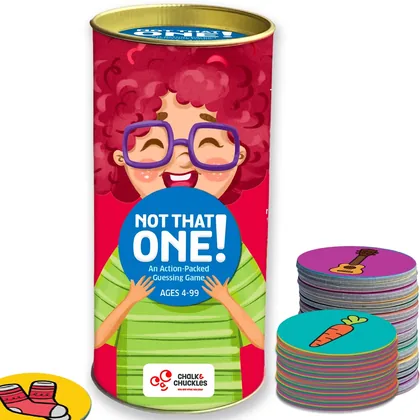
Not That One
Ask yes-or-no questions, grab tokens, and dodge the secret one
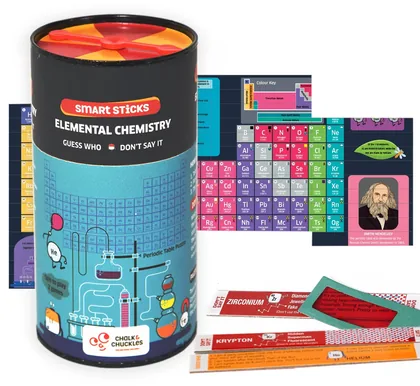
Smart Sticks Elemental Chemistry
Spin, pick a stick and race to name the element
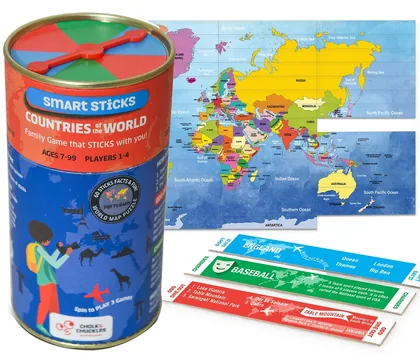
Smart Sticks Countries of the World
Act, describe and spot the odd one out across 60 countries
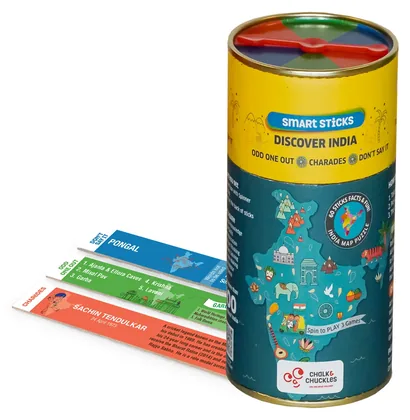
Smart Sticks Discover India
Charades, clues and odd-one-out rounds about India, plus a map puzzle
More memory games
Different games. A familiar kind of fun.
Match & Move Memory
Remember where each picture hides and race your piece home
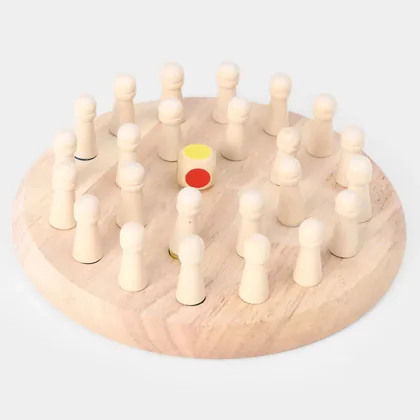
Memory Chess
Remember where the colours hide and pull out the right peg

SKYJO
Swap and flip cards to finish each round with the lowest score
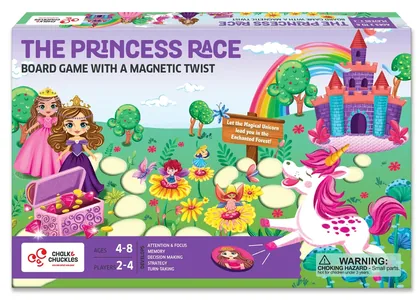
Princess Race
A race to the castle where a magnetic unicorn tests your memory
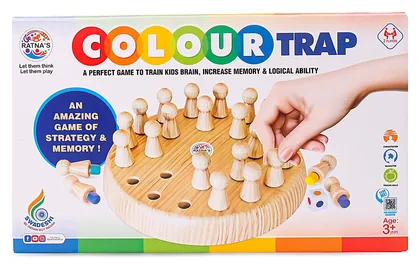
Colour Trap
Roll a colour, then find the hidden pawn that matches it
Questions people ask about Critter Heights
How do you play Critter Heights?
Each player starts with a ground-floor building, and 49 tokens numbered 2 to 50 lie face down. On your turn you flip one token and may add it to your tower only if it is higher than your top floor; otherwise you show it to everyone and put it back. The first to build ten floors wins.
What age is Critter Heights for?
The maker and the box say 4 to 8 years. Children need to compare numbers up to 50, so 4-year-olds usually need a parent beside them at first, and the maker says the rules can be made easier for younger children. Most children of 9 and up will find it too simple.
How many players can play Critter Heights, and can a child play alone?
The box says 2 to 4 players. The maker's web page says 1 to 4 but gives no solo rules; a child on their own could try to build ten floors in as few turns as possible.
How is Critter Heights different from a normal memory game?
There are no pairs to find. You remember where numbers are, and you can only add a floor that is higher than the one before, so you also have to choose when to take a token and when to wait. It practises number order as well as memory.
Is Critter Heights made in India?
It comes from Chalk and Chuckles, an Indian company that lists its own factory in Kundli, Haryana. The maker's pages for this game don't state the country of origin, so check the box or the listing if it matters to you.
Game facts
- Publisher
- Chalk and Chuckles (Chalk and Chuckles Products Pvt Ltd, New Delhi, India)
- In India
- Chalk and Chuckles, an Indian company (registered office in New Delhi, factory in Kundli, Haryana), which makes and sells the game in India
- First published
- 2024
- Players
- The box front says 2 to 4 players. The maker's web page says 1 to 4 but gives no rules for playing alone, so we count it from 2.
- Barcode
- 8906045561198
- Language
- No reading – The tokens show numbers from 2 to 50, so nobody reads words during play, but children do need to recognise numbers up to 50 and say which is bigger. Table talk can be in Hindi, Tamil or any home language. The instructions are in English as far as we can tell; we found no Hindi edition.
- Box size and weight
- 22.8 × 16.5 × 4.5 cm, 0.41 kg
Sources & photo creditsThe references behind this guide.
Facts on this page come from the publisher, the Indian maker or distributor, and the sources below. Photos are credited under each one.
- Chalk and Chuckles - Critter Heights (how to play, contents, size, weight)
- Chalk and Chuckles - Critter Heights product data (SKU CCPPL119, images, dates)
- Chalk and Chuckles - Contact (registered office and factory address)
- Chalk and Chuckles - Our Story (founders, materials, safety standards)
- Chalk and Chuckles - Critter heights explanation video (YouTube, April 2024)
- Toycra - Chalk and Chuckles Critter Heights Board Game (SKU, barcode, age)
- Safari Ltd (US distributor) - Chalk & Chuckles Critter Heights Memory Game (contents, age, box size, barcode)