
- Set-up
- About 2 min
- Reading
- None
The quick verdict
Full verdict ↓Great for Brothers and sisters or a parent and child who want a short game, with puzzles for when the child plays alone
Think twice if There is a baby or toddler at home who still puts things in its mouth: the foam balls are small
How we rate it
Learning curve. Each activity has one or two rules that a five-year-old can follow after being shown, so it sits at 1 on our scale with UNO and Connect 4. The harder puzzle levels take more thinking.
Luck & skill. In the push-down game the cards you draw matter a lot, though spotting the best ball to push takes some thought. The two puzzles involve no luck at all.
Interaction. The push-down game is all about knocking out other players' balls; the two puzzles are played alone.
Set-up. Put the foam balls in the holes of the game box and shuffle the cards; for a puzzle, pick a challenge from the booklet and set the balls out as it shows.
Reading. Balls, pattern cards and picture challenges; only the rules need reading, by an adult.
Learning curve: 1 = UNO or Connect 4; 3 = Catan; 5 = a heavy strategy game. These describe the experience, not an overall score.
Is Ballaroo right for you?
Great if
- Brothers and sisters or a parent and child who want a short game, with puzzles for when the child plays alone
- Children of 4 to 8 who like colours, sorting and patterns
- Screen-free holiday afternoons: the puzzles come in levels, so a child can work up through them
- A birthday gift with three activities in one box
Skip it if
- There is a baby or toddler at home who still puts things in its mouth: the foam balls are small
- You want one deep family game; the push-down game is short and simple, and two of the three activities are solo
- You need a game for more than four players
How Ballaroo plays
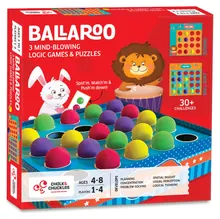
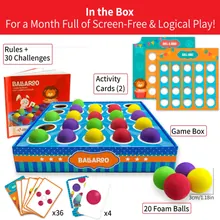
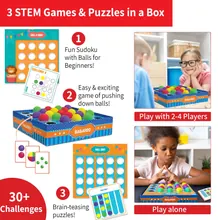
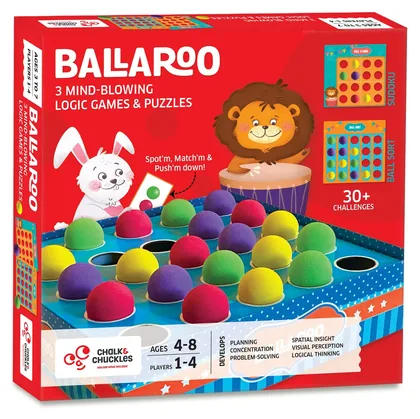
What's in it: a game box with 25 holes that holds the balls, 20 foam balls in several colours, 40 game cards, two puzzle cards, the rules and a booklet of challenges with solutions. The box holds three separate activities: one game for 2 to 4 players to play against each other, and two puzzles for one child.
- Time to teach: about 5 minutes.
- Reading and language: Play uses coloured foam balls, pattern cards and picture challenges, so children don't need to read. The rules are in English for the adult who explains them, and the talk at the table can be in any language. We found no Hindi edition.
A turn, step by step
- 1Defend
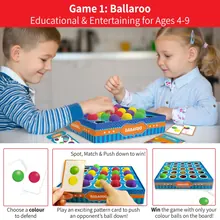
In the push-down game, each player picks one colour of balls to look after.
- 2Push
On your turn, play a pattern card; it decides which ball you push down, usually an opponent's.
- 3Win
The last player with balls of their colour still on the board wins.
- 4Solo
Alone, pick a Ball Sort or Ball-a-doku challenge from the booklet and solve it, then check the solution.
The full explanation: how a game of Ballaroo goes
Game 1, Ballaroo (2 to 4 players): put the balls in the holes and let each player choose a colour to defend. On your turn you play one of the pattern cards, which decides which ball to push down into the box, and the maker's pictures show players spotting the card's pattern on the board and pushing down an opponent's ball. The last player with balls of their colour still on the board wins. The exact matching rule is in the rules sheet, which we have not seen.
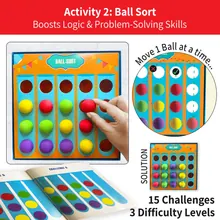
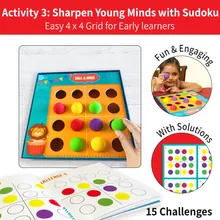
Game 2, Ball Sort (one child): pick a challenge from the booklet, set the balls out as it shows, then move them one at a time until every column holds balls of a single colour. There are only two rules: you may move only the top ball of a column, and no ball may leave the board. The maker's picture says there are 15 challenges in three levels.
Game 3, Ball-a-doku (one child): the maker's own version of sudoku, played with coloured balls on a 4-by-4 grid instead of numbers. Each challenge starts with some balls in place and the child fills in the rest; as in any sudoku, the usual aim is that no colour repeats in a row or column. The maker calls it suitable for the youngest players, and the booklet has the solutions.
For parents: read the rules and play the first game of Ballaroo with your child, then they can usually play it with a brother, sister or friend. For the puzzles, do the first easy challenge together and let them carry on alone, checking the solutions when they get stuck. The maker's page gives no small-parts warning, but the foam balls are about 3 cm across, so keep them away from children under 3 and pack them away after play.
What's in the box
- 1Game box with 25 holes
holds the balls during all three activities - 20Foam balls
about 3 cm across, in several colours - 40Game cards
pattern cards for the push-down game; the maker's picture shows a set of 36 and a set of 4 - 1Ball-a-Doku puzzle card
for the colour-sudoku puzzles - 1Ball-sort puzzle card
for the sorting puzzles - 1Rules and challenge booklet
the puzzle challenges with their solutions
Box: 25.8 × 25.8 × 4.5 cm, 0.6 kg. Handy to know for gifting and travel.
Contents are from Chalk and Chuckles' product page for this box (item code CCPPL118), which matches the listing. The maker's 'In the Box' picture shows the same parts, the two puzzle cards as 'Activity Cards (2)', the cards in two sets and the balls at 3 cm; it says the booklet has 30 challenges. There is only one edition.
Where to buy
How to make sure you get a genuine copyEditions and the details worth checking.
What reviewers and players say
We found no independent reviews, parenting blogs, videos or forum threads about Ballaroo, which Chalk and Chuckles added to its shop in April 2024, so there is little to go on beyond the maker's own description and pictures. On paper it is good value in variety: a short, lively game for 2 to 4 children plus two quiet one-child puzzles with graded challenges and solutions. The maker's description of the push-down game is brief, so expect to read the rules sheet closely before the first round, and keep the small foam balls away from toddlers.
What people love
- Three activities in one box: a game for siblings and two puzzles for one child
- Graded puzzle challenges with solutions, so children can work up the levels on their own
- Colours and patterns instead of words or numbers, so even 4-year-olds can join in
- Soft foam balls and a sturdy cardboard box
Common complaints
- The foam balls are small, a worry in homes with toddlers
- The maker's online description of the push-down game leaves the exact matching rule to the rules sheet
- No independent feedback yet on how long the 30 challenges keep children busy
5 research sources
- Reference Ballaroo: 3-in-1 Logic Games & Puzzles (Chalk and Chuckles product page, October 2026) · Chalk and Chuckles
- Reference Ballaroo product data (Chalk and Chuckles, April 2024) · Chalk and Chuckles
- Reference Chalk & Chuckles Ballaroo 3-In-1 Brain Games (Indian store listing, July 2024) · Toycra
- Reference Chalk & Chuckles Ballaroo Game (US distributor listing, January 2025) · Safari Ltd
- Reference Our Story (Chalk and Chuckles, October 2026) · Chalk and Chuckles
Summarised in our own words from the sources above. We don't use Amazon reviews or ratings.
More like Ballaroo
Which game is the best fit?
Our picks if Ballaroo isn't quite right.
Swipe to compare every game
| Compare the games.The details that make a difference. |
YOU’RE VIEWING
 Ballaroo |
ANOTHER WAY TO PLAY
 Brain Blocks |
ANOTHER WAY TO PLAY
 Brainvita |
ANOTHER WAY TO PLAY
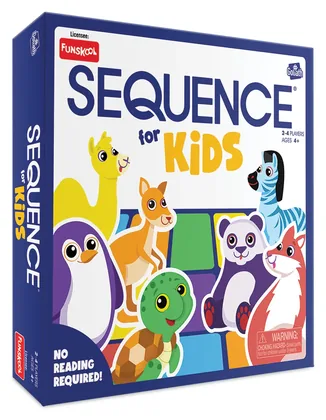 Sequence for Kids |
|---|---|---|---|---|
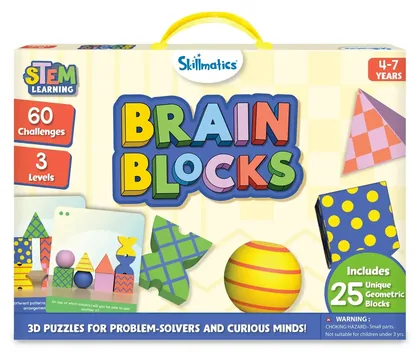
| Why consider it | This game A push-down ball game plus two solo ball puzzles in one box | A different fit Another solo challenge-card puzzle for 4 to 7 year olds, with blocks instead of balls | A different fit The classic one-player marble puzzle, for patient children from about 6 | A different fit A first strategy game for 2 to 4 players from 4, played with picture cards and chips |
| Players | 1–4 | 1 | 1 | 2–4 |
| Best with | 2-3 | 1 | 1 | 2-3 |
| Play time | 10–20 min | 5–20 min | 5–20 min | 10–20 min |
| Age | 4+ | 4+ | 6+ | 4+ |
| Rules | Easy | Easy | Easy | Easy |
| Indian edition | Available | Available | Available | Available |
| On this page | Explore Brain Blocks | Explore Brainvita | Explore Sequence for Kids |
More from Chalk and Chuckles
Another way into their collection.
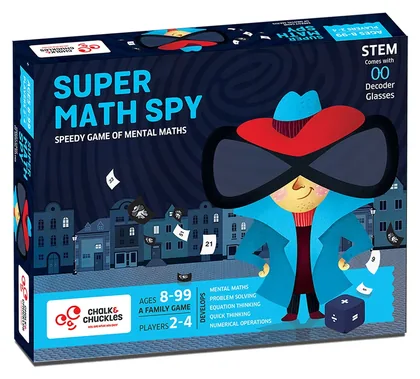
Super Math Spy
Race to build an equation that hits your mission number
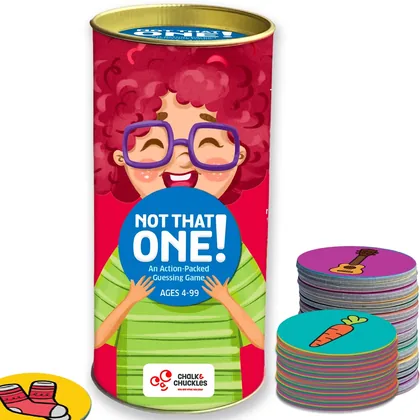
Not That One
Ask yes-or-no questions, grab tokens, and dodge the secret one

Smart Sticks Elemental Chemistry
Spin, pick a stick and race to name the element
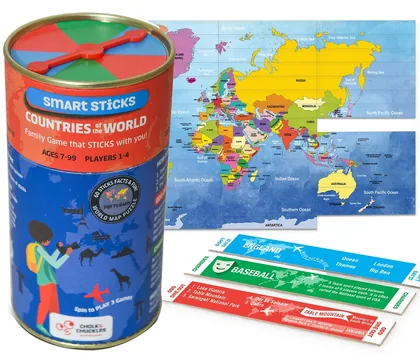
Smart Sticks Countries of the World
Act, describe and spot the odd one out across 60 countries
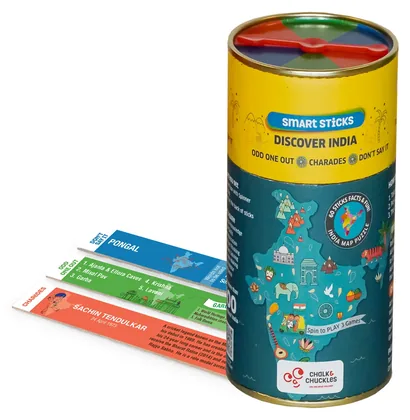
Smart Sticks Discover India
Charades, clues and odd-one-out rounds about India, plus a map puzzle
More solo puzzles
Different games. A familiar kind of fun.
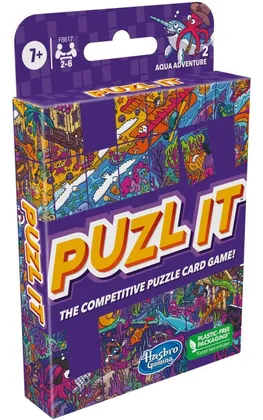
Puzl It: Aqua Adventure
A card game where you build an undersea jigsaw and steal cards
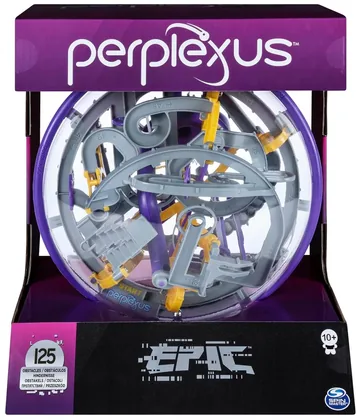
Perplexus Epic
A one-player 3D maze ball with 125 obstacles to beat
Super Math Spy
Race to build an equation that hits your mission number
Brainvita
Jump marble over marble until only one is left, in the centre
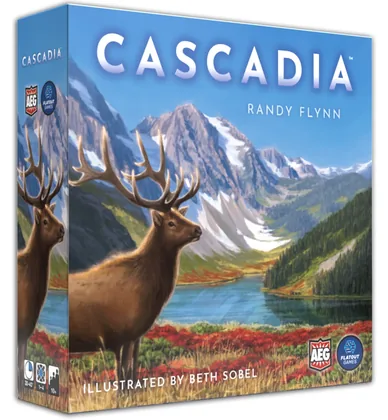
Cascadia
Build a Pacific Northwest landscape and fill it with wildlife
Questions people ask about Ballaroo
What are the three games in Ballaroo?
Ballaroo itself is a game for 2 to 4 players in which each child defends one colour of foam balls and pattern cards push balls down; the last colour left wins. Ball Sort and Ball-a-doku are one-player puzzles: sort the balls into single-colour columns, or solve a colour sudoku on a 4-by-4 grid.
Can a child play Ballaroo alone?
Yes, two of the three activities are for one child. Ball Sort and Ball-a-doku come with a booklet of challenges and solutions, and the maker's picture says Ball Sort alone has 15 challenges in three levels. The push-down game needs 2 to 4 players.
What age is Ballaroo for, and is it safe for a 3-year-old?
The maker and the box say 4 to 8 years, though the listing starts at 36 months. The maker's page shows no small-parts warning, but the foam balls are only about 3 cm across, so keep them away from children under 3 and watch younger brothers and sisters during play.
Does my child need to know sudoku to play Ball-a-doku?
No. It uses colours instead of numbers on a small 4-by-4 grid, and the maker calls it suitable for the youngest players. Start with the easiest challenge together; the booklet has the solutions for checking.
Is Ballaroo made in India?
It comes from Chalk and Chuckles, an Indian company that lists its own factory in Kundli, Haryana. The maker's pages for this game don't state the country of origin, so check the box or the listing if it matters to you.
Game facts
- Publisher
- Chalk and Chuckles (Chalk and Chuckles Products Pvt Ltd, New Delhi, India)
- In India
- Chalk and Chuckles, an Indian company (registered office in New Delhi, factory in Kundli, Haryana), which makes and sells the game in India
- First published
- 2024
- Players
- The box says 1 to 4 players. The push-down game, Ballaroo itself, is for 2 to 4; Ball Sort and Ball-a-doku are puzzles for one child.
- Barcode
- 8906045561181
- Language
- No reading – Play uses coloured foam balls, pattern cards and picture challenges, so children don't need to read. The rules are in English for the adult who explains them, and the talk at the table can be in any language. We found no Hindi edition.
- Box size and weight
- 25.8 × 25.8 × 4.5 cm, 0.6 kg
Sources & photo creditsThe references behind this guide.
Facts on this page come from the publisher, the Indian maker or distributor, and the sources below. Photos are credited under each one.
- Chalk and Chuckles - Ballaroo (how to play the three games, contents, size, weight)
- Chalk and Chuckles - Ballaroo product data (SKU CCPPL118, image alt text, dates)
- Chalk and Chuckles - Contact (registered office and factory address)
- Chalk and Chuckles - Our Story (founders, materials, safety standards)
- Toycra - Chalk & Chuckles Ballaroo 3-In-1 Brain Games (SKU, barcode, age, game summary)
- Safari Ltd (US distributor) - Chalk & Chuckles Ballaroo Game (contents, age, box size, barcode)