
- Set-up
- About 3 min
- Reading
- None
The quick verdict
Full verdict ↓Great for Families who want to try Rummikub before choosing the heavier plastic-tile Original
Think twice if You want the feel of chunky plastic tiles clicking on the table: Funskool's Original Rummikub has them
How we rate it
Learning curve. Runs, groups and the 30-point first move take a few minutes to explain, and rearranging the table takes a game or two to click. That puts it with Ticket to Ride and Codenames at 2 on our scale, the same as our Rummikub page.
Luck & skill. The tiles you draw matter a lot, especially early on, but spotting rearrangements and deciding when to hold tiles back is real skill.
Interaction. Everyone builds on and reshapes the same table, so your sets become the next player's building blocks. There is no direct attacking.
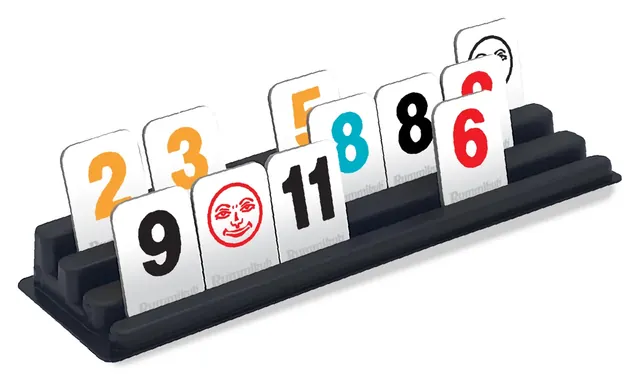
Set-up. Turn the 106 tiles face down, mix them and deal 14 to each rack. Stacking the pool in piles of seven saves time; card tiles are flat, so they stack easily.
Reading. Only numbers, colours and joker faces on the tiles; scoring needs simple adding.
Learning curve: 1 = UNO or Connect 4; 3 = Catan; 5 = a heavy strategy game. These describe the experience, not an overall score.
Is Rummikub Joy right for you?
Great if
- Families who want to try Rummikub before choosing the heavier plastic-tile Original
- Holidays and visits to grandparents: the box is about 21 x 15 cm and weighs well under half a kilo
- Mixed-language homes, since the tiles show only numbers, four colours and two jokers
- Card-rummy players at Diwali get-togethers who want the same runs and sets without a deck to shuffle
Skip it if
- You want the feel of chunky plastic tiles clicking on the table: Funskool's Original Rummikub has them
- Young children will play it daily or near food and drinks, because card tiles can bend or stain where plastic wipes clean
- You need more than four players: the box has four racks and the rules are for 2 to 4
A place on the honours list
Good company to be in.
Recognition from beyond our table.
Spiel des Jahres (German Game of the Year), 1980 (Winner)
How Rummikub Joy plays
Set-up: turn all 106 tiles face down on the table and mix them. Each player draws one tile and the highest number starts; put those tiles back and mix again. Everyone then takes 14 tiles onto a rack, and the rest stay face down as the pool. Stacking the pool in piles of seven makes drawing easier.
- Time to teach: about 10 minutes.
- Reading and language: The tiles carry only the numbers 1 to 13 in four colours and two joker faces, so nobody reads during play and the rules can be explained in Hindi, Tamil or any home language. Adding up scores needs simple sums. The rules that come in the box are in English.
How to play Rummikub · Triple S Games
Choose a video · Watch right here
If this creator doesn’t allow embedded playback, watch on YouTube ↗.
A turn, step by step
- 1Meld
Lay runs or groups from your rack; your very first move must total at least 30 points.
- 2Rearrange
After that, add to or split any set on the table, as long as every set is valid when you finish.
- 3Draw
Can't or won't play? Take one tile from the pool and your turn ends.
- 4Win
Empty your rack first and call 'Rummikub!'; the others lose the value of their leftover tiles.
The full explanation: how a game of Rummikub Joy goes
Making sets: a run is three or more numbers in a row in one colour, such as a red 4-5-6 (a 1 can't follow a 13). A group is three or four tiles of the same number in different colours. Your first move must put down sets worth at least 30 points in total, using only tiles from your own rack. If you can't, or don't want to play, you draw one tile from the pool and your turn ends; a tile you have just drawn can't be played until your next turn.
Rearranging: once you have made your first move, the whole table is yours to work with. You can add to any set, split a run, or move tiles from one set to another, as long as every set on the table is valid when your turn ends. The official rules give one minute per turn; if you can't finish a rearrangement in time, put the table back as it was, take back your tiles and draw three as a penalty.
Jokers and winning: a joker stands in for any tile, and you can win it back by replacing it with the real tile, but you must play it again on that same turn. The first player to empty their rack calls 'Rummikub!' and wins the game. The others count the tiles left on their racks as minus points, the winner scores the total, and a joker caught on your rack costs 30 points, as the Joy box itself warns.
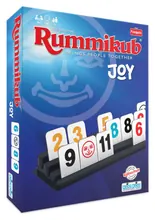
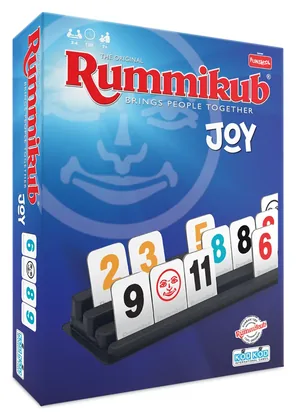
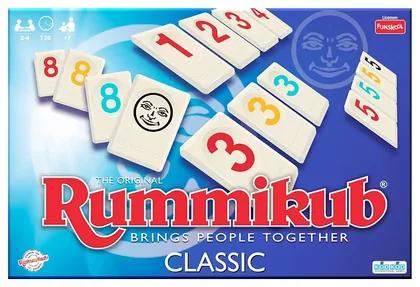
How Joy differs from our Rummikub page: Funskool's Original Rummikub (item 4939100) has 106 plastic tiles, four racks and four rack holders in a bigger, heavier box. Rummikub Joy (item 4939300) keeps the same 106-tile set and the same rules, but its tiles are printed cardboard, its contents list four racks and no rack holders, and the whole box is small and light. It plays exactly the same game, so anyone who knows one can play the other.
What's in the box
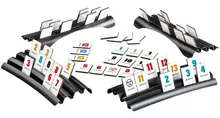
- 104Number tiles
printed cardboard, 1 to 13 in four colours, two of each - 2Joker tiles
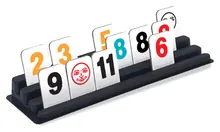
cardboard, each stands in for any tile - 4Racks
one per player, to keep your tiles hidden - 1Rules
Funskool calls them 'detailed rules'
Box: 21 × 15 cm, 0.27 kg. Handy to know for gifting and travel.
From Funskool's Joy page and box back (item 4939300): '106 Cardboard tiles (8 sets of tiles 1-13 in 4 colours and 2 Jokers), 4 racks, detailed rules'. Funskool's Original box (item 4939100) adds four rack holders and has plastic tiles. Rummikub's own cardboard edition (Rummikub Lite) comes with four mini flat curved racks; what Joy's racks look like is not described by Funskool.
Where to buy
How to make sure you get a genuine copyEditions and the details worth checking.
What reviewers and players say
We found no reviews of Funskool's Joy box, so this rests on what reviewers say about Rummikub and on what the Joy box changes. Reviewers treat Rummikub as a family classic: the rules need only numbers to 13 and colours, and once players start rearranging the table it becomes a satisfying puzzle that children can share with adults. The usual complaints are slow opening turns while players wait to reach 30 points, a fair amount of luck in the draw, and long turns if nobody uses the timer. Joy keeps all of that and swaps plastic tiles for card ones, which makes it lighter to carry but less hard-wearing.
What people love
- Easy to teach: you only need numbers up to 13, four colours and the idea of runs and groups
- Rearranging the shared table makes for satisfying, clever turns once the game opens up
- Familiar to anyone who plays rummy with cards
- Joy's small, light box is easy to carry to a holiday or a relative's home
Common complaints
- The first few turns can be slow while players wait for a 30-point opening
- Luck in the draw matters a lot
- Without the turn timer, some players take a very long time to rearrange the table
Based on 5 reviews and discussions
- Review Rummikub Board Game Review and Rules (Eric Mortensen, April 2019) · Geeky Hobbies
- Reference Rummikub Lite, the official cardboard edition (read October 2026) · Rummikub official site
- Reference Rummikub rules in English (official sheet, 2019) · Rummikub official site
- Reference Rummikub (read October 2026) · Wikipedia
- Reference Rummikub Joy, product page (item 4939300) · Funskool
Summarised in our own words from the sources above. We don't use Amazon reviews or ratings.
More like Rummikub Joy
Which game is the best fit?
Our picks if Rummikub Joy isn't quite right.
Swipe to compare every game
| Compare the games.The details that make a difference. |
YOU’RE VIEWING
 Rummikub Joy |
ANOTHER WAY TO PLAY
 Rummikub |
ANOTHER WAY TO PLAY
 Triominos |
ANOTHER WAY TO PLAY
 Phase 10 |
|---|---|---|---|---|
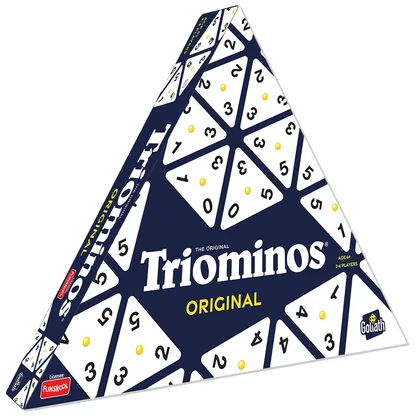
| Why consider it | This game Rummikub with light cardboard tiles in a small Funskool box | A different fit Funskool's Original box: the same game with 106 plastic tiles, racks and rack holders | A different fit Another Funskool number-tile game on racks for 2 to 4, matching corners instead of making runs | A different fit A rummy-style card game of runs and sets for bigger groups |
| Players | 2–4 | 2–4 | 2–4 | 2–6 |
| Best with | 3-4 | 3-4 | 2-4 | 3-5 |
| Play time | 20–60 min | 20–60 min | 20–45 min | 45–90 min |
| Age | 7+ | 7+ | 6+ | 7+ |
| Rules | Easy | Easy | Easy | Easy |
| Indian edition | Available | Available | Available | Available |
| On this page | Explore Rummikub | Explore Triominos | Explore Phase 10 |
More by Ephraim Hertzano
Another way into their collection.
More from Rummikub (Lemada)
Another way into their collection.
More from Funskool
Also made or sold in India by Funskool.
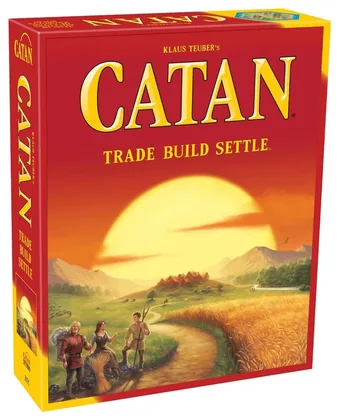
Catan
Trade wheat for brick, build roads, and race to ten points.
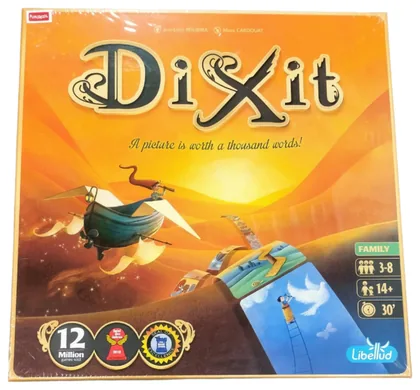
Dixit
Give a clue for a dreamlike picture, but not too obvious
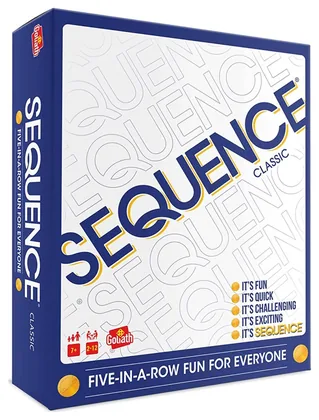
Sequence
Play a card, claim its space, and make five in a row.
Rummikub
Rummy with tiles: build runs and groups, then rearrange the table
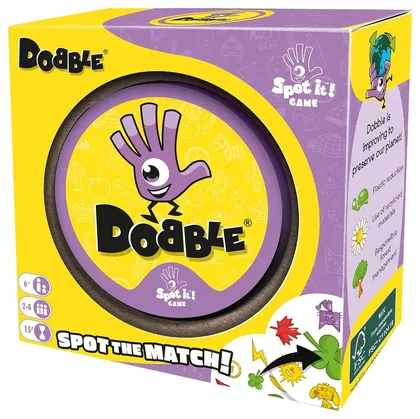
Dobble
Race to spot the one picture any two cards share
More set-collecting games
Different games. A familiar kind of fun.
Rummikub
Rummy with tiles: build runs and groups, then rearrange the table
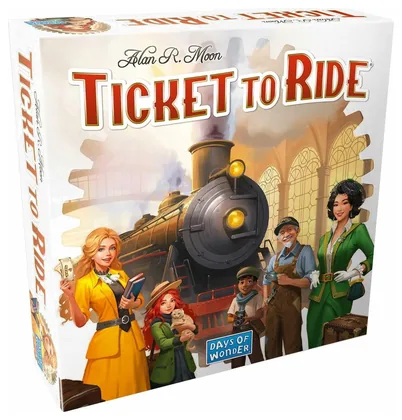
Ticket to Ride
Collect coloured cards and claim railway routes across America.
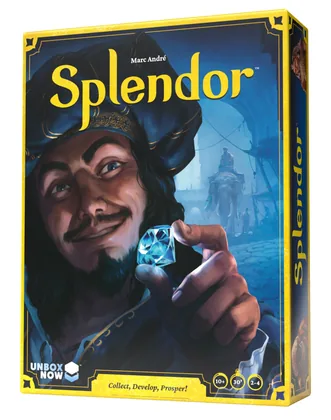
Splendor
A quick gem-trading race where every card makes the next easier.

Jaipur
Two rival merchants trade goods and camels in old Jaipur

Sushi Go!
Pick a dish, pass the rest, build the best sushi meal
Also playable with two
For game nights with two players.
Splendor
A quick gem-trading race where every card makes the next easier.
Jaipur
Two rival merchants trade goods and camels in old Jaipur
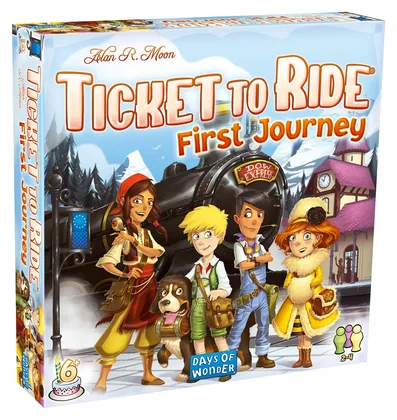
Ticket to Ride: First Journey
A shorter, simpler Ticket to Ride made for children six and up
Skip-Bo
Build shared piles from 1 to 12 and empty your Stockpile first
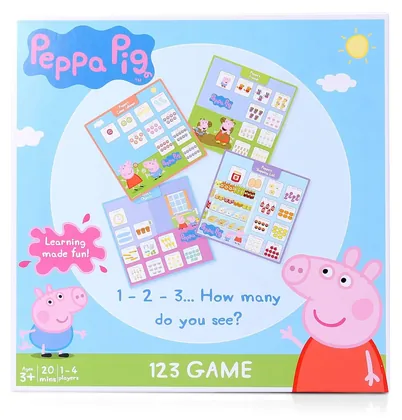
Peppa Pig 123 Game
Pick a token, count the pictures and find where it belongs
Questions people ask about Rummikub Joy
What is the difference between Rummikub Joy and the Original Rummikub?
The game and the 106-tile set are the same. Joy's tiles are printed cardboard and its box lists four racks and no rack holders, so it is much lighter and smaller. The Original (Funskool item 4939100) has plastic tiles, four racks and four rack holders.
Does Rummikub Joy have letter tiles?
No. Funskool's page and box back list number tiles: 1 to 13 in four colours, two of each, plus two jokers. Some listing titles add the word 'Alphabet', and a letters version called Rummikub Joy exists in Brazil, but Funskool's Joy is the numbers game.
Is Funskool's Rummikub Joy the real Rummikub?
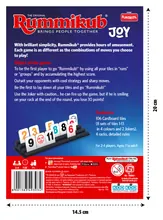
Yes. The box says 'The Original Rummikub' and carries Rummikub's trademark and copyright notices with a licensee line, and Funskool makes it in India. It follows the official rules, including the 30-point first move and the 30-point joker penalty.
What age is Rummikub Joy for?
The box back says 2 to 4 players, ages 7 to adult. Children need to know numbers up to 13 and be able to add up to 30 for the first move. The tiles are small, so keep them away from toddlers.
Is Rummikub Joy good for travelling?
It is the lightest Rummikub Funskool makes, in a box of about 21 x 15 cm, so it packs easily for holidays. You still need a table, since the game spreads out as players lay down sets.
Game facts
- Designed by
- Ephraim Hertzano
- Publisher
- Rummikub (Lemada Light Industries, Israel); this cardboard-tile box is made and sold in India by Funskool under licence
- In India
- Funskool (India) Ltd, Chennai, which makes and sells this edition in India
- First published
- 2024
- Players
- 2–4
- Barcode
- 8901383493934
- Language
- No reading – The tiles carry only the numbers 1 to 13 in four colours and two joker faces, so nobody reads during play and the rules can be explained in Hindi, Tamil or any home language. Adding up scores needs simple sums. The rules that come in the box are in English.
- Box size and weight
- 21 × 15 cm, 0.27 kg
- Awards
- Spiel des Jahres (German Game of the Year), 1980 (Winner)
Sources & photo creditsThe references behind this guide.
Facts on this page come from the publisher, the Indian maker or distributor, and the sources below. Photos are credited under each one.
- Funskool - Rummikub Joy product page (item 4939300)
- Funskool - Rummikub Classic product page
- Rummikub official site - Rummikub Lite (cardboard edition)
- Rummikub official site - Rummikub Classic
- Rummikub official English rules (PDF)
- Rummikub official site - About
- Rummikub - Wikipedia
- Toycra - Funskool Rummikub Joy Games (SKU 4939300)
- Fast Shop (Brazil) - Jogo Rummikub Joy Palavras
- Geeky Hobbies - Rummikub board game review and rules