
- Set-up
- Under a minute
- Reading
- Some
The quick verdict
Full verdict ↓Great for Mixed-age family groups of up to six, with an adult reading questions to the youngest
Think twice if No one can read the questions to children who can't read yet: every turn starts with one
How we rate it
Learning curve. Answer, flip, place or stack: a 5-year-old can follow it with help, and the only maths is adding and taking away with numbers up to 10.
Luck & skill. Which question you draw, and which number is on its back, decides a lot; knowing answers and spotting useful stacks help, and older players have an edge.
Interaction. Everyone builds their own number line; players share the deck and listen to each other's questions, but nobody can block or take cards.
Set-up. Shuffle the 99 cards into one deck; that's all.
Reading. Each turn starts with a short English question, and the backs carry a number and a short fact; non-readers need someone to read for them.
Learning curve: 1 = UNO or Connect 4; 3 = Catan; 5 = a heavy strategy game. These describe the experience, not an overall score.
Amazon Prime Get fast, free delivery on eligible items and early access to select sales. See Prime plans ↗
Is SLAM 10 right for you?
Great if
- Mixed-age family groups of up to six, with an adult reading questions to the youngest
- Children of 5 to 9 practising adding and taking away with small numbers
- Quiz-loving children: questions on science, history, geography and pop culture
- Car journeys and visits to grandparents: one small box of cards
Skip it if
- No one can read the questions to children who can't read yet: every turn starts with one
- Older children want harder maths: the number line only runs from 1 to 10
- You want a game decided by skill alone: which card you draw matters a lot
How SLAM 10 plays
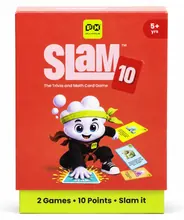
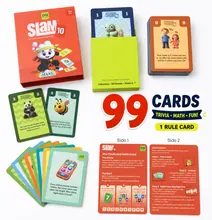
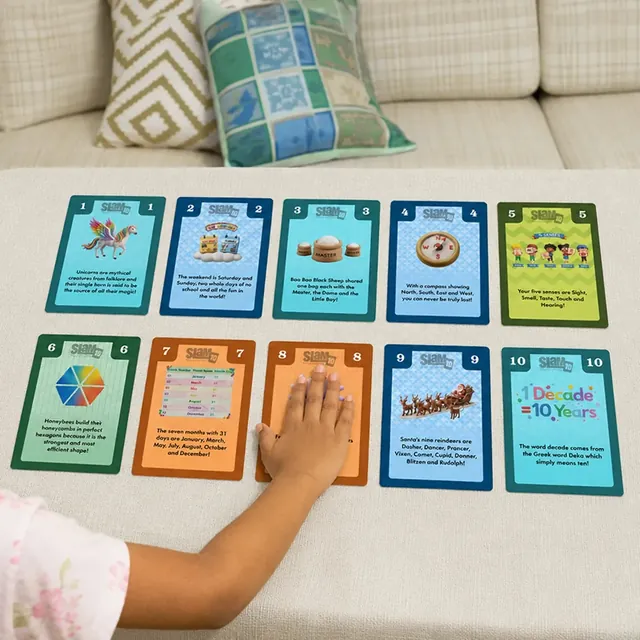
Set-up: shuffle the 99 cards into one deck. Each card has a question on the front and its answer, a number, on the back, often with a short fun fact. That's all you need; the rule card explains the rest.
- Time to teach: about 3 minutes.
- Reading and language: Every turn starts with a question in English, from science, history, geography, pop culture and more, but the answers are numbers. Children who can't yet read can play if an adult or older child reads the questions out, and the questions can be put in Hindi or any home language as you read. PlayHaus lists no other language edition.
Slam 10 - Fun Trivia & Math Card Game for Kids | How to Play · PlayHaus Games · Official
If this creator doesn’t allow embedded playback, watch on YouTube ↗.
A turn, step by step
- 1Ask
Draw a card and read out its question without turning the card over.
- 2Answer
Give your answer, then flip the card: if the number on the back matches, keep the card; if not, it goes back.
- 3Build
Place the number in your line from 1 to 10, or stack it on a card you hold to add up or take away to a number you need.
- 4Win
The first player to lay out every number from 1 to 10 in order wins.
The full explanation: how a game of SLAM 10 goes
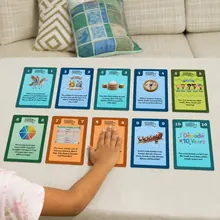
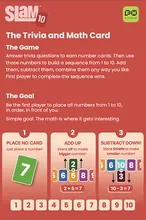
A turn: draw a card and read out the question without turning the card over. Give your answer, then flip the card to check it against the number on the back. Right, and the card is yours to keep; wrong, and it goes back into the deck, so no number this time. PlayHaus's own card pictures include questions such as how many digits an Indian mobile number has, and a maths puzzle about a sister's age.
Using the number: you are building a number line from 1 to 10 in front of you. A card can go straight into its place if it fits, or you can stack it on a card you already have: stack upwards to add the two numbers, or downwards to take one from the other, to reach a number you still need. So a 3 and a 4 can stand in for 7, and so can a 10 with a 3 taken away.
Winning: the first player to lay out every number from 1 to 10, in order, wins. PlayHaus's box calls it two games and one winner: the trivia decides which numbers you get, and the maths decides how you use them.
Tip: with young children at the table, let an adult read every question aloud and let the child count out the stacks; older players can be asked to answer without hints.
What's in the box
- 99Trivia and maths cards
a question on the front, its number answer on the back - 1Rule card
two-sided: quick-start rules on one side, how a round works on the other
Box: 12 × 9.5 cm, 0.31 kg. Handy to know for gifting and travel.
From PlayHaus's What's in the Box section ('99 Slam 10 cards', a quick-start rule card and game instructions) and pictures ('99 cards', '1 rule card', sides 1 and 2), and the Amazon.in listing (99 trivia and maths cards and 1 rule card). PlayHaus's header counts 100 cards, the 99 plus the rule card. The Trivia and Word box has different cards.
Where to buy
Boardgames.in helps you choose a game. You place your order on Amazon.in, where you can check the seller, delivery estimate and return terms before paying. Amazon.in’s policies apply to your purchase. As an Amazon Associate, we may earn a commission when you buy through our links, at no extra cost to you.
How to make sure you get a genuine copyEditions and the details worth checking.
What reviewers and players say
We found no independent reviews or forum threads about SLAM 10, which PlayHaus put on sale in July 2026, so this rests on PlayHaus's own page, rule card, box pictures and videos. On paper it is a clever pairing for young families: every question has a number for an answer, so a right answer hands you a card for your number line, and adding and taking away fills the gaps. The draw of the cards matters a lot, which keeps younger children in the game against older ones. It suits mixed-age groups from 5 up, with an adult reading the questions to non-readers.
What people love
- Every answer is a number, so the quiz feeds straight into the maths
- Stacking cards to add or take away gives young children a reason to do sums
- Up to six players, so cousins and grandparents can join in
- Card backs carry short fun facts as well as the answer
Common complaints
- No independent reviews yet
- Non-readers need someone to read every question
- The luck of the draw can outweigh what you know
5 research sources
- Reference Slam 10 (PlayHaus product page, July 2026) · PlayHaus
- Reference Slam 10 shop data (PlayHaus, July 2026) · PlayHaus
- Reference Slam 10 - Fun Trivia & Math Card Game for Kids | How to Play (PlayHaus Games, August 2026) · YouTube - PlayHaus Games
- Reference Slam 10 - Math & Trivia Card Game in Action | Family Game Night (PlayHaus Games, August 2026) · YouTube - PlayHaus Games
- Reference Slam 10: Trivia and Word Card Game (PlayHaus product page, 2026) · PlayHaus
Summarised in our own words from the sources above. We don't use Amazon reviews or ratings.
More like SLAM 10
Which game is the best fit?
Our picks if SLAM 10 isn't quite right.
Swipe to compare every game
| Compare the games.The details that make a difference. |
YOU’RE VIEWING
 SLAM 10 |
ANOTHER WAY TO PLAY
 Bridgit: Number Bridge |
ANOTHER WAY TO PLAY
 DIBS |
ANOTHER WAY TO PLAY
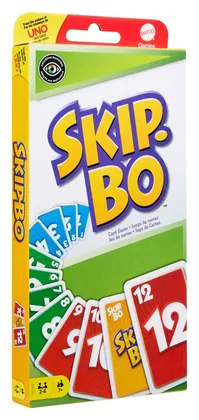 Skip-Bo |
|---|---|---|---|---|
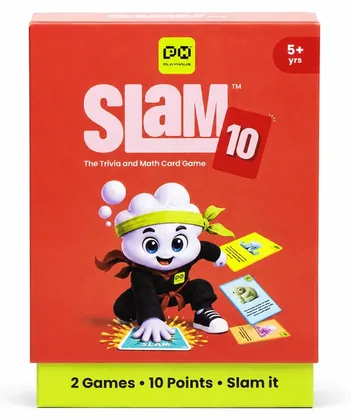
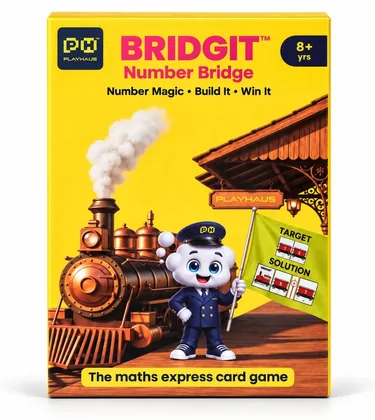
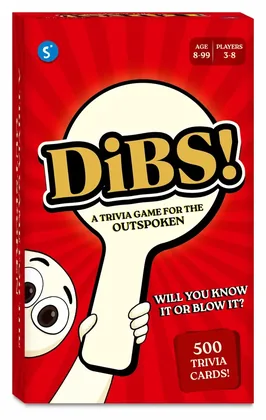
| Why consider it | This game Answer trivia, win number cards and build 1 to 10 first | A different fit PlayHaus's two-player maths race: digits and signs to hit a target number | A different fit A trivia card game where a right answer wins the card, first to seven, from 8 | A different fit Another race to lay numbers out in order, here from 1 to 12, from 7 |
| Players | 2–6 | 2 | 3–8 | 2–6 |
| Best with | 3-4 | 2 | 4-6 | 2-4 |
| Play time | 20 min | 20 min | 20–30 min | 20–45 min |
| Age | 5+ | 8+ | 8+ | 7+ |
| Rules | Easy | Easy | Easy | Easy |
| Indian edition | Available | Available | Available | Available |
| On this page | Explore Bridgit: Number Bridge | Explore DIBS | Explore Skip-Bo |
More from PlayHaus
Another way into their collection.
Color Match
Build chains in your colour and break everyone else's
Peek N Win
Lift as few lids as you can, then guess the hidden answer
PlayHaus This & That
Find one word that rhymes with one card and fits the other
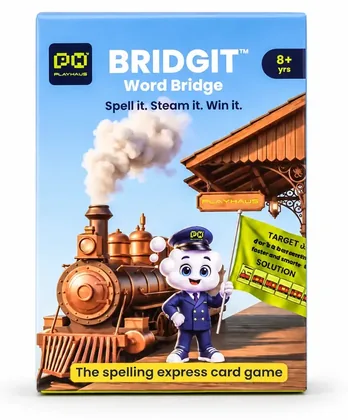
Bridgit: Word Bridge
Spell a word that fits the challenge and steam home first
Bridgit: Number Bridge
Turn digits and signs into a sum that hits the target
More set-collecting games
Different games. A familiar kind of fun.
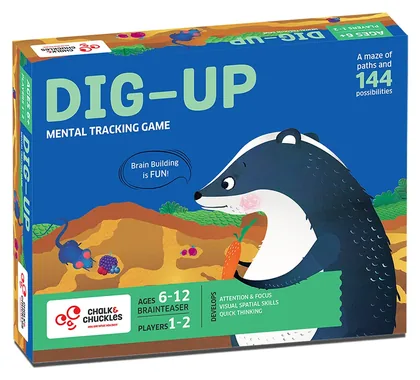
Dig Up
Follow the underground paths with your eyes and race to shout Dug
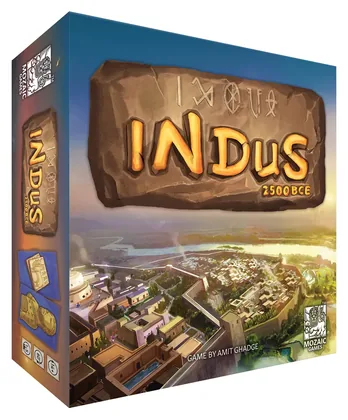
Indus 2500 BCE
Draw your own Indus Valley city and protect it from calamities
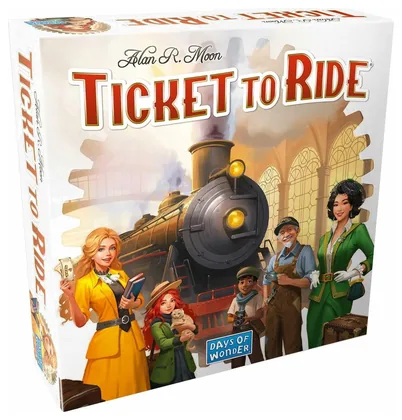
Ticket to Ride
Collect coloured cards and claim railway routes across America.
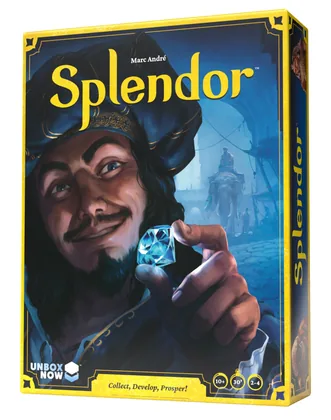
Splendor
A quick gem-trading race where every card makes the next easier.

Jaipur
Two rival merchants trade goods and camels in old Jaipur
Also playable with two
For game nights with two players.
Dig Up
Follow the underground paths with your eyes and race to shout Dug
Indus 2500 BCE
Draw your own Indus Valley city and protect it from calamities
Splendor
A quick gem-trading race where every card makes the next easier.
Jaipur
Two rival merchants trade goods and camels in old Jaipur
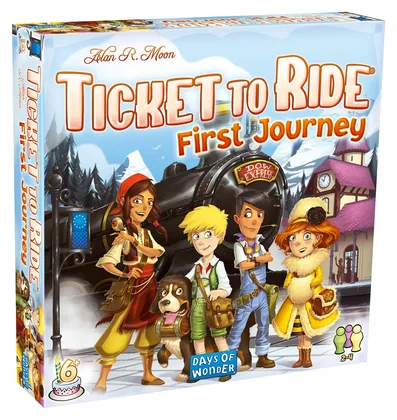
Ticket to Ride: First Journey
A shorter, simpler Ticket to Ride made for children six and up
Questions people ask about SLAM 10
How do you play SLAM 10?
Draw a card and answer its question; the answer is a number, printed on the back. Get it right and you keep the card. Lay your cards out from 1 to 10, or stack two cards to add up or take away to a number you need, and the first to complete 1 to 10 in order wins.
What age is SLAM 10 for?
PlayHaus says 5 and up, on its web page and on the box. Five-year-olds can play the maths part well, but someone needs to read the questions to them, and some questions suit older children better.
How many players can play SLAM 10?
PlayHaus says 2 to 6 players, and its own videos suggest three or four is a sweet spot. Everyone builds their own number line, so a big group of cousins just takes a little longer.
What is the difference between SLAM 10 Trivia and Math and Trivia and Word?
Both have you answer trivia to win cards. In the Trivia and Math box (this page) each card gives you a number, and you build a line from 1 to 10 using adding and taking away. In the Trivia and Word box, for ages 7 and up, each card gives you a letter, and you race to spell two five-letter words.
Is SLAM 10 made in India?
Yes. PlayHaus's picture of the box back gives India as the country of origin and names VK Global Digital, in Faridabad, Haryana, as the manufacturer. PlayHaus is a Bengaluru brand run by Hangtime Games.
Game facts
- Publisher
- PlayHaus (Hangtime Games Pvt. Ltd., Bengaluru)
- In India
- Hangtime Games Pvt. Ltd., Bengaluru, which markets PlayHaus games; the box back names VK Global Digital Pvt. Ltd., Faridabad, as manufacturer
- First published
- 2026
- Players
- PlayHaus's page and FAQ say 2 to 6 players; its video descriptions suggest it works best with three or four.
- Language
- Some English – Every turn starts with a question in English, from science, history, geography, pop culture and more, but the answers are numbers. Children who can't yet read can play if an adult or older child reads the questions out, and the questions can be put in Hindi or any home language as you read. PlayHaus lists no other language edition.
- Box size and weight
- 12 × 9.5 cm, 0.31 kg
Sources & photo creditsThe references behind this guide.
Facts on this page come from the publisher, the Indian maker or distributor, and the sources below. Photos are credited under each one.
- PlayHaus - Slam 10 product page
- PlayHaus - Slam 10 shop data (Shopify product record)
- PlayHaus - Slam 10: Trivia and Word Card Game product page
- PlayHaus - Number Ninja Duo page (Number Bridge and SLAM 10)
- Slam 10 - Fun Trivia & Math Card Game for Kids | How to Play (PlayHaus Games, YouTube, August 2026)