
- Set-up
- About 3 min
- Reading
- Some
The quick verdict
Full verdict ↓Great for Children of about 5 to 7 playing their first game with money
Think twice if You usually have five or six players; it is listed for 2 to 4, and Jumbo Picnic has the bigger board
How we rate it
Learning curve. One roll and one square a turn, so five-year-olds pick it up straight away and it sits with UNO at 1 on our scale. The money is the only part that needs help.
Luck & skill. Where you land and which card you draw decide the game; there is very little to choose on a turn.
Interaction. Players travel side by side and share the bank, but nothing seen on the board or cards lets you hold up or rob another player.
Set-up. Unfold the small board, give out tokens and starting notes, shuffle the 12 cards and pick a banker.
Reading. Short English text on the squares and cards; an adult reads them for children who can't read yet.
Learning curve: 1 = UNO or Connect 4; 3 = Catan; 5 = a heavy strategy game. These describe the experience, not an overall score.
Is Picnic Junior right for you?
Great if
- Children of about 5 to 7 playing their first game with money
- Two to four children with a grown-up as banker on a holiday afternoon
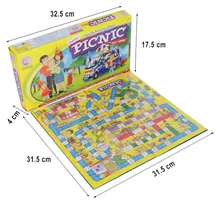
- Small flats and crowded shelves: the box is about 33 x 18 cm and weighs about half a kilo
- A present for a younger cousin who has outgrown Snakes and Ladders
Skip it if
- You usually have five or six players; it is listed for 2 to 4, and Jumbo Picnic has the bigger board
- Your children want to plan and outwit each other; the die and the cards decide almost everything
- Nobody wants to read every square and card aloud for children who can't read yet
How Picnic Junior plays
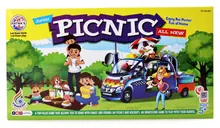
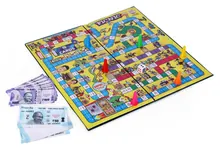
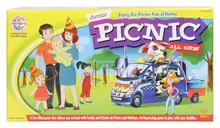
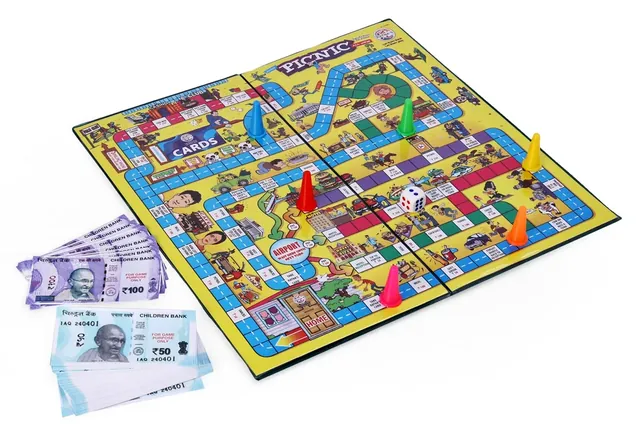
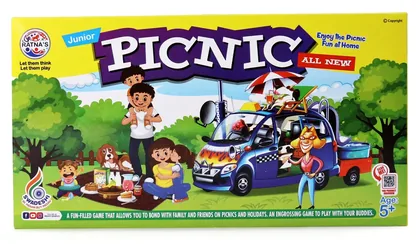
In the box, according to an Indian toy shop's product data: a game board, 12 cards, six coloured tokens, a die, a set of play notes and Ratna's instruction leaflet, in a box about 33 x 18 x 4 cm. Each player picks a token, and the banker hands out the starting money the leaflet gives.
- Time to teach: about 5 minutes.
- Reading and language: Squares and cards give short instructions in English, such as miss a turn or collect 200, so non-readers need someone to read aloud; the amounts are round hundreds that young children can learn to count out with help.
Unboxing and review of RATNA'S junior Picnic Board Family Game for gift · The Knowledge Crusade
Choose a video · Watch right here
If this creator doesn’t allow embedded playback, watch on YouTube ↗.
A turn, step by step
- 1Roll
Roll the die and move your token round the day trip.
- 2Square
Follow the square: wait, miss a turn, go back, or draw one of the 12 luck cards.
- 3Pay
Pay or collect play money when a square or card tells you to.
- 4Home
Race for Home; Ratna's leaflet says how the winner is decided.
The full explanation: how a game of Picnic Junior goes
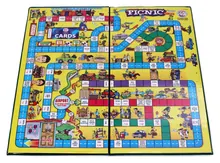
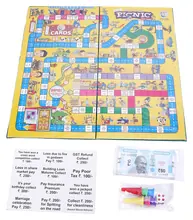
Players take turns to roll and move. The board is laid out like a day out from home: store photos of this box show squares such as a club, a casino, a hotel and a motel, the airport (wait there until your next turn), a puncture (off to the garage), car-sickness or a cow on the road (miss a turn) and a forgotten mobile phone that sends you back. Take-a-card squares draw from the 12 cards, which pay or charge round sums such as 100, 200 or 250: birthday money, a jackpot or a GST refund on the good side, a fire in the godown, an insurance premium or a fine for spitting on the road on the bad side.
The trip ends at Home. Ratna's leaflet, which isn't published online, says whether the first player home wins or whether everyone finishes and the richest wins, so read it and agree before the first roll. With two to four players, a game should take about 20 to 45 minutes.
Picnic Junior or Jumbo Picnic? Indian store listings give both boxes the same contents, so the choice is about size. Junior's box is about 33 x 18 cm and half a kilo and is listed for 2 to 4 players; Jumbo's box is about 42 x 23 cm and about a kilo, with a board about 42 cm across, listed for 2 to 6. Our Amazon.in link here goes to Junior; pick Jumbo if your family games usually have five or six players.
What's in the box
- 1Game board
smaller than the Jumbo board - 12Cards
luck cards that pay or charge sums such as 100, 200 or 250 - 6Tokens
in different colours - 1Die
- –Play money
paper notes printed for game use only - 1Instruction leaflet
Box: 33 × 18 × 4 cm, 0.5 kg. Handy to know for gifting and travel.
From an Indian toy shop's product data for this box, which names Prem Ratna Toys as the maker: 1 game board, 12 cards, 6 tokens of different colours, 1 die, 1 set of currency and an instruction manual. Store photos of the Junior box's contents show the board, the cards and the notes. The Jumbo box lists the same contents on a bigger board.
Where to buy
How to make sure you get a genuine copyEditions and the details worth checking.
What reviewers and players say
Picnic Junior has had almost no attention beyond store listings: we found no written reviews, parenting blogs or forum threads, only a Hindi unboxing-and-review video from 2021 that we couldn't draw opinions from. What the box offers is clear from the store photos: a gentle trip game for young children, with familiar scenes like the airport and a cow on the road, and play money that turns each turn into counting practice. The flip side is that luck decides almost everything, so it suits children of about 5 to 7 more than older ones.
What people love
- Small, light box that is easy to store and take to grandparents' homes
- Simple enough for five-year-olds, with a grown-up as banker
- Everyday Indian scenes on the board, from traffic to a forgotten mobile
- Counting out notes for birthday money and fines is maths practice without noticing
Common complaints
- Almost all luck, so older children soon want more to decide
- The rules aren't online, so keep the leaflet safe
- Listed for only 2 to 4 players, which can leave out a big family
5 research sources
- Reference Junior Picnic Board Game: maker, barcode, size, weight and contents (read October 2026) · Kheliya Toys
- Reference Ratnas Picnic Game - Multicolour, 33.5 x 18.5 cm box (read October 2026) · FirstCry
- Reference Unboxing and review of RATNA'S junior Picnic Board Family Game (The Knowledge Crusade, August 2021) · YouTube
- Reference Ratna's Picnic Board Game Junior (read October 2026) · Satyam Stationers
- Reference PREM RATNA TOYS channel description (read October 2026) · YouTube
Summarised in our own words from the sources above. We don't use Amazon reviews or ratings.
More like Picnic Junior
Which game is the best fit?
Our picks if Picnic Junior isn't quite right.
Swipe to compare every game
| Compare the games.The details that make a difference. |
YOU’RE VIEWING
 Picnic Junior |
ANOTHER WAY TO PLAY
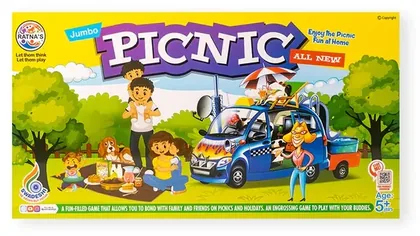 Jumbo Picnic |
ANOTHER WAY TO PLAY
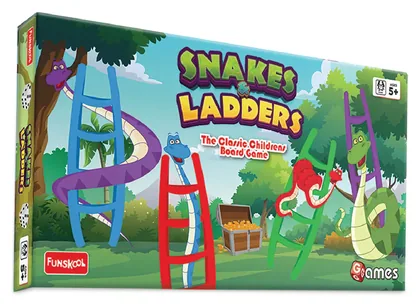 Snakes and Ladders |
ANOTHER WAY TO PLAY
 Ludo |
|---|---|---|---|---|
| Why consider it | This game Ratna's picnic trip dice game in a smaller, lighter box | A different fit The same game on a bigger board, listed for up to six players | A different fit An even simpler roll-and-race for the youngest, with no money or reading | A different fit Ratna's classic race game, where you can send other players back to start |
| Players | 2–4 | 2–6 | 2–4 | 2–4 |
| Best with | 3-4 | 3-4 | 2-4 | 4 |
| Play time | 20–45 min (est.) | 30–60 min (est.) | 15–30 min | 30–60 min |
| Age | 5+ | 5+ | 5+ | 5+ |
| Rules | Easy | Easy | Easy | Easy |
| Indian edition | Available | Available | Available | Available |
| On this page | Explore Jumbo Picnic | Explore Snakes and Ladders | Explore Ludo |
More from Ratna's
Another way into their collection.

Business
India's own property game: buy cities, collect rent, build hotels
Ludo
India's favourite race game: roll a six, cut and race home
Tic Tac Toe
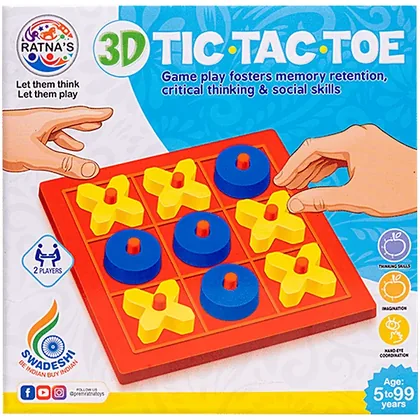
Three in a row wins: every child's first strategy game
International Cricket
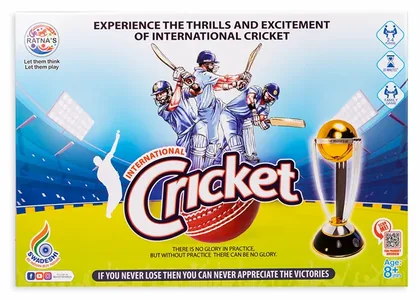
Bowl, bat and chase runs on a cloth cricket ground at home
Jumbo Picnic
Ratna's big-board picnic trip: roll, pay your way and reach home
More roll-and-move games
Different games. A familiar kind of fun.

Monopoly Junior
Monopoly for little ones: one die, simple rules, half an hour

Monopoly Junior: Peppa Pig Edition
Monopoly Junior with Pig family tokens and places from Peppa's world
Jumbo Picnic
Ratna's big-board picnic trip: roll, pay your way and reach home
Ludo
India's favourite race game: roll a six, cut and race home
Snakes and Ladders
Climb the ladders, dodge the snakes, first to 100 wins
Also playable with two
For game nights with two players.
Monopoly Junior
Monopoly for little ones: one die, simple rules, half an hour
Monopoly Junior: Peppa Pig Edition
Monopoly Junior with Pig family tokens and places from Peppa's world
Snakes and Ladders
Climb the ladders, dodge the snakes, first to 100 wins
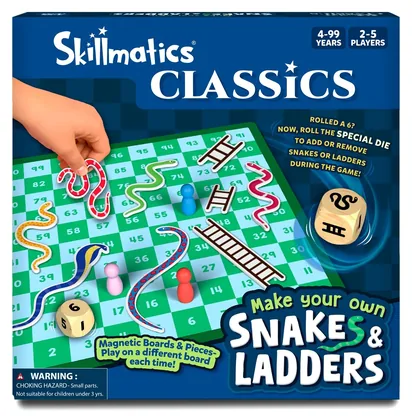
Magnetic Snakes & Ladders
Snakes and Ladders where you place the snakes and ladders yourself
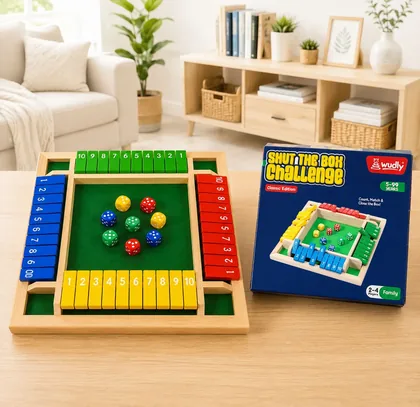
Shut the Box
Roll two dice, flip down the tiles, leave the smallest total
Questions people ask about Picnic Junior
Is Picnic Junior the same game as Jumbo Picnic?
As far as the makers' information goes, yes: Indian store listings give both boxes the same contents, a board, 12 cards, six tokens, a die, play money and a leaflet. Junior is the smaller box, about 33 x 18 cm and half a kilo, listed for 2 to 4 players; Jumbo is about 42 x 23 cm and a kilo, listed for 2 to 6.
Can five or six children play Picnic Junior?
It is listed for 2 to 4. A store's contents list mentions six tokens, so a fifth or sixth player may fit, but the smaller board gets crowded; for a group of five or six, Jumbo Picnic is the better buy.
What will my child learn from Picnic Junior?
Mostly counting and handling money: paying and collecting round sums such as 100, 200 and 250 and making change with play notes. Reading the squares and cards aloud is good practice for early English readers, with a grown-up helping.
Is Ratna's Picnic Junior made in India?
Yes. Ratna's is the brand of Prem Ratna Toys, a Mumbai toy maker, and store photos of the Picnic Junior box show 'Made in India' printed on it.
How long does a game of Picnic Junior take?
Ratna's doesn't say. With two to four players, allow about 20 to 45 minutes.
Game facts
- Publisher
- Ratna's (Prem Ratna Toys, Mumbai)
- In India
- Prem Ratna Toys, Mumbai (maker of Ratna's games)
- Players
- The listing says 2 to 4 players. An Indian store's contents list for this box gives six tokens, the same as the Jumbo box, so the box may allow more; for five or six players the bigger Jumbo board is the safer choice.
- Barcode
- 8904114982202
- Language
- Some English – Squares and cards give short instructions in English, such as miss a turn or collect 200, so non-readers need someone to read aloud; the amounts are round hundreds that young children can learn to count out with help.
- Box size and weight
- 33 × 18 × 4 cm, 0.5 kg
Sources & photo creditsThe references behind this guide.
Facts on this page come from the publisher, the Indian maker or distributor, and the sources below. Photos are credited under each one.
- Kheliya Toys - Ratna's Junior Picnic Board Game (maker details, barcode, size, weight and contents)
- FirstCry - Ratnas Picnic Game, 33.5 x 18.5 cm box (age, size, country of origin, photos)
- FirstCry - Ratnas Picnic Game (gallery with Picnic Junior box photos)
- Satyam Stationers - Ratna's Picnic Board Game Junior (barcode, box photo)
- Kheliya Toys - Ratna's Jumbo Picnic (the bigger box, for comparison)
- Prem Ratna Toys - official YouTube channel (about the maker)
- Unboxing and review of RATNA'S junior Picnic Board Family Game (The Knowledge Crusade, August 2021)