
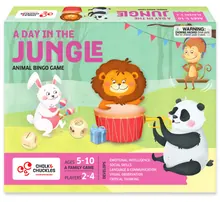
- Set-up
- About 2 min
- Reading
- Little
The quick verdict
Full verdict ↓Great for Children of about 5 to 8 who are ready for a bingo game but not for Tambola's numbers up to 90
Think twice if You want a game with real choices: like Housie, it is all luck
How we rate it
Learning curve. Roll, find the picture, cover it. A five-year-old follows it after one round, so it sits with UNO and Connect 4 at 1 on our scale.
Luck & skill. Like Housie, it is all luck: the dice decide which pictures are called, and you only need sharp eyes to spot yours.
Interaction. Everyone watches the same roll, but nobody can block or take from anyone else. The shared part is talking about the kind acts in the pictures.
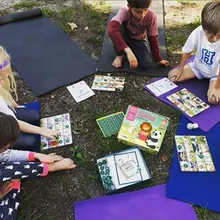
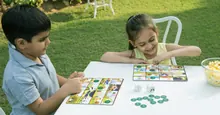
Set-up. Hand out a board to each player and put the caller board, the two dice and the chips in the middle.
Reading. The boards are pictures; the caller may need to say the action aloud if the die shows it as a word, and the game guide is in English.
Learning curve: 1 = UNO or Connect 4; 3 = Catan; 5 = a heavy strategy game. These describe the experience, not an overall score.
Is A Day in the Jungle right for you?
Great if
- Children of about 5 to 8 who are ready for a bingo game but not for Tambola's numbers up to 90
- Parents who want to talk about helping, sharing and caring without a lecture
- Evenings with grandparents and cousins: the boards are pictures, so everyone can follow
- A birthday gift from an Indian maker
Skip it if
- You want a game with real choices: like Housie, it is all luck
- You have more than four players: there are only four boards
- There are babies or toddlers at home: the box warns that small parts make it unsuitable under 3
How A Day in the Jungle plays
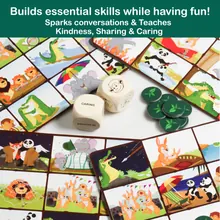
Each player takes one of the four jungle boards. Every board is covered with pictures of jungle animals doing something kind for each other, such as helping, sharing or caring. Put the caller board, the two wooden dice and the pile of jungle chips in the middle of the table.
- Time to teach: about 3 minutes.
- Reading and language: The boards are pictures of animals doing kind things, so nobody needs to read them. The dice give an animal and an action, as in the maker's example 'Monkey and Helping'; if the action is written as a word, the caller simply says it aloud. The talk about who is being kind works just as well in Hindi or any home language. The game guide is in English.
Chalk and Chuckles A Day In The Jungle-Unboxing · Chalk and Chuckles · Official
If this creator doesn’t allow embedded playback, watch on YouTube ↗.
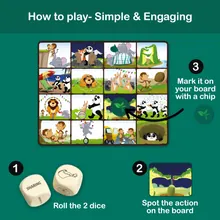
A turn, step by step
- 1Roll
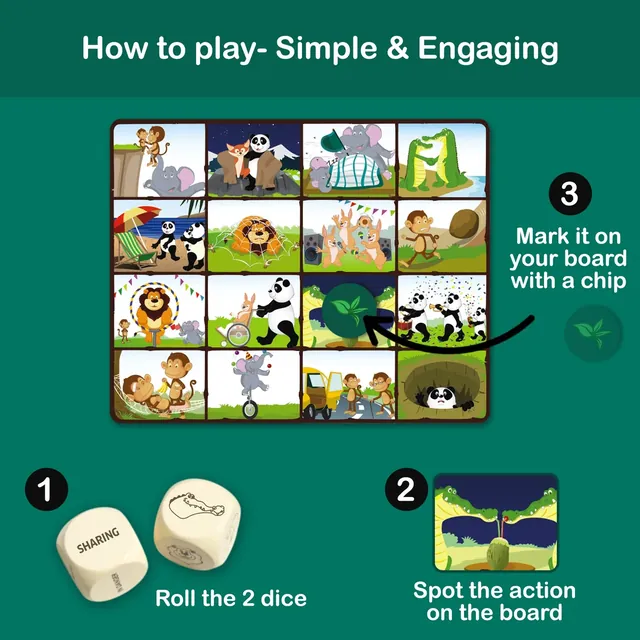
Roll both dice and call out the animal and the action, such as 'Monkey and Helping'.
- 2Mark
Anyone whose board shows that picture, here a monkey helping another animal, covers it with a jungle chip.
- 3Win
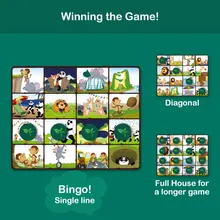
The first to cover four squares in a row, column or diagonal shouts 'Jungle Love!' and wins; play for a full house for a longer game.
The full explanation: how a game of A Day in the Jungle goes
Roll both dice and call out what they show. One roll gives an animal and an action, so the maker's example call is 'Monkey and Helping'. Everyone checks their own board for that picture, here a monkey helping another animal, and whoever has it covers it with a chip. Taking turns to roll and call keeps everyone busy, or an adult can be the caller for the youngest.
The first player to cover any four squares in a straight line, across, down or corner to corner, shouts 'Jungle Love!' and wins. For a longer game, the maker's pictures suggest playing for a full house, where you must cover the whole board.
For parents: the real value is in the chat. When a picture is found, ask who is being kind and how, or what your child would do in that animal's place. A five-year-old can play alone once they know the pictures; a younger child can share a board with an adult. The chips and dice are small, so pack them away from toddlers.
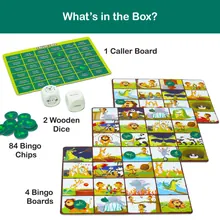
What's in the box
- 4Jungle bingo boards
one per player, covered with pictures of animals helping, sharing and caring - 84Jungle chips
for covering pictures; some listings say 100 - 1Caller board
- 2Wooden dice
a roll gives an animal and an action, such as 'Monkey and Helping' - 1Game guide
Box: 26.7 × 21.6 × 5.8 cm, 0.75 kg. Handy to know for gifting and travel.
Contents are from Chalk and Chuckles' product page and its 'What's in the Box?' picture for the box we link (item CCPPL007, barcode 8906045560078). A US library's catalogue record of the same game also lists 84 chips, a caller board, 2 wooden dice and an instruction booklet. The maker's text calls the caller board a 'caller sheet'. Some listings, including the one we link, say 100 chips; we follow the maker's 84.
Where to buy
How to make sure you get a genuine copyEditions and the details worth checking.
What reviewers and players say
We found no independent reviews, parenting blogs, videos or forum threads about A Day in the Jungle; what is online comes from Chalk and Chuckles itself, store listings and a US public library that lends it. On paper it is a simple, gentle first bingo: no numbers to read, pictures to spot and four in a row to win. Its twist is that every picture shows an animal being kind, which gives parents an easy way to talk about helping and sharing. Like any bingo it is all luck, so it is best treated as a calm family game rather than a challenge.
What people love
- No numbers or reading on the boards, so children who can't read yet can play
- Every picture is a small story about helping, sharing or caring, which gets children talking
- Familiar for Indian families: it works like Tambola, with dice instead of numbers
- Short rounds, with a full-house game when you want to play longer
Common complaints
- It is pure luck, so there is nothing for an older child to get better at
- Only four boards, so bigger groups need to share or take turns
- No independent reviews or how-to-play video yet, so it is hard to say how long it keeps children interested
5 research sources
- Reference A Day in the Jungle (Chalk and Chuckles product page, July 2022) · Chalk and Chuckles
- Reference Chalk and Chuckles A Day In The Jungle-Unboxing (Chalk and Chuckles, October 2021) · YouTube (Chalk and Chuckles)
- Reference A day in the jungle: social-emotional bingo (library catalogue record) · Chemeketa Cooperative Regional Library Service (Oregon, US)
- Reference Chalk & Chuckles A Day in the Jungle Matching Game (US distributor listing, January 2025) · Safari Ltd
- Reference Contact: registered office and factory address (Chalk and Chuckles) · Chalk and Chuckles
Summarised in our own words from the sources above. We don't use Amazon reviews or ratings.
More like A Day in the Jungle
Which game is the best fit?
Our picks if A Day in the Jungle isn't quite right.
Swipe to compare every game
| Compare the games.The details that make a difference. |
YOU’RE VIEWING
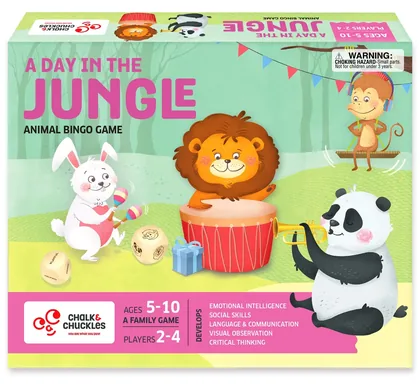 A Day in the Jungle |
ANOTHER WAY TO PLAY
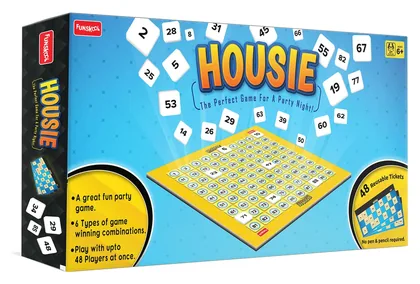 Housie (Tambola) |
ANOTHER WAY TO PLAY
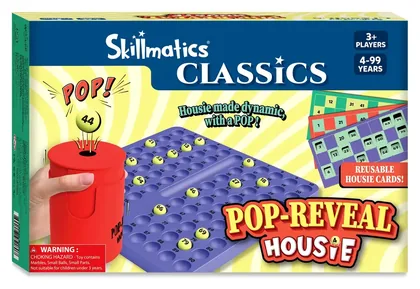 Pop-Reveal Housie |
ANOTHER WAY TO PLAY
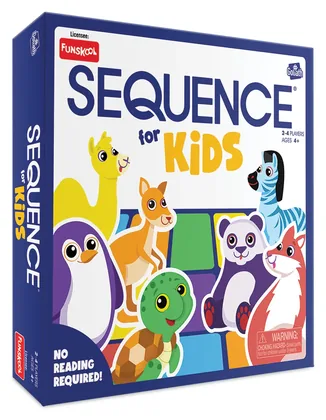 Sequence for Kids |
|---|---|---|---|---|
| Why consider it | This game Picture bingo about jungle animals helping, sharing and caring | A different fit The family number game this one is based on, for older children and grown-ups | A different fit Skillmatics' Housie for ages 4 and up, with numbered balls popped out of a can | A different fit Another four-in-a-row animal picture game, with a little more to decide |
| Players | 2–4 | 3–48 | 3–40 | 2–4 |
| Best with | 3-4 | 8-20 | 5-15 | 2-3 |
| Play time | 10–25 min | 15–30 min | 15–30 min | 10–20 min |
| Age | 5+ | 6+ | 4+ | 4+ |
| Rules | Easy | Easy | Easy | Easy |
| Indian edition | Available | Available | Available | Available |
| On this page | Explore Housie (Tambola) | Explore Pop-Reveal Housie | Explore Sequence for Kids |
More from Chalk and Chuckles
Another way into their collection.
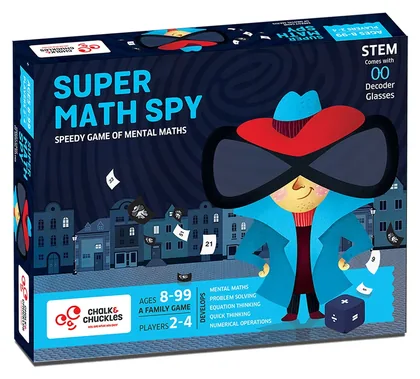
Super Math Spy
Race to build an equation that hits your mission number
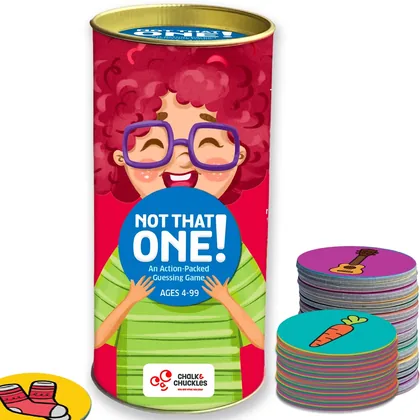
Not That One
Ask yes-or-no questions, grab tokens, and dodge the secret one
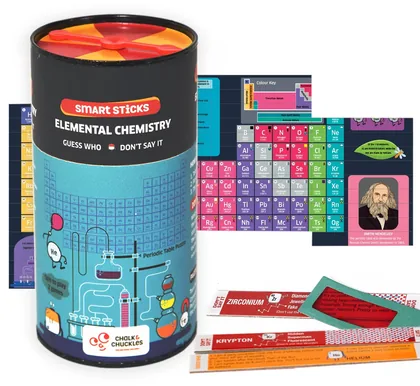
Smart Sticks Elemental Chemistry
Spin, pick a stick and race to name the element
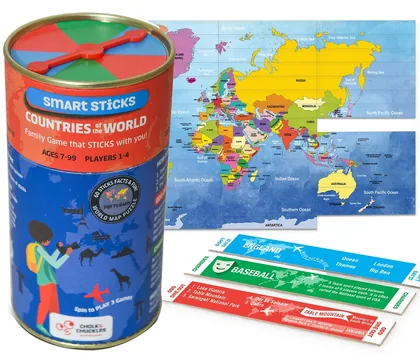
Smart Sticks Countries of the World
Act, describe and spot the odd one out across 60 countries
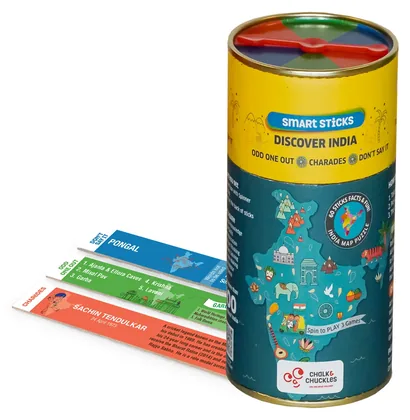
Smart Sticks Discover India
Charades, clues and odd-one-out rounds about India, plus a map puzzle
More dice games
Different games. A familiar kind of fun.

Ludo
India's favourite race game: roll a six, cut and race home
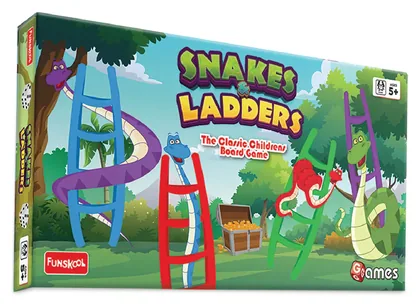
Snakes and Ladders
Climb the ladders, dodge the snakes, first to 100 wins
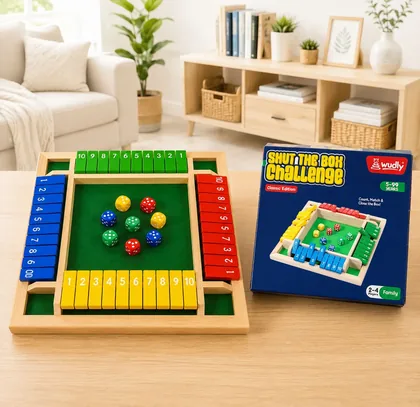
Shut the Box
Roll two dice, flip down the tiles, leave the smallest total

Monopoly Junior
Monopoly for little ones: one die, simple rules, half an hour

Trouble
Pop the bubble, race four pegs home and bump your rivals
Also playable with two
For game nights with two players.
Snakes and Ladders
Climb the ladders, dodge the snakes, first to 100 wins
Shut the Box
Roll two dice, flip down the tiles, leave the smallest total
Monopoly Junior
Monopoly for little ones: one die, simple rules, half an hour

Monopoly Junior: Peppa Pig Edition
Monopoly Junior with Pig family tokens and places from Peppa's world
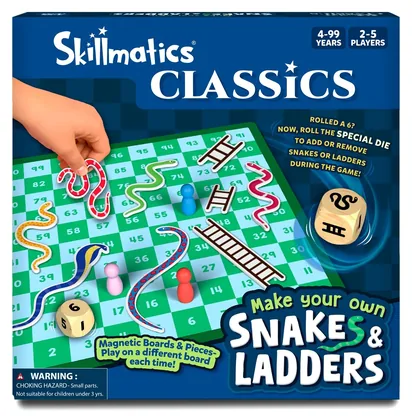
Magnetic Snakes & Ladders
Snakes and Ladders where you place the snakes and ladders yourself
Questions people ask about A Day in the Jungle
How do you play A Day in the Jungle?
Each player takes a jungle board. Roll the two dice to get an animal and a kind act, such as 'Monkey and Helping', and anyone whose board shows that picture covers it with a chip. The first to cover four in a row, across, down or corner to corner, shouts 'Jungle Love!' and wins.
What age is A Day in the Jungle for?
Chalk and Chuckles gives 5 to 10 years, and children of about 5 to 8 get the most from it. Some listings say 4 or 6 and up; a 4-year-old can share a board with an adult. The box warns that small parts make it unsuitable for children under 3.
Is A Day in the Jungle like Tambola?
Yes, the maker calls it a twist on Tambola. Instead of a caller drawing numbers from 1 to 90, two dice give an animal and an action, and you look for that picture on your board. That makes it a good first bingo for children who don't know big numbers yet.
How many players can play A Day in the Jungle?
Two to four, as there are four boards. With more children, pair them up so two share a board, or let one child be the caller who rolls and calls for everyone.
Is A Day in the Jungle made in India?
It comes from Chalk and Chuckles, an Indian company that lists its own factory in Kundli, Haryana. The maker's page for this game doesn't state the country of origin, so check the box label if it matters to you.
Game facts
- Publisher
- Chalk and Chuckles (Chalk and Chuckles Products Pvt Ltd, New Delhi, India)
- In India
- Chalk and Chuckles, an Indian company (registered office in New Delhi, factory in Kundli, Haryana), which publishes and sells the game in India
- First published
- 2013
- Players
- 2–4
- Barcode
- 8906045560078
- Language
- Little reading – The boards are pictures of animals doing kind things, so nobody needs to read them. The dice give an animal and an action, as in the maker's example 'Monkey and Helping'; if the action is written as a word, the caller simply says it aloud. The talk about who is being kind works just as well in Hindi or any home language. The game guide is in English.
- Box size and weight
- 26.7 × 21.6 × 5.8 cm, 0.75 kg
Sources & photo creditsThe references behind this guide.
Facts on this page come from the publisher, the Indian maker or distributor, and the sources below. Photos are credited under each one.
- Chalk and Chuckles - A Day in the Jungle (how to play, contents, size, ages)
- Chalk and Chuckles - A Day in the Jungle product data (item CCPPL007, barcode, weight)
- Chalk and Chuckles - Contact (registered office and factory address)
- Chalk and Chuckles - Our Story (company history since 2013)
- Chalk and Chuckles A Day In The Jungle - Unboxing (maker's video, October 2021)
- A day in the jungle: social-emotional bingo (library catalogue record, Chemeketa Cooperative Regional Library Service, Oregon)
- Safari Ltd - Chalk & Chuckles A Day in the Jungle Matching Game (US distributor listing)