

- Set-up
- Under a minute
- Reading
- None
The quick verdict
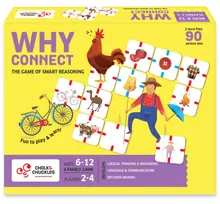
Full verdict ↓Great for Children of about 6 to 10 who love to explain things and argue their case
Think twice if Your family prefers games with clear right and wrong answers; here the group decides
How we rate it
Learning curve. Put down a tile and say why it fits: a six-year-old can follow it after one turn, so it sits with UNO at 1 on our scale. Thinking of good reasons is the challenge, not the rules.
Luck & skill. Which tiles you draw matters, but a quick, creative mind and the knack of convincing the table decide most games.
Interaction. Every move is explained to the others, who can accept or reject it, so the table talks and argues all game.
Set-up. Each player takes a wooden stand and draws six tiles from the bag; find a clear patch of table or floor, and keep a pencil for the score pad.
Reading. The tiles are pictures and the reasons are spoken; only the rules and scoring need reading.
Learning curve: 1 = UNO or Connect 4; 3 = Catan; 5 = a heavy strategy game. These describe the experience, not an overall score.
Is Why Connect right for you?
Great if
- Children of about 6 to 10 who love to explain things and argue their case
- Families who speak a mix of languages, since the reasons can be given in any language
- Parents and teachers who want children to practise thinking and speaking out loud
- Trips and get-togethers: there is no board, and the tiles travel in a cloth bag
Skip it if
- Your family prefers games with clear right and wrong answers; here the group decides
- You want a fast race; this is a slow, chatty game played turn by turn
- You need a game for more than four players
How Why Connect plays
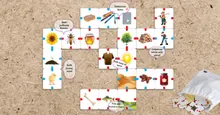
Each player takes a wooden stand and draws six picture tiles from the cloth bag. There is no board: the game grows across the table or the floor, tile by tile, across and down like a crossword.
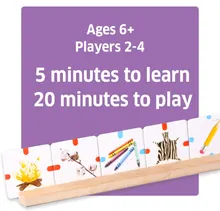
- Time to teach: about 5 minutes.
- Reading and language: The tiles are pictures, so nobody reads during play. The reasons are spoken, so you can play in Hindi, Tamil, Bengali or whatever mix of languages your family uses. Only the rules are in English, and an adult may need to keep the score.
Chalk and Chuckles Why Connect Game · Chalk and Chuckles · Official
Choose a video · Watch right here
If this creator doesn’t allow embedded playback, watch on YouTube ↗.
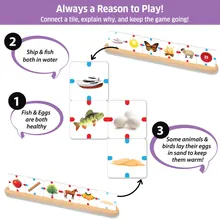
A turn, step by step
- 1Start
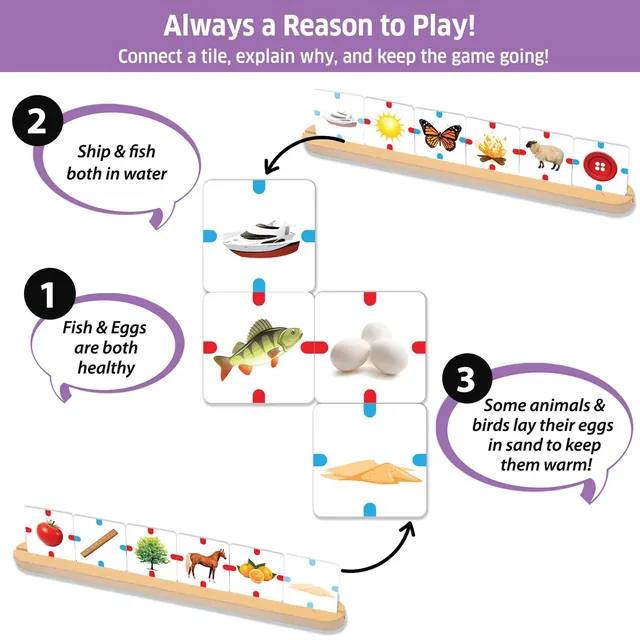
The first player lays two related picture tiles on the table and says what links them.
- 2Connect
On your turn, place one tile from your stand next to a tile already down, across or down, and explain the link; the others accept or reject it.
- 3Win
Keep score on the pad, with extra points for linking to two or more tiles; the highest score at the end wins.
The full explanation: how a game of Why Connect goes
The first player puts down two tiles that are related and says why, for example two things you would find in a kitchen. On each turn after that, you add one tile from your stand next to a tile already on the table, explain the connection out loud, and then top your stand back up from the bag.
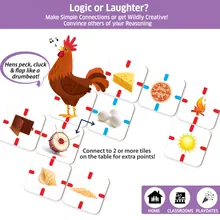
The other players accept or reject your reason. A real reason counts, even a clever or funny one; a long made-up story doesn't. Linking a new tile to two or more tiles already down scores extra points, so the best moves fit into a corner of the growing grid.
Keep score on the score pad as you go; at the end, the highest score wins. The box offers two levels of play, so younger children can start with the simpler game.
For parents: the arguing is the point. Children practise explaining their thinking and listening to other people's, which is why the maker also suggests it for classrooms. Agree before you start how strict the group will be; with young children, accept any sensible link. If your family already plays Not That One, this is its slower, chattier cousin: both use pictures and need no reading, but Not That One is a fast guessing-and-grabbing race, while Why Connect is turn by turn and all about the reasons.
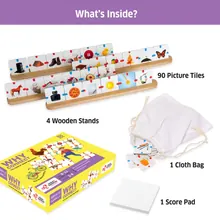
What's in the box
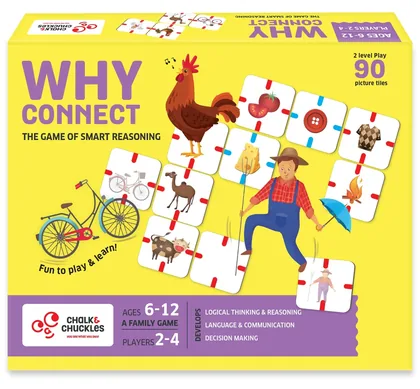
- 90Picture tiles
each shows one picture - 4Wooden stands
one per player, to hold your tiles - 1Cloth bag
for drawing tiles and carrying the game - 1Score pad
- 1Instruction guide
Box: 26.7 × 21.6 × 4.6 cm, 0.55 kg. Handy to know for gifting and travel.
Contents are from Chalk and Chuckles' product page for the box we link (item code CCPPL017, barcode 8906045560177); the maker's contents picture and a US distributor's listing give the same list. An Indian store's older description also mentions an answer booklet, which the maker's current page does not list. Keep a pencil handy for the score pad.
Where to buy
How to make sure you get a genuine copyEditions and the details worth checking.
What reviewers and players say
We found no independent written reviews, forum threads or award pages for Why Connect, although it has been sold in India since at least 2019. Store listings in India and abroad repeat the maker's description, so this page rests on Chalk and Chuckles' own pages and short promo videos. On paper it is a gentle, talky game: no board, no reading, just picture tiles and reasons. How well it works depends on the group agreeing how strict to be, so expect some friendly arguments on the first play.
What people love
- No reading needed, so young children can play with grandparents in any language
- No board, and the tiles go in a cloth bag, so it packs small for trips
- Almost any link can work if you can explain it, which suits creative children
- Two levels of play, so it can grow with a child
Common complaints
- Rejecting someone's reason can start arguments; agree how strict to be before you begin
- The maker's website gives only an outline of the scoring, so keep the printed guide
- Four stands means four players at most
4 research sources
- Reference Why Connect (Chalk and Chuckles product page, October 2026) · Chalk and Chuckles
- Reference Chalk and Chuckles Why Connect Game (maker's promo video and description, January 2023) · YouTube (Chalk and Chuckles)
- Reference Chalk & Chuckles Why Connect (Indian store listing, since June 2019) · Toycra
- Reference Chalk & Chuckles Why Connect Connection Game (US distributor listing, December 2024) · Safari Ltd
Summarised in our own words from the sources above. We don't use Amazon reviews or ratings.
More like Why Connect
Which game is the best fit?
Our picks if Why Connect isn't quite right.
Swipe to compare every game
| Compare the games.The details that make a difference. |
YOU’RE VIEWING
 Why Connect |
ANOTHER WAY TO PLAY
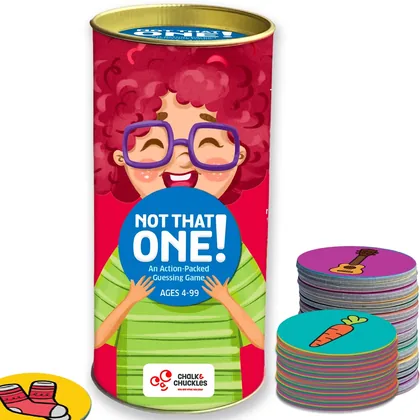 Not That One |
ANOTHER WAY TO PLAY
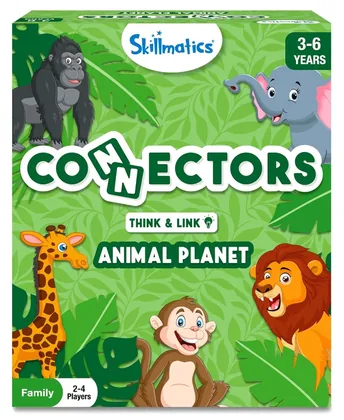 Connectors: Animal Planet |
ANOTHER WAY TO PLAY
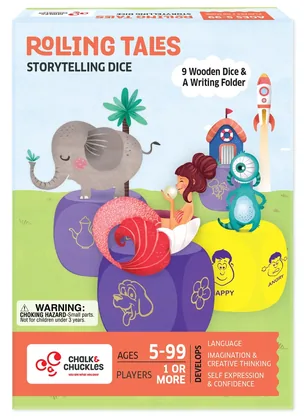 Rolling Tales |
|---|---|---|---|---|
| Why consider it | This game Link picture tiles and convince everyone why they belong together | A different fit Same maker and also all pictures, but a fast guessing-and-grabbing race | A different fit Link animal tiles to what they eat and where they live; for younger children | A different fit Same maker: roll nine picture dice and tell the story they spark, with no score |
| Players | 2–4 | 2–6 | 2–4 | 1+ |
| Best with | 3-4 | 3-5 | 2-4 | 2-4 |
| Play time | 20–30 min | 10–30 min | 10–15 min | 5–20 min |
| Age | 6+ | 5+ | 3+ | 5+ |
| Rules | Easy | Easy | Easy | Easy |
| Indian edition | Available | Available | Available | Available |
| On this page | Explore Not That One | Explore Connectors: Animal Planet | Explore Rolling Tales |
More from Chalk and Chuckles
Another way into their collection.
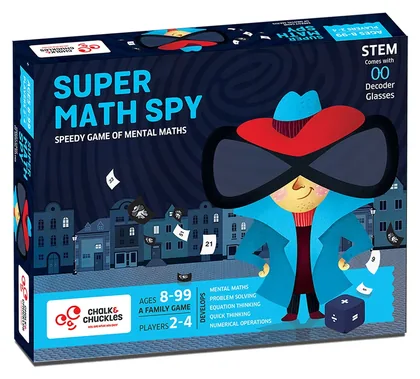
Super Math Spy
Race to build an equation that hits your mission number
Not That One
Ask yes-or-no questions, grab tokens, and dodge the secret one
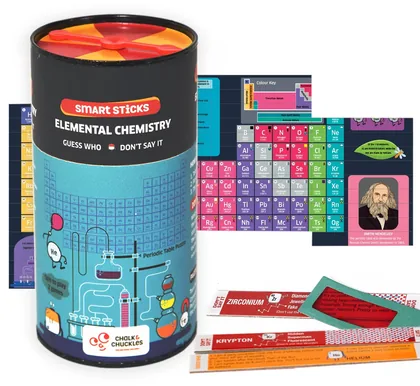
Smart Sticks Elemental Chemistry
Spin, pick a stick and race to name the element
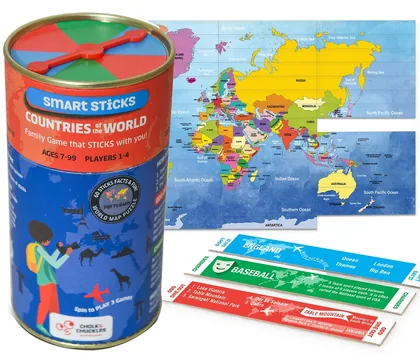
Smart Sticks Countries of the World
Act, describe and spot the odd one out across 60 countries
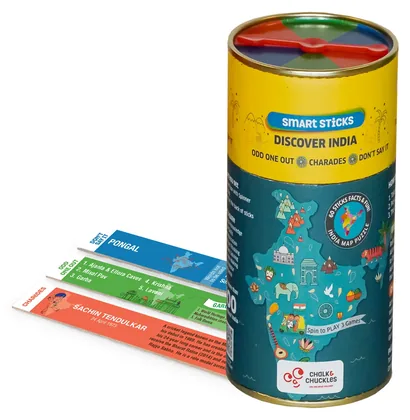
Smart Sticks Discover India
Charades, clues and odd-one-out rounds about India, plus a map puzzle
More tile-laying games
Different games. A familiar kind of fun.

Carcassonne
Build a medieval map tile by tile, then claim it
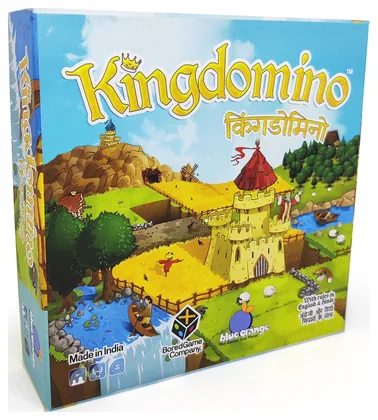
Kingdomino
Build a tiny kingdom from land dominoes in twenty minutes
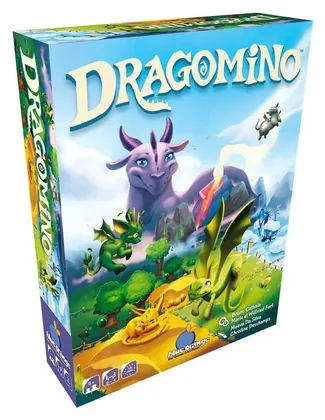
Dragomino
Kingdomino for five-year-olds: match landscapes, hatch baby dragons

Labyrinth
Shift the maze walls to reach your treasures first
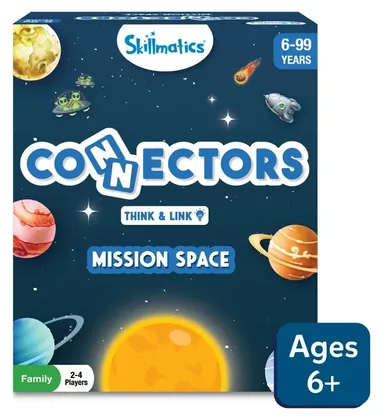
Connectors: Mission Space
Link picture tiles into a path through planets and galaxies
Also playable with two
For game nights with two players.
Carcassonne
Build a medieval map tile by tile, then claim it
Kingdomino
Build a tiny kingdom from land dominoes in twenty minutes
Dragomino
Kingdomino for five-year-olds: match landscapes, hatch baby dragons
Labyrinth
Shift the maze walls to reach your treasures first
Connectors: Mission Space
Link picture tiles into a path through planets and galaxies
Questions people ask about Why Connect
What age is Why Connect for?
Chalk and Chuckles says 6 to 12 years on its page and box, and one of its videos says 5 and up. Children of about 6 to 10 get the most from it, and adults can join in as equals, because the game is about reasons rather than speed.
How do you score points in Why Connect?
You score for the connections you make, and linking a new tile to two or more tiles already on the table earns extra points, according to the maker's pictures. The exact points are in the printed guide that comes with the score pad; the maker's website gives only the outline.
Can Why Connect be played in Hindi?
Yes. The tiles are pictures and the reasons are spoken, so you can play in Hindi, Tamil, Marathi or any mix of languages. Only the rules are in English.
What is the difference between Why Connect and Not That One?
Both are picture games from Chalk and Chuckles that need no reading. Not That One is a quick guessing-and-grabbing race for two or more players, while Why Connect is a slower, turn-by-turn game for two to four where you link pictures and argue for your reasons.
Is Why Connect made in India?
It comes from Chalk and Chuckles, an Indian company that lists its own factory in Kundli, Haryana. The maker's page for this game does not state the country of origin, so check the box if it matters to you.
Game facts
- Publisher
- Chalk and Chuckles (Chalk and Chuckles Products Pvt Ltd, New Delhi, India)
- In India
- Chalk and Chuckles, an Indian company (registered office in New Delhi, factory in Kundli, Haryana) that designs and sells the game in India
- Players
- 2–4
- Barcode
- 8906045560177
- Language
- Little reading – The tiles are pictures, so nobody reads during play. The reasons are spoken, so you can play in Hindi, Tamil, Bengali or whatever mix of languages your family uses. Only the rules are in English, and an adult may need to keep the score.
- Box size and weight
- 26.7 × 21.6 × 4.6 cm, 0.55 kg
Sources & photo creditsThe references behind this guide.
Facts on this page come from the publisher, the Indian maker or distributor, and the sources below. Photos are credited under each one.
- Chalk and Chuckles - Why Connect (contents, how to play, size)
- Chalk and Chuckles - Contact (registered office and factory address)
- Chalk and Chuckles - Our Story
- Toycra - Chalk & Chuckles Why Connect (contents, two levels, manufacturer)
- Safari Ltd - Chalk & Chuckles Why Connect Connection Game (US distributor: contents, box size)