



Family game
Rummikub
Rummy with tiles: build runs and groups, then rearrange the table
- Set-up
- About 3 min
- Reading
- None
The quick verdict
Full verdict ↓Great for Families who play rummy with cards on festival nights and want a fresh twist on it
Think twice if You need a game for more than four people (the standard Funskool box is for 2-4)
How we rate it
Learning curve. Runs, groups and the 30-point first move take a few minutes to explain, but rearranging the table and the joker rules take a game or two to click. That puts it with Ticket to Ride and Codenames at 2 on our scale.
Luck & skill. The tiles you draw matter a lot, especially early on. But spotting clever rearrangements, and knowing when to hold tiles back, is real skill.
Interaction. There are no attacks, but everyone shares and reshapes the same table, so one player's sets become the next player's building blocks, and holding tiles back can leave others with fewer openings.
Set-up. Turn all 106 tiles face down and mix them, then everyone takes 14 onto their rack. Funskool's sheet suggests stacking the rest in piles of seven so the pool is easy to draw from.
Reading. The tiles show only the numbers 1 to 13 in four colours and a joker face. Only Funskool's two-page rule sheet is in English, and one person can explain it in any language.
Learning curve: 1 = UNO or Connect 4; 3 = Catan; 5 = a heavy strategy game. These describe the experience, not an overall score.
Paid link · We may earn a commission, at no extra cost to you.
Is Rummikub right for you?
Great if
- Families who play rummy with cards on festival nights and want a fresh twist on it
- Mixed-language households, since the tiles carry only numbers and colours
- Grandparents and children from about 7 at the same table, with quiet number practice built in
- Couples, because it works well with just two players
Skip it if
- You need a game for more than four people (the standard Funskool box is for 2-4)
- Your group gets restless during long turns, since rearranging the table can take a while
- You want a game with a theme or a story, because Rummikub is pure numbers and colours
A place on the honours list
Good company to be in.
Recognition from beyond our table.
Spiel des Jahres (German Game of the Year), 1980 (Winner)
How Rummikub plays
The box holds 106 tiles: the numbers 1 to 13 in four colours, two of each, plus two jokers. Everyone turns the tiles face down and mixes them, then each player takes 14 tiles onto a rack. The rest stay face down as the pool. Each player draws one tile, and the highest number starts.
- Time to teach: about 10 minutes.
- Reading and language: The tiles show only numbers and colours, so nobody needs to read during play. Only the rule sheet is in English, and one person can explain the rules in any language at the table.

Rummikub The Original game Tutorial · Rummikub · Official
Choose a video · Watch right here
If this creator doesn’t allow embedded playback, watch on YouTube ↗.
A turn, step by step
- 1Open
Your first play must be one or more sets from your own rack worth at least 30 points. Until you manage that, you draw one tile and your turn ends.
- 2Play
After that, add tiles from your rack to the table. Start new runs or groups, or rearrange the sets already there, as long as every set is valid when your minute is up.
- 3Draw
If you can't play, or choose not to, draw one tile from the pool instead. A tile you have just drawn has to wait until your next turn.
- 4Win
Empty your rack first and call 'Rummikub!' to win the game. Everyone else loses the value of the tiles left on their rack (30 for a joker), and the winner collects the total.
The full explanation: how a game of Rummikub goes
You play tiles in sets of at least three. A run is three or more numbers in a row in one colour, like a red 4-5-6 (a 1 cannot follow a 13). A group is three or four tiles of the same number in different colours.
Your first move must be sets from your own rack worth at least 30 points in total. Until you manage that, and on any turn when you cannot or do not want to play, you draw one tile from the pool and your turn ends.
Once you have made your first move, the whole table is open to you. You can add to any set, split a run, or move tiles from one set to another, as long as every set is valid when your turn ends. Funskool's rule sheet gives one minute per turn: if you run out of time you draw a tile, and if you can't finish a rearrangement you put the table back as it was, take back your tiles and draw three as a penalty.
A joker can stand in for any tile, and you can win it back by replacing it with the real tile. The first player to empty their rack calls 'Rummikub' and wins the round. Everyone else loses the value of the tiles left on their rack (a joker costs 30 points), and the winner gains the total.
What's in the box
- 104Number tiles
1 to 13 in four colours (red, blue, orange and black), two of each - 2Joker tiles
smiling-face tiles that stand in for any tile - 4Tile racks
one per player, to keep your tiles hidden - 4Rack holders
- 1Rule sheet
two pages, in English
Box: 1.11 kg. Handy to know for gifting and travel.
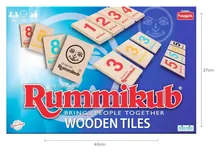
From Funskool's Classic page and box back (item 4939100): 106 tiles (8 sets of tiles 1-13 in 4 colours and 2 jokers), 4 racks, 4 rack holders and detailed rules. Funskool's pictures don't show the rack holders, so their design is not described. The Wooden Tiles box (item 4939200) has 106 wooden tiles, 4 wooden racks and 4 metal rack holders. The budget Joy box (item 4939300) has 106 cardboard tiles and 4 racks, with no rack holders. Imported 5-6 player editions add extra tiles and racks.
Where to buy
Paid link · We may earn a commission, at no extra cost to you.
How to make sure you get a genuine copyEditions and the details worth checking.
What reviewers and players say
Reviewers treat Rummikub as a family classic that has aged well. The rules are short, the tiles carry only numbers and colours, and once players start rearranging the table it becomes a satisfying puzzle that children of about 7 can share with adults. The common complaints are slow opening turns while players wait to reach 30 points, a big dose of luck in the tiles you draw, and joker rules that are worded differently between editions. Agree on how the joker works before you start, and the game runs smoothly.
What people love
- Rearranging the tiles already on the table to fit in your own is the satisfying heart of the game
- Children from about 7 can play properly alongside grandparents, with quiet practice in adding and number patterns
- Simple, sturdy pieces and no reading, so it suits mixed-language and mixed-age tables
- It works with just two players as well as with four
Common complaints
- The first few turns can drag while players wait to make their 30-point opening move
- The tiles you draw matter a lot, so a careful player can still lose to a lucky one
- Joker rules differ between editions and rulebooks, which can start arguments at the table
Based on 7 reviews and discussions
- Review Rummikub Board Game Review and Rules (Eric Mortensen, April 2019) · Geeky Hobbies
- Review Rummikub Classic: Board Game Review (September 2021) · What's Good To Do (UK)
- Players Getting Joker from the existing groups in Rummikub (September 2018) · Board & Card Games Stack Exchange
- Players What can I do with the Joker if I remove every tile from its meld? (March 2015) · Board & Card Games Stack Exchange
- Award Rummikub (Spiel des Jahres 1980) · Spiel des Jahres
- Reference Spiel des Jahres - list of winners · Wikipedia
- Reference Rummikub · Wikipedia
Summarised in our own words from the sources above. We don't use Amazon reviews or ratings.
More like Rummikub
Which game is the best fit?
Our picks if Rummikub isn't quite right.
Swipe to compare every game
| Compare the games.The details that make a difference. |
YOU’RE VIEWING
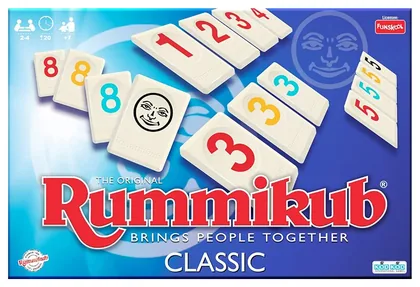 Rummikub
|
ANOTHER WAY TO PLAY
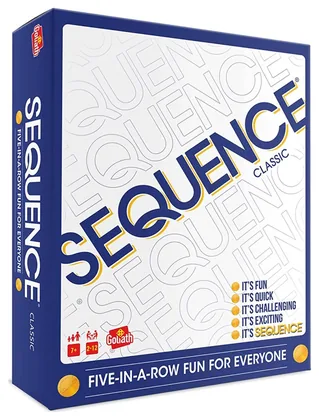 Sequence
|
ANOTHER WAY TO PLAY
 Azul
Azul
|
ANOTHER WAY TO PLAY
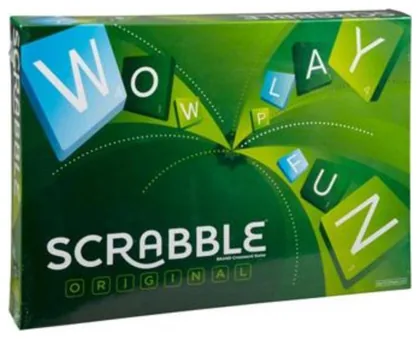 Scrabble
|
|---|---|---|---|---|
| Why consider it | This game Rummy with tiles: build runs and groups, then rearrange the table | A different fit Another Funskool family classic that mixes card play with a board | A different fit A modern tile game for 2-4 with the same calm, puzzly feel | A different fit Racks and tiles again, but with English words instead of numbers |
| Players | 2–4 | 2–12 | 2–4 | 2–4 |
| Best with | 3-4 | 4-6 in two teams | 2-4 | 2-3 |
| Play time | 20–60 min | 20–40 min | 30–45 min | 50–60 min |
| Age | 7+ | 7+ | 8+ | 10+ |
| Rules | Easy | Easy | Easy | Medium |
| Indian edition | Available | Available | Available | Imported |
| On this page | Explore Sequence | Explore Azul | Explore Scrabble |
More from Funskool
Also made or sold in India by Funskool.
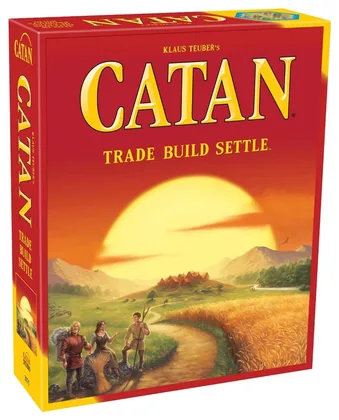
Catan
Trade wheat for brick, build roads, and race to ten points.
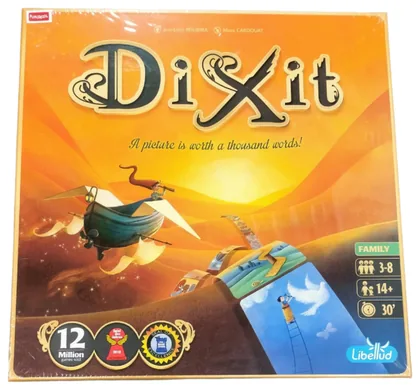
Dixit
Give a clue for a dreamlike picture, but not too obvious
Sequence
Play a card, claim its space, and make five in a row.
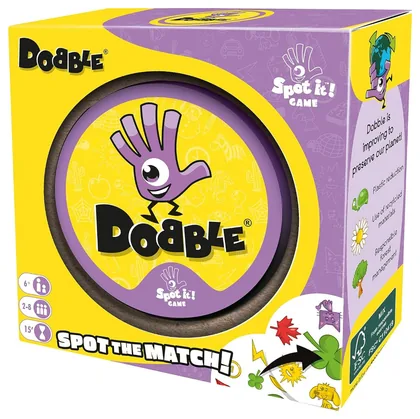
Dobble
Race to spot the one picture any two cards share
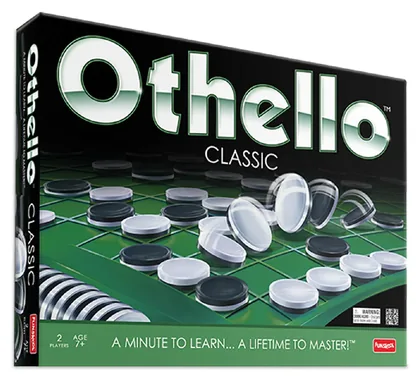
Othello
Trap a line of discs, flip them to your colour
More set-collecting games
Different games. A familiar kind of fun.
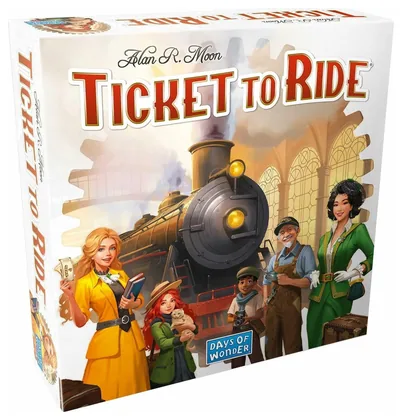
Ticket to Ride
Collect coloured cards and claim railway routes across America.
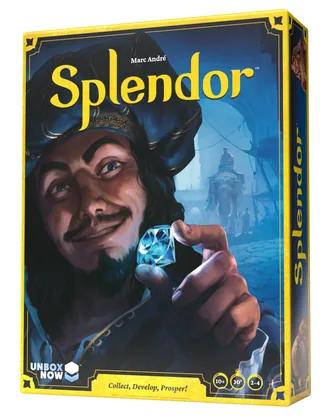
Splendor
A quick gem-trading race where every card makes the next easier.

Jaipur
Two rival merchants trade goods and camels in old Jaipur

Sushi Go!
Pick a dish, pass the rest, build the best sushi meal
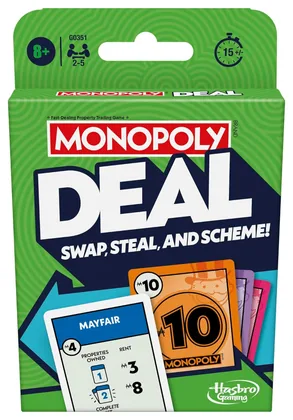
Monopoly Deal
Monopoly as a 15-minute card game of rent, raids and sets
Also playable with two
For game nights with two players.
Splendor
A quick gem-trading race where every card makes the next easier.
Jaipur
Two rival merchants trade goods and camels in old Jaipur
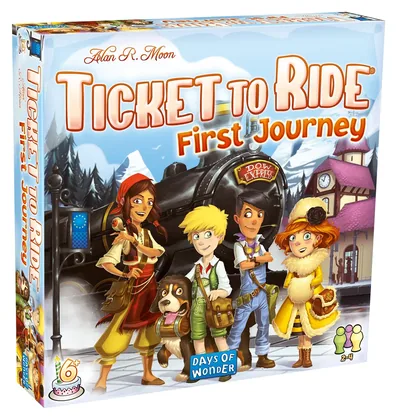
Ticket to Ride: First Journey
A shorter, simpler Ticket to Ride made for children six and up
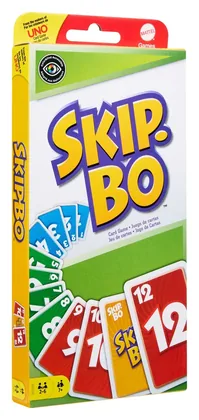
Skip-Bo
Build shared piles from 1 to 12 and empty your Stockpile first
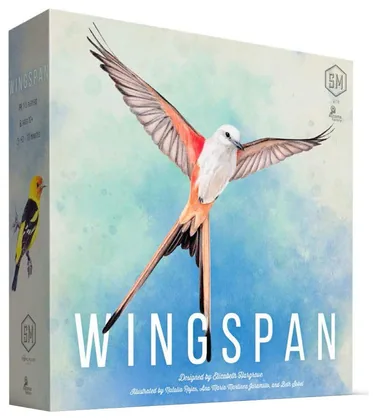
Wingspan
Calm card game about birds where every new bird boosts your turns.
Questions people ask about Rummikub
Is Rummikub the same as rummy?
It is based on the same idea of making runs and sets, but it uses numbered tiles instead of playing cards. There is no discard pile, and once you have made your first 30-point move you can rearrange any tiles already on the table. If you know rummy, the basic idea will feel familiar.
Which Funskool Rummikub should I buy: Classic, Wooden Tiles or Joy?
The Classic is the standard set with 106 tiles, four racks and rack holders. The Wooden Tiles edition plays the same way with wooden tiles and racks, and costs more. Joy is a budget version with cardboard tiles, which suits younger children or occasional play.
Is Funskool Rummikub the original game?
Yes. Funskool makes and sells it in India as 'The Original Rummikub', with the same 106-tile set and rules as the international game. Funskool's packs are made in India, which is why they cost far less than imported editions.
Can more than four people play Rummikub?
Not with the standard Funskool box, which is for 2-4 players. The official rules allow 5-6 players with a larger 160-tile set, and 6-player editions reach India only as imports, which cost more.
Game facts
- Designed by
- Ephraim Hertzano
- Publisher
- Lemada Light Industries (Israel). Since April 2026, tabletop rights outside Israel, the US and Canada belong to Longshore Limited.
- In India
- Funskool (India) Ltd., Chennai, which makes and sells the game in India
- First published
- 1950
- Players
- 2–4
- Barcode
- 8901383493910
- Language
- No reading – The tiles show only numbers and colours, so nobody needs to read during play. Only the rule sheet is in English, and one person can explain the rules in any language at the table.
- Box size and weight
- 1.11 kg
- Awards
- Spiel des Jahres (German Game of the Year), 1980 (Winner)
Sources & photo creditsThe references behind this guide.
Facts on this page come from the publisher, the Indian maker or distributor, and the sources below. Photos are credited under each one.
- Rummikub - Wikipedia
- Rummikub official site - About
- Rummikub official English rules (PDF)
- Rummikub official site - Rummikub Classic
- License Global - Longshore Limited acquires global IP rights to Rummikub (April 2026)
- Funskool - Rummikub Classic
- Funskool - Rummikub Joy
- Funskool - Rummikub Classic (older listing, item 4939100)
- Toycra - Funskool Rummikub Classic Game
- Toycra - Funskool Games Rummikub Wooden Tiles
- Toycra - Funskool Rummikub Joy Games
- Hamleys India - Funskool Rummikub Number
- Hamleys India - Funskool Rummikub Joy
- FirstCry - Funskool Rummikub Wooden Tiles