


Family game
Sequence
Play a card, claim its space, and make five in a row.
- Set-up
- About 2 min
- Reading
- None
The quick verdict
Full verdict ↓Great for Family evenings when you want everyone in one game: up to 12 can play in two or three teams
Think twice if You want deep strategy. The cards you draw limit your choices a lot.
How we rate it
Learning curve. Play a card, place a chip, draw a card. The only extras are the two kinds of Jack and swapping a dead card, which puts it with UNO and Connect 4 at 1 on our scale.
Luck & skill. The cards you draw limit your choices, and a two-eyed Jack at the right moment can swing a close game. Choosing between the two matching spaces, blocking, and saving Jacks add some skill.
Interaction. You block each other's lines, remove opponents' chips with one-eyed Jacks, and usually play in teams around the table.
Set-up. Unfold the board, shuffle the two packs together and deal the hand size for your group: 7 cards each for two players, down to 3 each for 10 or 12. Each side takes chips of one colour: blue and green for two sides, plus red for a third.
Reading. The cards and board show ordinary playing-card faces, so anyone who knows a pack of cards can play. Only the rule leaflet is in English.
Learning curve: 1 = UNO or Connect 4; 3 = Catan; 5 = a heavy strategy game. These describe the experience, not an overall score.
Paid link · We may earn a commission, at no extra cost to you.
Is Sequence right for you?
Great if
- Family evenings when you want everyone in one game: up to 12 can play in two or three teams
- Grandparents and older relatives who already know a pack of cards
- Couples who want a light strategy game that also works for a bigger crowd
- Gifting, because it's a well-known name, made in India and widely available
Skip it if
- You want deep strategy. The cards you draw limit your choices a lot.
- Your group loves discussing plans out loud. Team-mates aren't supposed to hint about the cards they hold.
- You need a game for travel. The box is small (about 26 × 21 cm), but the board unfolds to roughly 50 × 38 cm and there are 135 loose chips.
How Sequence plays
The board shows every card from two ordinary packs except the Jacks, each card twice, plus a free space in each of the four corners. Each player or team takes chips of one colour: blue and green for two sides, plus red when there are three.
- Time to teach: about 5-10 minutes.
- Reading and language: The cards and board show ordinary playing-card faces (A, K, Q, 2–10 in four suits), so anyone who knows a regular pack can play without reading. Funskool's rule sheet is in English.
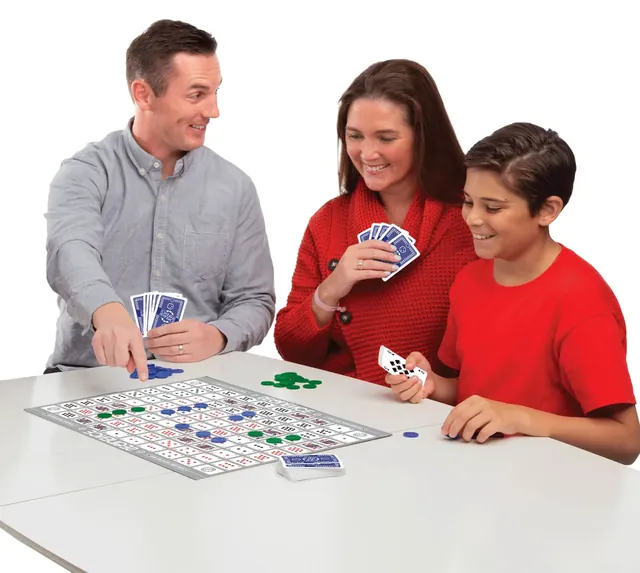
How To Play Sequence - Goliath Games · Vivid Toys and Games · Official
Choose a video · Watch right here
If this creator doesn’t allow embedded playback, watch on YouTube ↗.
A turn, step by step
- 1Play
Lay one card from your hand face up on your discard pile.
- 2Place
Put a chip of your colour on one of the two matching spaces on the board. A two-eyed Jack lets you take any open space, and a one-eyed Jack removes an opponent's chip instead.
- 3Draw
Take a new card before the next player finishes their turn and draws, or you play the rest of the game one card short.
- 4Win
Five of your chips in a line, across, down or diagonally, make a sequence, and the corner spaces count for everyone. Two players or teams need two sequences to win; with three, one is enough.
The full explanation: how a game of Sequence goes
Everyone is dealt a hand: seven cards each with two players, going down to three each with 10 or 12. On your turn you play a card, put a chip on one of the two matching spaces, then draw a replacement. If you forget to draw before the next player draws, you play the rest of the game one card short.
Jacks are the special cards. A two-eyed Jack is wild, so you can put your chip on any open space. A one-eyed Jack removes one opponent's chip, but not from a finished line.
A sequence is five of your chips in a straight line across, down or diagonally, and the corner spaces count for everyone. With two players or two teams you need two sequences to win. With three players or teams, one is enough. If both spaces for a card in your hand are already taken, you can swap that card for a new one before your turn.
With more than three people you play in teams and sit so that team-mates alternate around the table. Team-mates may not tell each other what cards they hold unless everyone agrees otherwise at the start.
What's in the box
- 1Game board
folding board showing every card except the Jacks twice, plus a free space in each corner - 104Sequence cards
two full packs of playing cards, Jacks included - 50Green chips
- 50Blue chips
- 35Red chips
used only when three players or teams play - 1Instruction leaflet
four pages, in English
Box: 26 × 20.8 × 4 cm, 0.88 kg. Handy to know for gifting and travel.
From Funskool's rule leaflet and box back for The Original Sequence (item 4935400): a board, 104 cards, 135 chips (50 green, 50 blue, 35 red) and instructions. An Indian listing's 'What's inside' graphic lists the same. The board has 96 card spaces (48 cards, each shown twice) plus four free corners. Funskool describes the newer blue Sequence Classic box (item 4936100) as a folding board, playing cards and chips for up to 12 players, but its exact chip counts were not seen.
Where to buy
Paid link · We may earn a commission, at no extra cost to you.
How to make sure you get a genuine copyEditions and the details worth checking.
What reviewers and players say
Sequence wins people over because it takes minutes to teach, works for anything from 2 to 12 players, and turns into a lively team game at family gatherings. The Board Game Family praised the team play, close finishes and easy rematches. Co-op Board Games liked the quick games and simple rules. Both say card luck can decide close games and that serious strategy fans may find it thin. Rules questions about dead cards and the lost-card rule come up often, so read that part of the leaflet together before you start.
What people love
- Simple to teach: play a card, place a chip, draw a card
- Teams of up to 12 make it a natural fit for family gatherings and festivals
- Luck evens things out, so children and grandparents can win too
- Games are short and usually close, so people want a rematch
Common complaints
- Card luck, especially who draws the two-eyed Jacks, can decide close games
- Not much depth for players who want serious strategy
- With three teams or a big group the board gets crowded and the wait between turns grows
Based on 5 reviews and discussions
- Review Sequence - A 'must have' family game (Trent, August 2010) · The Board Game Family
- Review Sequence Board Game Review (Ronny Alexander, December 2025) · Co-op Board Games
- Reference How does luck influence the board game Sequence? (2025) · Towards Data Science
- Players Does exchanging a dead card count as a move for loss of a card? (March 2018) · Board & Card Games Stack Exchange
- Reference Sequence (game) · Wikipedia
Summarised in our own words from the sources above. We don't use Amazon reviews or ratings.
More like Sequence
Which game is the best fit?
Our picks if Sequence isn't quite right.
Swipe to compare every game
| Compare the games.The details that make a difference. |
YOU’RE VIEWING
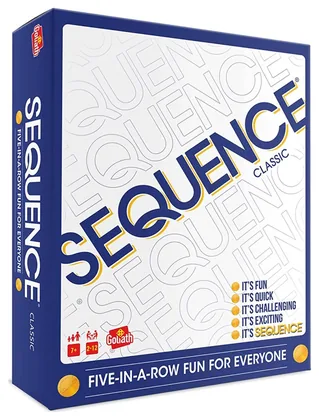 Sequence
|
ANOTHER WAY TO PLAY
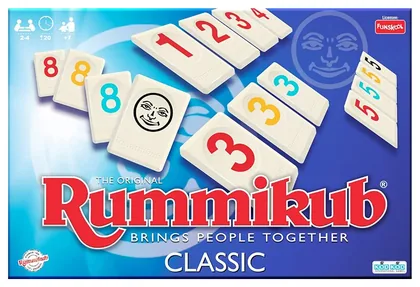 Rummikub
|
ANOTHER WAY TO PLAY
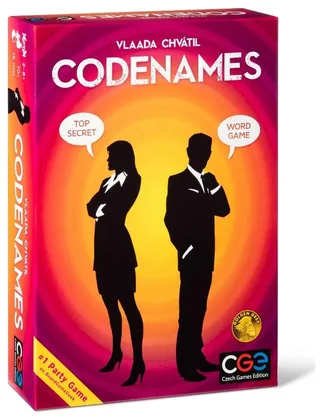 Codenames
|
ANOTHER WAY TO PLAY
 Azul
Azul
|
|---|---|---|---|---|
| Why consider it | This game Play a card, claim its space, and make five in a row. | A different fit Another classic family game built on runs and sets that grandparents pick up quickly | A different fit Team play for a big group, with more talking and word clues | A different fit Pattern-building with a bit more strategy, best for 2 to 4 |
| Players | 2–12 | 2–4 | 2–8 | 2–4 |
| Best with | 4-6 in two teams | 3-4 | 6-8 | 2-4 |
| Play time | 20–40 min | 20–60 min | 15 min | 30–45 min |
| Age | 7+ | 7+ | 14+ | 8+ |
| Rules | Easy | Easy | Easy | Easy |
| Indian edition | Available | Available | Imported | Available |
| On this page | Explore Rummikub | Explore Codenames | Explore Azul |
More from Funskool
Also made or sold in India by Funskool.
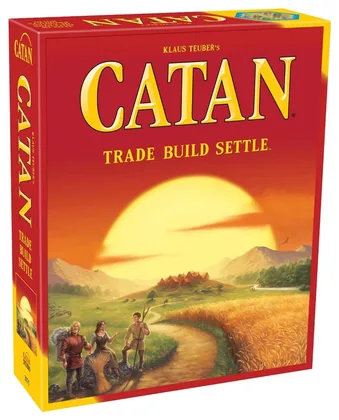
Catan
Trade wheat for brick, build roads, and race to ten points.
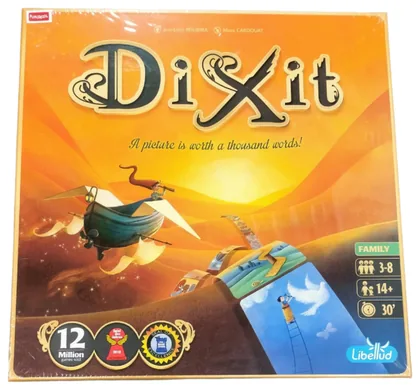
Dixit
Give a clue for a dreamlike picture, but not too obvious
Rummikub
Rummy with tiles: build runs and groups, then rearrange the table
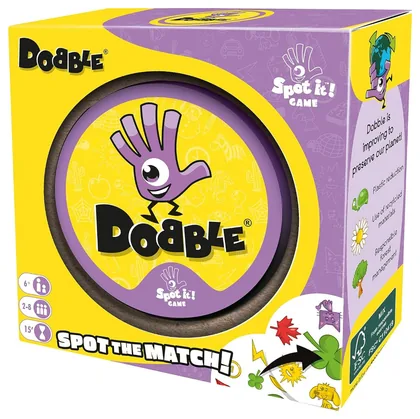
Dobble
Race to spot the one picture any two cards share
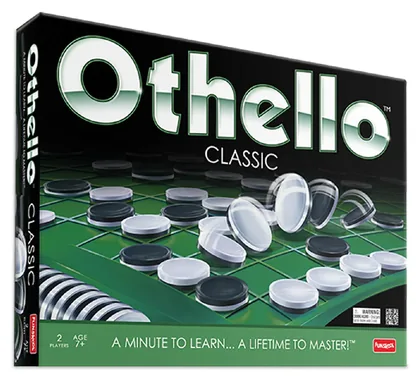
Othello
Trap a line of discs, flip them to your colour
More team games
Different games. A familiar kind of fun.
Codenames
One-word clues, 25 secret agents, and one assassin to avoid

Taboo
Get your team to guess the word without saying the obvious ones

Pictionary
Sketch the clue for your team, no letters or talking
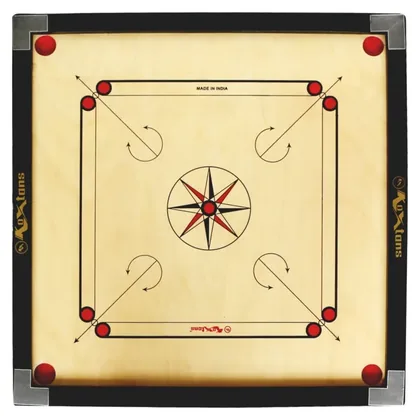
Carrom
Flick the striker, pocket your colour, then capture and cover the queen

Wavelength
Read your teammates' minds with one clue and a big red dial
Also playable with two
For game nights with two players.
Azul
Draft colourful tiles and build the best-scoring palace wall
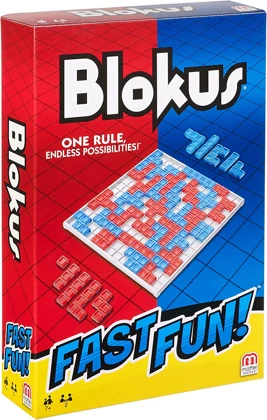
Blokus Fast Fun
A compact duel for two: fit your shapes, protect your corners, block your opponent
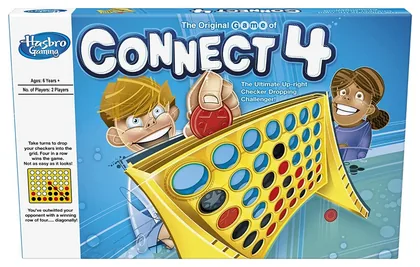
Connect 4
Drop discs, block your rival and get four in a row
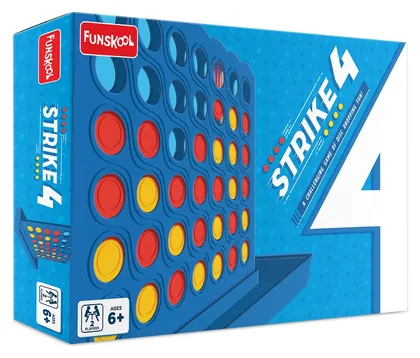
Strike 4
Drop discs, block your rival and line up four first
Carrom
Flick the striker, pocket your colour, then capture and cover the queen
Also worth a look (not in our catalogue yet): Sequence for Kids – Funskool's simpler version for younger children.
Questions people ask about Sequence
How many people can play Sequence?
Two to 12. Up to three people play on their own. With more, you split evenly into two or three teams (for example 2 vs 2, 3 vs 3 or 4 vs 4 vs 4) and sit so that team-mates alternate around the table. Two players or teams need two sequences to win, while three players or teams need just one.
What do the one-eyed and two-eyed Jacks do in Sequence?
Two-eyed Jacks are wild: you can put a chip on any open space. One-eyed Jacks let you remove one opponent's chip from the board, but not a chip that is part of a completed sequence. Jacks don't appear on the board themselves.
Is Funskool Sequence the original game?
Yes. Doug Reuter invented Sequence, and Jax first published it. Goliath Games bought Jax in 2017 and now owns the game. Funskool makes it in India, and the box says 'Distributed by Funskool' under Goliath's copyright, so the Funskool box is the genuine game, not a copy.
Why are some Sequence sets much cheaper?
Because they aren't Funskool's game. Many cheaper sets, including large 'jumbo' floor-mat versions, use the same idea under the Sequence name or a near-miss of it. They aren't the Funskool/Goliath game, so check that the brand is Funskool before you buy.
Game facts
- Designed by
- Doug Reuter
- Publisher
- Goliath Games (originally Jax Ltd.)
- In India
- Funskool (India) Ltd., which makes and sells the game in India; Funskool's site lists it under Goliath Games
- First published
- 1982
- Players
- 2–12
- Barcode
- 8901383493545
- Language
- No reading – The cards and board show ordinary playing-card faces (A, K, Q, 2–10 in four suits), so anyone who knows a regular pack can play without reading. Funskool's rule sheet is in English.
- Box size and weight
- 26 × 20.8 × 4 cm, 0.88 kg
Sources & photo creditsThe references behind this guide.
Facts on this page come from the publisher, the Indian maker or distributor, and the sources below. Photos are credited under each one.
- Funskool - Sequence (item 4935400)
- Funskool - Sequence Classic
- Funskool - Sequence instructions (PDF)
- Goliath Games - Sequence
- Sequence (game) - Wikipedia
- Doug Reuter - Wikipedia
- Mandi's Attic Toys - Sequence Deluxe Game, 1982, Jax (vintage copy)
- Toycra - Funskool The Original Sequence
- Toycra - Funskool Sequence Classic
- Crossword - Funskool Original Sequence
- FirstCry - Funskool The Original Sequence
- Hamleys - Funskool Classic Sequence
- Flipkart - Funskool The Original Sequence (product details)
- Bureau of Indian Standards - Indian Standards on toys (Toys QCO, ISI mark)