






Two-player game
Jaipur
Two rival merchants trade goods and camels in old Jaipur
- Set-up
- About 5 min
- Reading
- None
The quick verdict
Full verdict ↓Great for two people who want a quick, competitive card game.
Think twice if you need room for a third player, or prefer to cooperate.
How we rate it
Learning curve. It has more rules than UNO (selling limits, bonus tokens, camels), but most people have them after one round, so it sits with Ticket to Ride and Codenames.
Luck & skill. The cards that refill the market and the hidden bonus-token values add real luck, but timing your sales and camel grabs is where rounds are won.
Interaction. Every card you take or put back changes the market your opponent sees next, and you race each other to sell goods while the tokens are still worth most.
Set-up. The first time, allow about 10 minutes to punch out and sort the tokens. After that it's about 5 minutes: put 3 camels face up as the market, shuffle, deal 5 cards each, add 2 cards to the market, and lay out each goods pile from highest to lowest value. Setting up again between rounds takes a couple of minutes.
Reading. Cards show pictures of goods and camels, and tokens show numbers you add up at the end of a round. Only the rulebook has text (English and Hindi in the Indian edition).
Learning curve: 1 = UNO or Connect 4; 3 = Catan; 5 = a heavy strategy game. These describe the experience, not an overall score.
Buying link pausedWe haven’t found an available Amazon listing for this edition.
Is Jaipur right for you?
Great if
- Couples or two siblings looking for a regular after-dinner game
- Travel and small tables, since it's just cards and tokens
- Rummy players who want a card game with more choices on each turn
- Homes where some players prefer Hindi, thanks to the bilingual rulebook
Skip it if
- You usually have three or more players, because Jaipur is strictly for two
- Luck bothers you: the cards that come into the market are random, and one draw can swing a round
- You want a cooperative game, since this is head-to-head and a little cutthroat
A place on the honours list
Good company to be in.
Recognition from beyond our table.

Spiel des Jahres
Selected for the German jury’s annual recommendation list.
Meet the jury’s choice ↗More recognition 2
À la carte card game prize (Fairplay magazine, Germany), 2010 (Winner)
Juego del Año (Spain's Game of the Year), 2014 (Winner)
How Jaipur plays
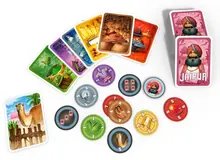
You are each a trader hoping to become the Maharaja's favourite. Five cards sit face up in the middle as the market, and three of them are camels at the start. Each player gets five cards. Any camels you are dealt go into a herd in front of you, not into your hand.
- Time to teach: about 10 minutes.
- Reading and language: There is very little reading during play, because the cards and tokens are about goods and numbers. The Indian edition comes with rules in both English and Hindi.
Learn How to Play Jaipur (in under 5 minutes!) · Casual Cardboard
Choose a video · Watch right here
If this creator doesn’t allow embedded playback, watch on YouTube ↗.
A turn, step by step
- 1Take
Each turn you either take cards or sell cards, never both. To take, grab one goods card from the market, swap two or more of your cards for the same number from the market, or take every camel there. You can't end with more than seven cards in hand; camels don't count.
- 2Sell
Or sell as many cards of one kind as you like and take that many tokens from the top of its pile, where the values are highest. Diamonds, gold and silver need at least two cards, and selling three or more earns a bonus token.
- 3Score
A round ends when three kinds of goods tokens run out or the deck can't refill the market. The bigger camel herd earns 5 rupees, and the richer trader wins a Seal of Excellence.
- 4Win
The first player to win two Seals of Excellence wins the game.
The full explanation: how a game of Jaipur goes
On your turn you do just one thing. You can take one goods card from the market, or take several goods by swapping in the same number of cards from your hand or camels from your herd. You can also take every camel in the market, or sell cards. You may never hold more than seven cards, but camels don't count toward that limit.
Selling is where the tension is. You sell cards of one type at a time and take the same number of tokens for that good. Each pile of tokens starts with the highest values on top, so the first seller earns more. Diamonds, gold and silver must be sold at least two at a time. Selling three, four or five cards together also earns a bonus token.
Camels are a trade-off. A big herd lets you swap for several goods in one turn, but taking all the camels refills the market from the deck, which may hand your opponent good cards. At the end of each round, whoever has more camels gets a 5-rupee bonus token.
A round ends when three kinds of goods tokens have run out, or when the deck can no longer refill the market. The richer trader wins a Seal of Excellence, and the first player to win two seals wins the game.
What's in the box
- 55Goods cards
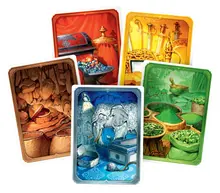
6 diamonds, 6 gold, 6 silver, 8 cloth, 8 spice, 10 leather and 11 camels - 38Goods tokens
rupee values, one pile per type of goods - 18Bonus tokens
for selling 3, 4 or 5+ cards at once (worth 1-3, 4-6 and 8-10 rupees); the value is printed only on the back - 1Camel token
worth 5 rupees to the player with the bigger herd at the end of a round - 3Seals of Excellence
win two to win the game - 1Rulebook
English and Hindi in the Yes Papa Games edition sold in India
Box: 18 × 13 × 4 cm, 0.33 kg. Handy to know for gifting and travel.
From the 'Material' section of Space Cowboys' English rulebook (© 2019), which matches the contents list on the publisher's Jaipur page. Indian listings say the Yes Papa Games English/Hindi edition is made in partnership with the original publisher to the same quality, with Hindi rules added. We couldn't check a physical Indian box. Asmodee US says the first print run of this edition also came with a metal first-player coin; it isn't in the rulebook's list.
Where to buy
Buying link pausedWe haven’t found an available Amazon listing for this edition.
How to make sure you get a genuine copyEditions and the details worth checking.
What reviewers and players say
Jaipur is one of the most often recommended games for two people. Reviewers like that the rules are short, a full match takes about half an hour, and every turn is a small tug-of-war over the market. Camels are the clever twist: taking them helps you trade later, but it can also hand your rival a better market. The main catch is luck. The cards that turn up and the random bonus tokens can swing a round, and a few experienced players find it too light once they know it well.
What people love
- Simple, quick turns: you take cards or sell cards, never both
- Real head-to-head tension: sell early for the best tokens, or wait for a bigger bonus
- The camel trick: grabbing camels can set up the market for you or spoil it for your opponent
- Bright, sturdy cards and tokens in a small box that travels well
Common complaints
- Luck plays a part: one market refill or bonus token can decide a close round
- It is strictly for two, so it won't work for a family of three or four
- Some experienced players find it too light, or the seven-card hand limit a little tight
Based on 7 reviews and discussions
- Review Jaipur review (Andy Matthews, December 2015) · Meeple Mountain
- Review Jaipur Card Game Review and Rules (Eric Mortensen, November 2019) · Geeky Hobbies
- Players The Best Two Player Game There Is (forum thread, March 2014) · BoardGameGeek forums
- Players How much does luck play a role in Jaipur? (forum thread, September 2019) · BoardGameGeek forums
- Video Unboxing Jaipur (English/Hindi) by Indian Meeple published by Yes Papa Games (March 2022) · Indian Meeple (YouTube)
- Award Jaipur – Spiel des Jahres recommendation list 2010 · Spiel des Jahres
- Reference Jaipur (card game) · Wikipedia
Summarised in our own words from the sources above. We don't use Amazon reviews or ratings.
More like Jaipur
Which game is the best fit?
Our picks if Jaipur isn't quite right.
Swipe to compare every game
| Compare the games.The details that make a difference. |
YOU’RE VIEWING
 Jaipur
|
ANOTHER WAY TO PLAY
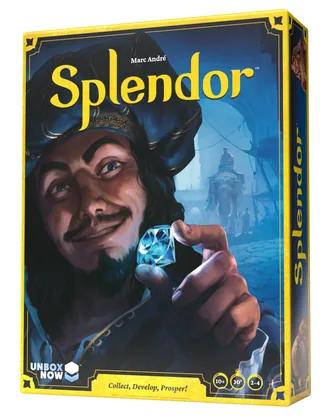 Splendor
|
ANOTHER WAY TO PLAY
 Azul
Azul
|
|---|---|---|---|
| Why consider it | This game Two rival merchants trade goods and camels in old Jaipur | A different fit A similar collect-and-trade feel with gem cards, and it still works if a third or fourth person joins | A different fit Plays very well with two and is just as quick to learn, with tile drafting in place of trading |
| Players | 2 | 2–4 | 2–4 |
| Best with | 2 | 2-3 | 2-4 |
| Play time | 30 min | 30 min | 30–45 min |
| Age | 10+ | 10+ | 8+ |
| Rules | Easy | Easy | Easy |
| Indian edition | Available | Imported | Available |
| On this page | Explore Splendor | Explore Azul |
More from Space Cowboys
Another way into their collection.
Splendor
A quick gem-trading race where every card makes the next easier.
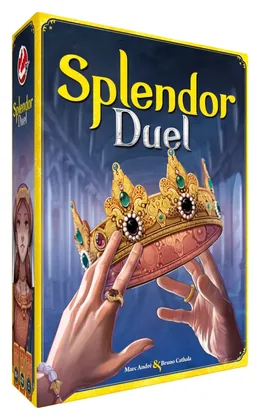
Splendor Duel
Splendor rebuilt for two: gem lines, card powers, three ways to win

Skull
Bluff with flowers and skulls, then bid how many you can flip
More from Yes Papa Games
Also made or sold in India by Yes Papa Games.

More set-collecting games
Different games. A familiar kind of fun.

Ticket to Ride
Collect coloured cards and claim railway routes across America.
Splendor
A quick gem-trading race where every card makes the next easier.
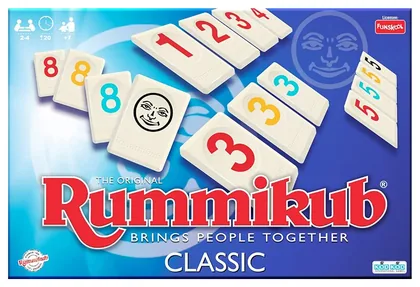
Rummikub
Rummy with tiles: build runs and groups, then rearrange the table

Sushi Go!
Pick a dish, pass the rest, build the best sushi meal
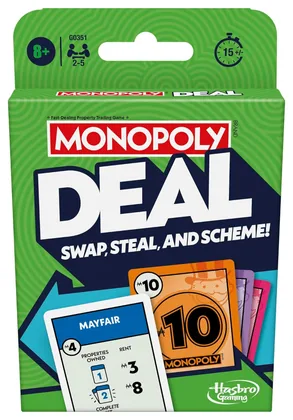
Monopoly Deal
Monopoly as a 15-minute card game of rent, raids and sets
Also worth a look (not in our catalogue yet): Lost Cities – Another short two-player card game about building sets and deciding when to take a risk.
Questions people ask about Jaipur
Is Jaipur available in India?
Yes Papa Games distributes an English/Hindi edition in India. The international Space Cowboys edition is an import; look for ‘English/Hindi’ in the listing title when choosing the Indian edition. Our buying link is currently paused.
Can more than 2 people play Jaipur?
No. Jaipur is designed strictly for two players, so a listing that says 2–4 players is not describing the real game. For three or four players, Splendor has a similar trading feel.
Is there a Hindi version of Jaipur?
Yes. The Indian edition from Yes Papa Games has rules in both English and Hindi. There is very little reading during play itself, so it works for players who prefer Hindi.
What age is Jaipur suitable for?
The publisher, Space Cowboys, says 10 and up. Children need to add small numbers and plan a move ahead, so it helps if an adult walks them through the first round.
Game facts
- Designed by
- Sébastien Pauchon
- Publisher
- Space Cowboys (first published by GameWorks, 2009)
- In India
- Yes Papa Games (English/Hindi edition)
- First published
- 2009
- Players
- 2
- Language
- Little reading – There is very little reading during play, because the cards and tokens are about goods and numbers. The Indian edition comes with rules in both English and Hindi.
- Box size and weight
- 18 × 13 × 4 cm, 0.33 kg
- Awards
- Spiel des Jahres (Germany's Game of the Year), recommendation list, 2010 (Recommended); À la carte card game prize (Fairplay magazine, Germany), 2010 (Winner); Juego del Año (Spain's Game of the Year), 2014 (Winner)
Sources & photo creditsThe references behind this guide.
Facts on this page come from the publisher, the Indian maker or distributor, and the sources below. Photos are credited under each one.