

- Set-up
- About 2 min
- Reading
- None
The quick verdict
Full verdict ↓Great for Mixed-age family evenings: Badam Saat takes five minutes to teach a six-year-old
Think twice if You want a board, pieces and printed rules in the box: a deck of cards comes with no rules
How we rate it
Learning curve. Badam Saat is one of the easiest card games: follow the suit up or down from the sevens. Team games such as Twenty-Nine and Court Piece take much longer to learn well.
Luck & skill. In Badam Saat the deal decides a lot, but choosing which cards to hold back matters. Trick-taking games played with the same deck reward skill far more.
Interaction. Every card you play opens a row for someone else, and every card you hold back can block them.
Set-up. Shuffle and deal the whole deck; there is nothing else to set up.
Reading. Cards carry numbers, the letters A, K, Q and J, and suit symbols; there is nothing to read during play.
Learning curve: 1 = UNO or Connect 4; 3 = Catan; 5 = a heavy strategy game. These describe the experience, not an overall score.
Amazon Prime Get fast, free delivery on eligible items and early access to select sales. See Prime plans ↗
Is Playing Cards right for you?
Great if
- Mixed-age family evenings: Badam Saat takes five minutes to teach a six-year-old
- Big groups on holidays and train journeys: one small pack plays games for up to eight
- Grandparents who know Twenty-Nine, Court Piece or Mendikot and want to teach the next generation
- Rummy players: a pack of three gives you the two decks a rummy game needs, plus a spare
Skip it if
- You want a board, pieces and printed rules in the box: a deck of cards comes with no rules
- Your group dislikes luck: in Badam Saat the deal decides a lot
- Your players struggle with small print: look for a large-index deck instead of a regular one
How Playing Cards plays
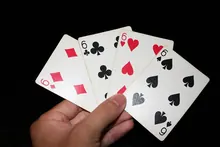
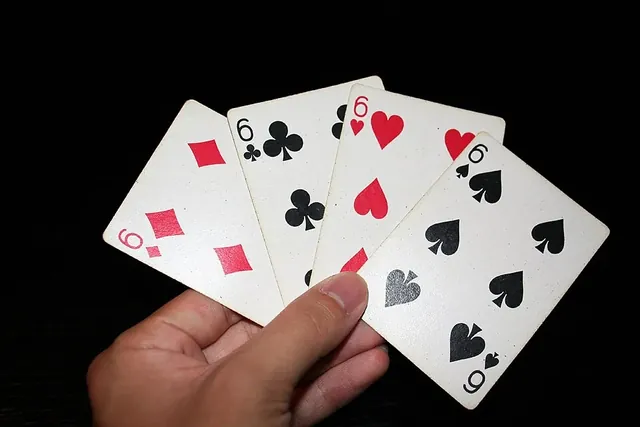
A standard deck has 52 cards in four suits: spades, hearts, diamonds and clubs, called hukum, paan, eent and chidi in Hindi. Each suit has 13 ranks: ace (ikka), 2 to 10, jack (gulam), queen (rani) and king (raja). Packs also include jokers, which many rummy games use as wild cards; Parksons Cartamundi says each of its decks has 55 cards. With no board to set up, the same deck plays games where you empty your hand, rummy games of runs and sets, and team games of winning tricks.
- Time to teach: about 5 minutes.
- Reading and language: Nothing to read while playing: the cards show numbers, the letters A, K, Q and J, and suit symbols. Rules pass by word of mouth in any language; in Hindi the suits are hukum, paan, eent and chidi.
How to Play Sevens (Card Game) · wikiHow
Choose a video · Watch right here
If this creator doesn’t allow embedded playback, watch on YouTube ↗.
A turn, step by step
- 1Deal
Deal the whole deck one card at a time to three to eight players; some may get one card more.
- 2Open
Whoever holds the seven of hearts plays it first. Then, in turn, add the next card up or down in a suit on the table, or any seven to start a new row.
- 3Pass
If no card fits, say pass. You may pass only when you cannot play.
- 4Win
The first player to empty their hand wins; counting the cards left decides the other places.
The full explanation: how a game of Playing Cards goes
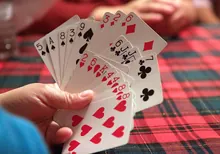
Badam Saat, also called Seven of Hearts or Satti Centre, is the game many Indian children learn first. Deal the whole deck one card at a time to three to eight players; some players may get one card more. Whoever holds the seven of hearts must play it first. After that, in turn, each player adds one card: the next card up or down in a suit already on the table (the eight or six of hearts, to begin with), or any other seven to start that suit's row. Rows grow up to the king and down to the ace; a few families put the ace after the king instead, so agree first.
If none of your cards fits, you say pass. You may pass only when you have no card you can play, and a player caught holding back a playable card usually gets a penalty agreed at the start. The first player to empty their hand wins, and many families play on to decide second and third place. For a longer game, count the cards left in each hand (ace 1, jack 11, queen 12, king 13, or every picture card as 10) and keep a running total over several rounds: the player with the most points at the end loses. One round takes about 10 to 15 minutes.
The skill is in holding back. Players avoid laying cards next to a seven when that only helps others: if you hold the six of a suit and nothing lower in it, keeping the six blocks everyone waiting to play the five or four. Once you know Badam Saat, the same deck plays Indian Rummy, also called Paplu (13 cards each, two decks for up to six players, and you need two runs, one of them without jokers), Twenty-Nine (popular in much of north India, Nepal and Bangladesh: four players in two teams, 32 cards, with the jack and nine highest), Court Piece or Rang (four players in teams; the trump-caller picks trumps after seeing five cards, and a team needs seven of the 13 tricks) and Mendikot (Maharashtra and Gujarat: teams try to capture the four tens). Kerala has Twenty-Eight and Fifty-Six, Tamil Nadu and Kerala play Literature, Punjab plays Getaway, and in Goa Court Piece is called Seven Hands.
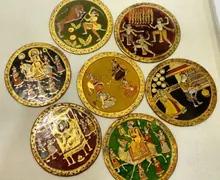
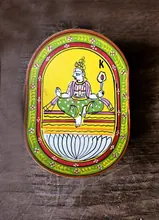
Cards have a long history in India. Ganjifa cards, often round and hand-painted, with eight suits in the Mughal sets and ten in the Dashavatara sets, became popular under the Mughal emperors in the 16th century; Babur's memoir records that he sent a pack to Shah Hassan in 1527. Artisans still paint Ganjifa in Sawantwadi in Maharashtra, in Odisha and in Mysuru. The printed four-suit deck arrived in the colonial period and came to dominate in the 20th century.
What's in the box
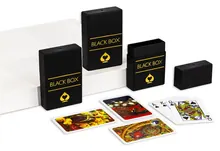
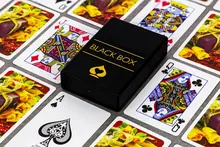
- 3Black Box Premium plastic playing card decks
Bridge size, regular index; Cartamundi gives 55 cards per deck - 3Plastic cases
One for each deck
Box: 10 × 7.1 × 7.1 cm, 0.49 kg. Handy to know for gifting and travel.
From Parksons Cartamundi's page for the single Black Box Premium deck (100% plastic, its own plastic case) and Cartamundi's Black Box page (bridge-sized, 55 cards per deck); the pack of three and the regular index are from our Amazon.in link. Neither maker page says how many of the 55 cards are jokers, and no rules leaflet is mentioned.
Where to buy
Boardgames.in helps you choose a game. You place your order on Amazon.in, where you can check the seller, delivery estimate and return terms before paying. Amazon.in’s policies apply to your purchase. As an Amazon Associate, we may earn a commission when you buy through our links, at no extra cost to you.
How to pick a good setSize, pieces and the details worth checking.
Which set to buy
4 sets on Amazon.in, grouped by kind. Each button opens that set's own listing; check its size and pieces there before you buy.
Plastic decks2 sets
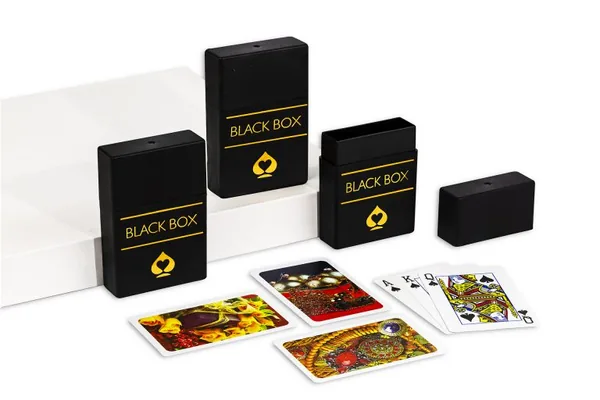
Black Box Premium plastic cards, pack of 3
Parksons Cartamundi, Mumbai · Made in India
- Size
- Bridge size; pack about 10 x 7.1 x 7.1 cm, 490 g (the maker's page)
- Build
- 100% plastic cards with a waterproof surface, regular index (the listing); each deck in its own plastic case
- In the box
- Three decks, 55 cards each, each in a plastic case
Good for: Families who play often and want washable cards that last, with the two decks rummy needs plus a spare

The Ace Card Company premium plastic cards, 2 decks with case
The Ace Card Company (the listing)
- Size
- Bridge size; 380 g (the listing's figures)
- Build
- Plastic cards with a case (the listing)
- In the box
- Two decks of plastic cards and a case (the listing)
Good for: Rummy players who want two plastic decks kept together in one case
Paper decks2 sets
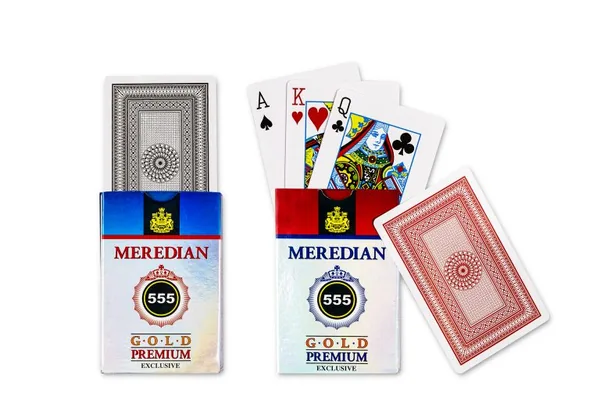
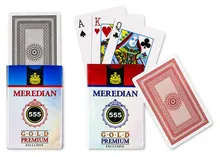
Meredian 555 Gold Premium paper cards, pack of 2
Parksons Cartamundi, Mumbai · Made in India
- Size
- Bridge size, 2.25 x 3.5 inches (the maker); 173 g for the pack (the listing)
- Build
- Plastic-coated paper cards that resist bending, regular index, red and black backs
- In the box
- Two decks of 55 cards each
Good for: Families who like the classic feel of paper cards, with the two decks a rummy game needs

Creneau 555 Club playing cards, set of 4
Sharda Cards Pvt Ltd, for Creneau (the listing)
- Size
- Four decks, 300 g in all (the listing's figure)
- Build
- Coated cards (the listing's material row says coated, plastic)
- In the box
- Four decks of playing cards (the listing)
Good for: Big family groups who want several decks at once, for two rummy tables or a spare for every game
What reviewers and players say
Badam Saat is valued as the card game children learn first: there is one rule to remember, nothing to read, and it works for anything from three to eight players. Wikipedia notes that it is not all luck, since players hold back cards next to the sevens to force others to play elsewhere, but the deal still decides a lot. A standard deck is valued most for its range, from Badam Saat and rummy to Twenty-Nine, Court Piece and Mendikot, each with its own region and house rules. On the cards themselves, the maker says its plastic Black Box decks resist water, bending and folding, while paper decks are plastic-coated to resist bending.
What people love
- One deck plays dozens of games, from Badam Saat for children to Twenty-Nine and Court Piece for adults
- Badam Saat needs no reading and takes minutes to teach
- Games that grandparents already know, with regional versions across India
- Plastic decks that the maker says resist water and bending
Common complaints
- Badam Saat can be decided by the deal, with little a player can do
- House rules differ from family to family (the ace, penalties, scoring), so agree them first
- Regular-index cards have small corner numbers; large-index decks exist for clarity
5 research sources
- Reference Sevens (card game) (Wikipedia, read October 2026) · Wikipedia
- Reference Sevens (Card Game Rules, date not shown) · pagat.com
- Reference Card games in India (Card Game Rules, date not shown) · pagat.com
- Reference Black Box playing cards (Cartamundi, date not shown) · Cartamundi
- Reference Black Box Premium, single pack (Parksons Cartamundi, date not shown) · Parksons Cartamundi
Summarised in our own words from the sources above. We don't use Amazon reviews or ratings.
More like Playing Cards
Which game is the best fit?
Our picks if Playing Cards isn't quite right.
Swipe to compare every game
| Compare the games.The details that make a difference. |
YOU’RE VIEWING
 Playing Cards |
ANOTHER WAY TO PLAY
 Rummikub |
ANOTHER WAY TO PLAY
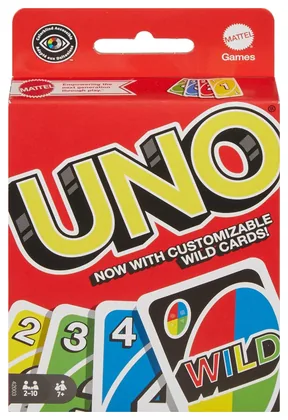 UNO |
ANOTHER WAY TO PLAY
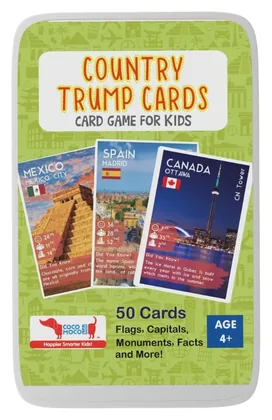 Trump Cards |
|---|---|---|---|---|
| Why consider it | This game One deck, dozens of family games, from Badam Saat to rummy | A different fit Rummy's runs and sets, played with numbered tiles instead of cards | A different fit Another race to empty your hand, with its own colour deck | A different fit The stats-comparison card game Indian children play with themed decks of countries, planes, cars and warriors |
| Players | 2–8 | 2–4 | 2–10 | 2–5 |
| Best with | 4-6 | 3-4 | 4-6 | 2-4 |
| Play time | 10–30 min | 20–60 min | 10–30 min | 10–30 min |
| Age | 6+ | 7+ | 7+ | 6+ |
| Rules | Easy | Easy | Easy | Easy |
| Indian edition | Available | Available | Imported | Available |
| On this page | Explore Rummikub | Explore UNO | Explore Trump Cards |
More empty-your-hand card games
Different games. A familiar kind of fun.
Rummikub
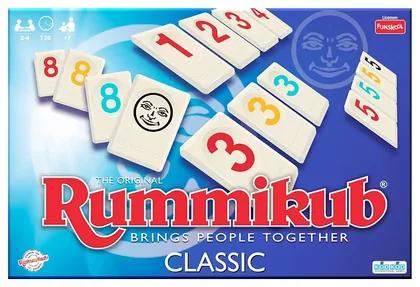
Rummy with tiles: build runs and groups, then rearrange the table
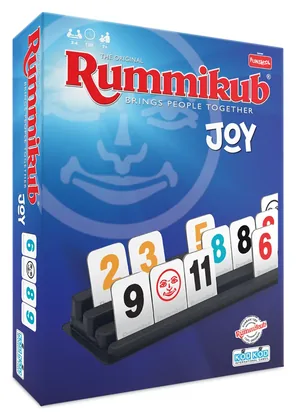
Rummikub Joy
Rummikub with light cardboard tiles in a small Funskool box
UNO
Match colours or numbers, then shout UNO before anyone catches you.

Taco Cat Goat Cheese Pizza
Say the word, watch the card, slap the pile before everyone else
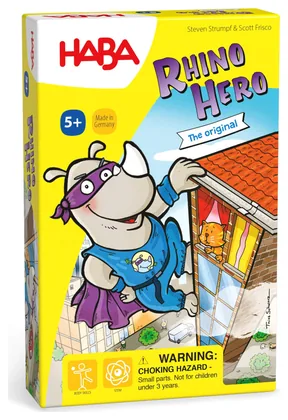
Rhino Hero
Build a wobbly card skyscraper without toppling the rhino
Also playable with two
For game nights with two players.
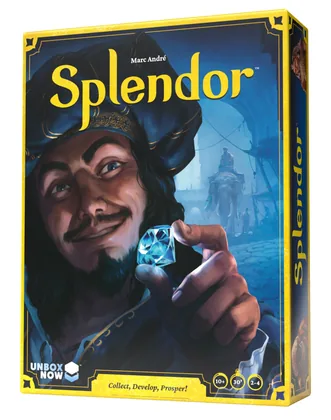
Splendor
A quick gem-trading race where every card makes the next easier.

Jaipur
Two rival merchants trade goods and camels in old Jaipur

Ticket to Ride: First Journey
A shorter, simpler Ticket to Ride made for children six and up
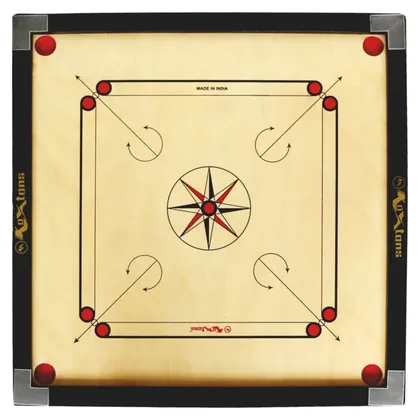
Carrom
Flick the striker, pocket your colour, then capture and cover the queen

Wavelength
Read your teammates' minds with one clue and a big red dial
Questions people ask about Playing Cards
How do you play Badam Saat (Seven of Hearts)?
Deal out all the cards. The player with the seven of hearts plays it first; then each player in turn adds the next card up or down in a suit on the table, plays another seven to start a new row, or passes if no card fits. The first player to get rid of all their cards wins.
Which is better, plastic or paper playing cards?
Plastic cards last much longer, can be wiped clean and don't crease, so they suit families who play often. Paper cards, usually with a plastic coating, are lighter and feel more traditional, but they wear out sooner. Our pick is a plastic deck; the same maker's Meredian 555 decks are its paper option.
How many decks do you need for rummy?
For Indian Rummy, with 13 cards each, the rules on pagat.com use two decks for up to six players and three decks for seven or more, each with a printed joker. A pack of two or three decks is the easiest way to have them ready.
What are the card suits called in Hindi?
Spades are hukum, hearts paan, diamonds eent and clubs chidi. The ace is ikka, the king raja, the queen rani and the jack gulam, and a whole pack is a gaddi.
Are Black Box playing cards made in India?
Yes. Parksons Cartamundi's own product page says the Black Box Premium cards are made in India, and Cartamundi's Black Box page says they are designed and made in India. The company's address is in Mumbai.
Game facts
- Publisher
- Parksons Cartamundi (Black Box Premium)
- In India
- Parksons Cartamundi Pvt Ltd (Mumbai)
- Players
- A deck has no fixed player count. Badam Saat suits 3 to 8 (best with 4 to 6); Twenty-Nine, Court Piece and Mendikot are for four players in two teams; Indian Rummy and Saat-Aath (7-8) can be played by two.
- Language
- No reading – Nothing to read while playing: the cards show numbers, the letters A, K, Q and J, and suit symbols. Rules pass by word of mouth in any language; in Hindi the suits are hukum, paan, eent and chidi.
- Box size and weight
- 10 × 7.1 × 7.1 cm, 0.49 kg
Sources & photo creditsThe references behind this guide.
Facts on this page come from the publisher, the Indian maker or distributor, and the sources below. Photos are credited under each one.
- Cartamundi - Black Box playing cards (brand page)
- Parksons Cartamundi - Black Box Premium, single pack (maker's shop)
- Cartamundi - Meredian 555 playing cards (brand page)
- Parksons Cartamundi - Meredian 555 Gold Premium paper playing cards, pack of 4 (maker's shop)
- Parksons Cartamundi - About us
- Parksons Cartamundi - Contact us (Mumbai address)
- Sevens (card game) - Wikipedia (Indian variant: Badaam Saat, Satti Centre)
- Sevens - Card Game Rules (pagat.com)
- Card games in India - Card Game Rules (pagat.com)
- Twenty-Nine - Card Game Rules (pagat.com)
- Court Piece (Rang) - Card Game Rules (pagat.com)
- Mendikot - Card Game Rules (pagat.com)
- Indian Rummy - Card Game Rules (pagat.com)
- Taash - Hindi Wikipedia (Hindi names for cards and suits)
- Ganjifa - Wikipedia
- Standard 52-card deck - Wikipedia (card sizes, jokers)