
- Set-up
- Under a minute
- Reading
- None
The quick verdict
Full verdict ↓Great for Children from 8 who enjoy brain-teasers like Brainvita or a Rubik's Cube
Think twice if You want something the whole family can play together; it is a puzzle for one
How we rate it
Learning curve. One move, explained in a sentence, but the solving is hard: every flip also turns the cube, so smileys keep rolling away. We rate it 2 for the puzzle, not the rules.
Luck & skill. No dice, no cards and nothing hidden: every cube is in plain view, so success comes from planning and patience.
Interaction. It is a solo puzzle. Others can only watch, take turns or time each other.
Set-up. Turn all eight cubes smiley-down in the tray. Resetting after a try takes under a minute.
Reading. Nothing to read during play; the rules on the box are a few short steps in English.
Learning curve: 1 = UNO or Connect 4; 3 = Catan; 5 = a heavy strategy game. These describe the experience, not an overall score.
Is Eureka right for you?
Great if
- Children from 8 who enjoy brain-teasers like Brainvita or a Rubik's Cube
- Quiet time alone in the school holidays: nothing to set up and no one to wait for
- A small gift or return gift for a puzzle-loving child
- A parent and child taking turns to see who can solve it first
Skip it if
- You want something the whole family can play together; it is a puzzle for one
- Your child gives up quickly, because the puzzle often seems to go backwards before it comes right
- There are toddlers at home: the cubes are small parts and the box says not for children under 3
How Eureka plays
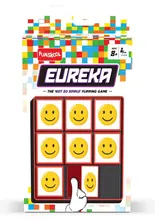
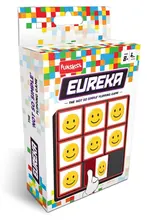
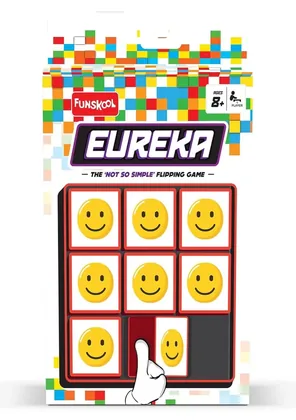
Eureka comes with eight cubes and a tray with a 3x3 grid of nine spaces, so one space is always empty. Each cube has a smiley face on just one of its six sides. To start, set all eight cubes in the tray with the smileys facing down.
- Time to teach: about 1 minute.
- Reading and language: Nothing to read during play. The short rules are printed in English on the back of the box.
A turn, step by step
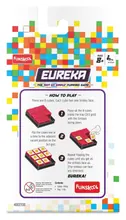
- 1Set
Put all eight cubes in the 3x3 tray with their smileys facing down, leaving one space empty.
- 2Flip
Tip one cube over its edge into the empty space beside it. It rolls a quarter turn, so its smiley changes direction.
- 3Solve
You have won when all eight smileys face up, pointing any way. Then shout 'Eureka!'
The full explanation: how a game of Eureka goes
A move is a flip: tip one cube over its edge into the empty space next to it. The cube rolls a quarter turn as it moves, so its smiley ends up facing a different way, and the empty space moves to where the cube was.
Keep flipping until all eight smileys face up. They don't have to point the same way, only up, and Funskool's rules don't say where the empty space must end. When the last smiley shows, the box tells you to shout 'Eureka!'
Eureka works like an old puzzle that collectors call rolling cubes or the eight cubes puzzle. It is credited to John Harris and was described in Scientific American's Mathematical Games column in 1975.
For a harder challenge once you can solve it, try the classic goal as well: all smileys up and the empty space back in the middle of the tray. Ken Shirriff's write-up of the classic version says it can be solved in 36 moves.
What's in the box
- 8Cubes
each with a smiley face on one side - 1Tray
a 3x3 grid of nine spaces, so one space stays empty
Box: 0.35 kg. Handy to know for gifting and travel.
From the contents list on Funskool's box-back photo ('Cubes - 8 Nos., Tray - 1 No.'). The rules are printed on the back of the box; no separate rules sheet or solution is listed. Funskool's product page doesn't list contents but describes the 8 cubes and the tray.
Where to buy
How to make sure you get a genuine copyEditions and the details worth checking.
What reviewers and players say
No reviews or forum threads about Funskool's Eureka could be found, so this rests on Funskool's own description and on puzzle writers who cover the classic rolling cubes puzzle, which works the same way. Ken Shirriff, who built a computer version, warns that solving it is harder than it looks, and Jaap Scherphuis's puzzle page shows that the hardest positions of the classic puzzle need dozens of moves. Funskool's version is a little gentler, since the smileys only have to face up and the gap can finish anywhere. It suits a child who enjoys working something out alone more than a family wanting a game with a winner.
What people love
- One simple move to learn, so a child can start straight away
- Harder than it looks, which keeps older children and adults trying again
- Nothing to set up and no partner needed
- A gentler goal than the classic puzzle: smileys only need to face up, not point the same way
Common complaints
- One puzzle only: once solved, replay means solving it faster or trying the classic gap-in-the-middle goal
- No solution or hints in the box, so a stuck child may need an adult's help
- Small cubes that are easy to lose and not safe for toddlers
Based on 4 reviews and discussions
- Reference Eureka (Funskool, read October 2026) · Funskool
- Reference Rolling Cubes Puzzle (Jaap Scherphuis, read October 2026) · Jaap's Puzzle Page
- Reference Java applets: The Rolling Cubes Puzzle (Ken Shirriff, 2001) · righto.com
- Reference new cube game (Stan Isaacs, December 1981) · Cube-Lovers mailing list archive
Summarised in our own words from the sources above. We don't use Amazon reviews or ratings.
More like Eureka
Which game is the best fit?
Our picks if Eureka isn't quite right.
Swipe to compare every game
| Compare the games.The details that make a difference. |
YOU’RE VIEWING
 Eureka |
ANOTHER WAY TO PLAY
 Brainvita |
ANOTHER WAY TO PLAY
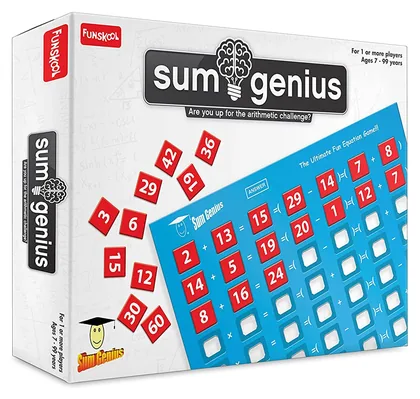 Sum Genius |
ANOTHER WAY TO PLAY
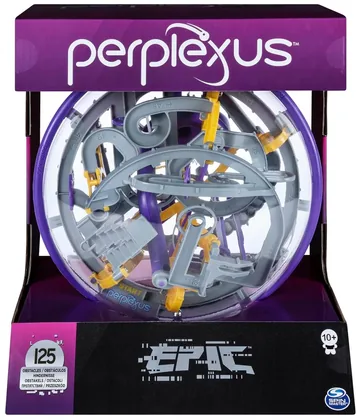 Perplexus Epic |
|---|---|---|---|---|
| Why consider it | This game Flip eight cubes around a tray until every smiley faces up | A different fit Another one-player puzzle where every move has to be planned a few steps ahead | A different fit Funskool's solo puzzle board: flip and swap number tiles until seven equations work | A different fit A bigger one-player challenge that takes patience and steady hands rather than planning |
| Players | 1 | 1 | 1–4 | 1 |
| Best with | 1 | 1 | 1-2 | 1 |
| Play time | 5–30 min | 5–20 min | 10–30 min | 5–60 min |
| Age | 8+ | 6+ | 7+ | 8+ |
| Rules | Easy | Easy | Easy | Easy |
| Indian edition | Available | Available | Available | Available |
| On this page | Explore Brainvita | Explore Sum Genius | Explore Perplexus Epic |
More from Funskool
Another way into their collection.
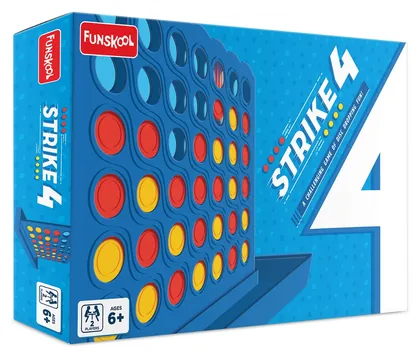
Strike 4
Drop discs, block your rival and line up four first
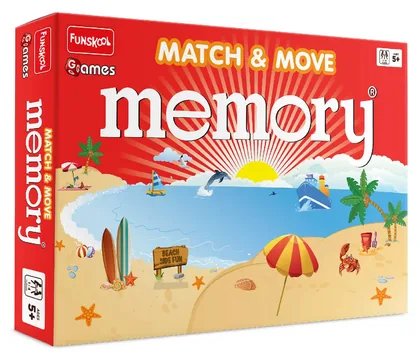
Match & Move Memory
Remember where each picture hides and race your piece home
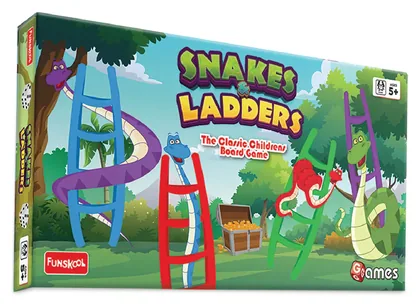
Snakes and Ladders
Climb the ladders, dodge the snakes, first to 100 wins
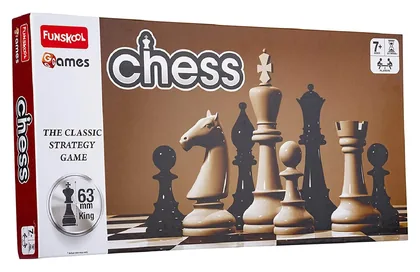
Chess
The two-player battle of wits that began in India as chaturanga
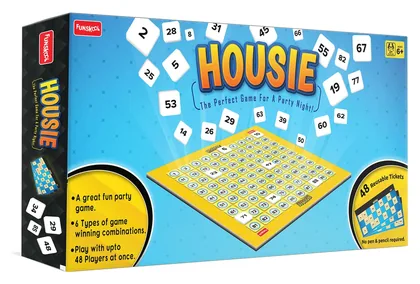
Housie (Tambola)
Strike off called numbers and shout first for lines and Full House
More solo puzzles
Different games. A familiar kind of fun.
Perplexus Epic
A one-player 3D maze ball with 125 obstacles to beat
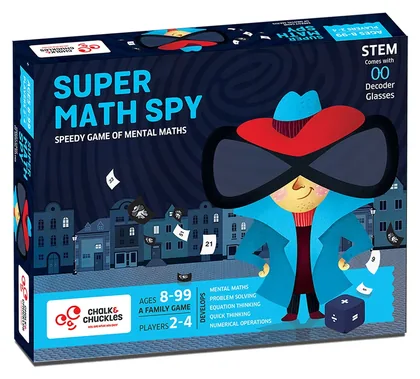
Super Math Spy
Race to build an equation that hits your mission number
Brainvita
Jump marble over marble until only one is left, in the centre
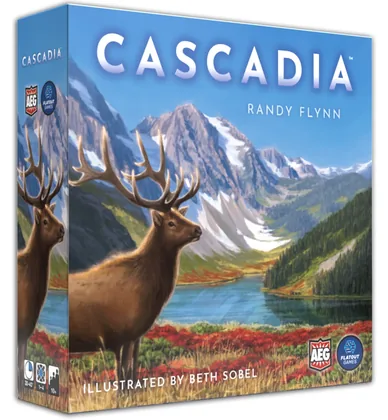
Cascadia
Build a Pacific Northwest landscape and fill it with wildlife
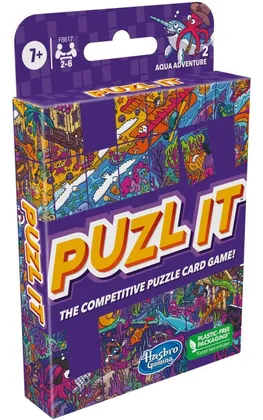
Puzl It: Aqua Adventure
A card game where you build an undersea jigsaw and steal cards
Questions people ask about Eureka
How do you play Eureka by Funskool?
Put all eight cubes in the tray with their smileys facing down. Flip one cube at a time into the empty space next to it; each flip turns the cube, so its smiley changes direction. You have solved it when all eight smileys face up.
What age is Eureka suitable for?
Funskool says 8 years and up. The move is easy enough for younger children to copy, but solving it takes patience. The cubes are small parts, so keep the box away from children under 3.
Is Eureka hard to solve?
Yes, for most people. Every flip also turns the cube, so fixing one smiley can undo another. Writers on the classic rolling cubes puzzle, which works the same way, warn that it is harder than it looks, and Funskool's box has no solution sheet.
Can two people play Eureka?
It is a puzzle for one. Two players can take turns and time each other, or race if each has a set, but there are no rules for playing against each other.
Is Funskool's Eureka made in India?
Funskool's product page gives India as the country of origin and names Funskool India Ltd of Chennai as the manufacturer, packer and importer.
Game facts
- Publisher
- Funskool
- In India
- Funskool (India) Ltd, Chennai, which names itself as manufacturer, packer and importer
- Players
- 1
- Language
- No reading – Nothing to read during play. The short rules are printed in English on the back of the box.
- Box size and weight
- 0.35 kg
Sources & photo creditsThe references behind this guide.
Facts on this page come from the publisher, the Indian maker or distributor, and the sources below. Photos are credited under each one.
- Funskool - Eureka product page (product code 4002700)
- Jaap's Puzzle Page - Rolling Cubes Puzzle (Jaap Scherphuis)
- Ken Shirriff - Java applets: The Rolling Cubes Puzzle
- Cube-Lovers mailing list archive - Stan Isaacs, new cube game (December 1981)
- Funskool - Eureka product page on Funskool's earlier website (archived July 2019)