
- Set-up
- About 2 min
- Reading
- None
The quick verdict
Full verdict ↓Great for Children from about 7 who enjoy dots and boxes and are ready for a game with a twist
Think twice if Your children are under 6; the box says 7 and up
How we rate it
Learning curve. One move a turn, placing a stick, and a single rule for who takes a closed tile. Thinking ahead takes practice, but the rules are as quick to learn as Connect 4, so it sits at 1 on our scale.
Luck & skill. Once the tiles are on the board, nothing is hidden and there are no dice; the only luck is where the tiles happen to lie.
Interaction. Every stick on a shared edge counts for two tiles, so players are always racing for and spoiling the same tiles.
Set-up. Fill the board with the 36 tiles face up and hand each player a colour of fence sticks.
Reading. Tiles and sticks are pictures and colours; only the rules are in English.
Learning curve: 1 = UNO or Connect 4; 3 = Catan; 5 = a heavy strategy game. These describe the experience, not an overall score.
Is Count Your Chickens right for you?
Great if
- Children from about 7 who enjoy dots and boxes and are ready for a game with a twist
- Family evenings where grandparents, parents and children can all play on equal terms
- Practising planning ahead, spatial thinking and adding up a score
- A birthday or Rakhi gift that isn't a screen
Skip it if
- Your children are under 6; the box says 7 and up
- You want a big group game; it takes 2 to 4 players
- Someone at home hates slow, thinking turns; each move is a small puzzle
How Count Your Chickens plays
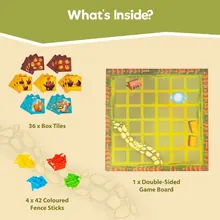
Lay the double-sided board on the table and fill it with the 36 square box tiles, face up, so everyone can see which tiles hold chickens and which hold foxes. Each player takes a set of fence sticks in their own colour; the box has four sets of 42.
- Time to teach: about 5 minutes.
- Reading and language: The tiles show chickens and foxes and the fences are plain coloured sticks, so nobody reads during play. Only the rules on the box and in the manual are in English, and the game is easy to explain in Hindi, Marathi, Malayalam or any language at home.
Bincas' Count your Chickens - How to play| English | Family / Friends / Kids / Group fun game · Shanat's RealmO'Games
Choose a video · Watch right here
If this creator doesn’t allow embedded playback, watch on YouTube ↗.
A turn, step by step
- 1Fence
Place one of your coloured sticks on any empty side of a chicken or fox tile.
- 2Scoop
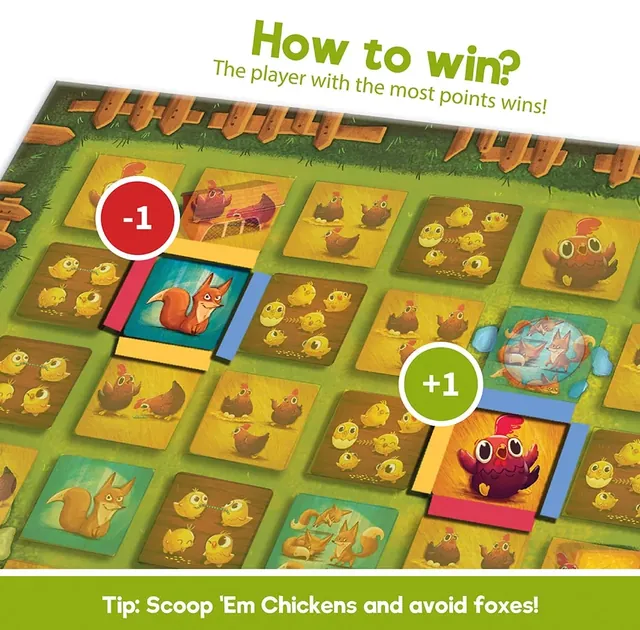
When a tile is fully fenced, whoever has the most sticks around it takes it; a tie goes to the player who closed it.
- 3Win
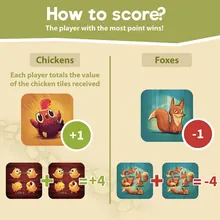
When every tile is taken, add up your chickens, subtract your foxes, and the highest score wins.
The full explanation: how a game of Count Your Chickens goes
On your turn, place one of your fence sticks on any empty side of a tile. Bit by bit, players build fences around the tiles they want, and every stick on a shared edge counts for the tiles on both sides of it.
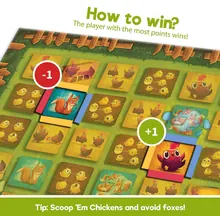
When the last side of a tile is filled, the tile is closed. Whoever has the most sticks around it takes the tile, which Binca calls scooping 'em up; if players tie, the tile goes to the player who placed the closing stick. That is the twist on dots and boxes: closing a box doesn't win it unless you also have the most fences round it.
The game ends when every tile has been closed and taken. Everyone adds up the value of the chicken tiles they won, and foxes count against you, so fencing in a fox along with your chickens can cost you. The highest total wins.
For parents: a seven-year-old can usually play on their own after one game; adults may only need to help with adding up the score at the end. The game builds planning, spatial thinking and counting. A tip to share: before you place a stick, check which tiles it touches, because you may be setting up a tile for someone else.
What's in the box
- 1Double-sided game board
- 36Box tiles
chickens and foxes - 168Coloured fence sticks
4 sets of 42, one colour per player - 1Instruction manual
Box: 28.4 × 28.3 × 5.3 cm, 0.88 kg. Handy to know for gifting and travel.
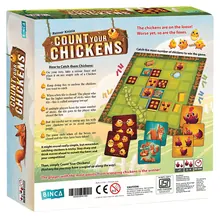
Contents are from Binca's product page for the game: 1 double-sided game board, 36 box tiles, 4 sets of 42 coloured fence sticks and an instruction manual. Binca's contents picture shows the same parts, and the rules are also printed on the box back. There is only one edition that we know of.
Where to buy
How to make sure you get a genuine copyEditions and the details worth checking.
What reviewers and players say
We found no written reviews, parent blogs or forum threads about Binca's Count Your Chickens. The only independent coverage is a pair of how-to-play videos, in English and Malayalam, from a Bengaluru game host's channel, which calls it a clever, family-friendly strategy game. On paper it is dots and boxes with a smart twist: a fenced tile goes to whoever built most of its fence, and foxes cost points. That suits families with children from 7 who like quiet thinking games more than fast, noisy ones.
What people love
- A familiar dots-and-boxes start that children pick up in minutes
- The most-sticks rule makes every fence count, not only the last one
- Foxes that cost points add a choice to every move
- Children and adults can play on equal terms, with no reading
Common complaints
- Little independent feedback so far, so it is hard to say how well it lasts
- Turns can slow down while players work out which tiles a stick touches
- The instruction manual is not online; the box back is the only rules source we could read
4 research sources
- Reference Count Your Chickens - Strategy Board Game (maker's product page, read October 2026) · Binca
- Reference Bincas' Count your Chickens - How to play, English (Shanat's RealmO'Games, January 2026) · YouTube
- Reference Bincas' Count your Chickens - How to play, Malayalam (Shanat's RealmO'Games, January 2026) · YouTube
- Reference About us (Binca, read October 2026) · Binca
Summarised in our own words from the sources above. We don't use Amazon reviews or ratings.
More like Count Your Chickens
Which game is the best fit?
Our picks if Count Your Chickens isn't quite right.
Swipe to compare every game
| Compare the games.The details that make a difference. |
YOU’RE VIEWING
 Count Your Chickens |
ANOTHER WAY TO PLAY
 Claim and Save |
ANOTHER WAY TO PLAY
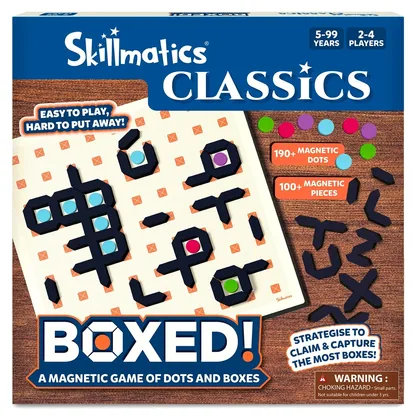 Boxed |
ANOTHER WAY TO PLAY
 Carcassonne |
|---|---|---|---|---|
| Why consider it | This game Place fences to scoop up chickens, but keep the foxes out | A different fit Close cousin: place hedges round squares and claim animal tokens worth points; closing a square wins it outright | A different fit Magnetic dots and boxes, where closing a box claims it and earns another turn | A different fit For older children: when a city closes, whoever has the most pieces in it scores, much like scooping a tile |
| Players | 2–4 | 2–4 | 2–4 | 2–5 |
| Best with | 2-4 | 2-3 | 2 | 2-4 |
| Play time | 20–30 min | 20–40 min | 10–20 min | 30–45 min |
| Age | 7+ | 6+ | 5+ | 7+ |
| Rules | Easy | Easy | Easy | Easy |
| Indian edition | Available | Available | Available | Available |
| On this page | Explore Claim and Save | Explore Boxed | Explore Carcassonne |
More from Binca Games
Another way into their collection.
Qwicket
A two-player cricket duel over three overs, played with cards
White Washers
A cheeky bluffing card game about cleaning up dirty money
Great Minds
Guess which answer your friend will pick, and score if you match
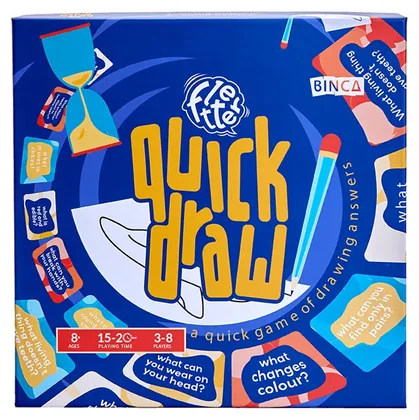
Quick Draw
Everyone draws an answer in 30 seconds, and only unique ideas score
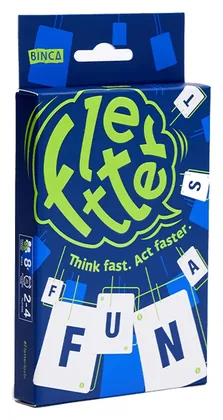
Fletter
Flip letters into the middle and shout the first word you spot
More pure strategy games
Different games. A familiar kind of fun.
Claim and Save
Build hedges, claim squares and score for saving endangered animals
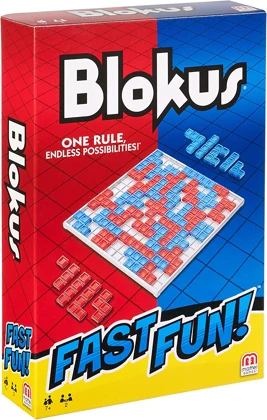
Blokus Fast Fun
A compact duel for two: fit your shapes, protect your corners, block your opponent
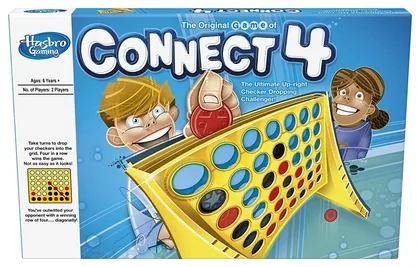
Connect 4
Drop discs, block your rival and get four in a row
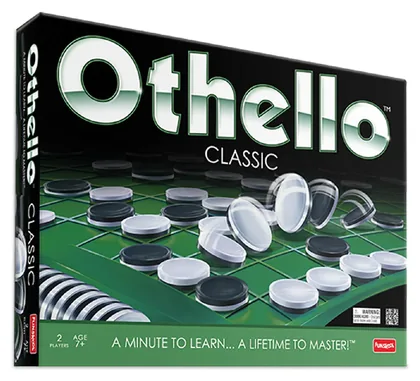
Othello
Trap a line of discs, flip them to your colour
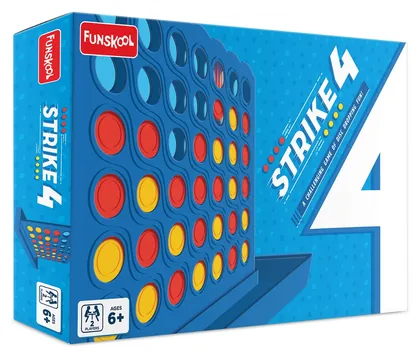
Strike 4
Drop discs, block your rival and line up four first
Questions people ask about Count Your Chickens
How do you play Count Your Chickens by Binca?
Players take turns placing one fence stick on any empty side of a tile. When a tile is fully fenced, whoever has the most sticks around it takes it, and a tie goes to the player who closed it. When every tile is taken, add up your chickens, take off your foxes, and the highest score wins.
What age is Count Your Chickens for?
The box says 7 and up. Younger children can join in with help, but the game is about planning where to put fences. If there are toddlers at home, count the sticks and tiles back into the box after a game.
Is Count Your Chickens like dots and boxes?
It starts the same way, by adding one side at a time to squares, but closing a tile doesn't win it by itself: the tile goes to whoever has the most sticks around it. The tiles are also worth different points, and foxes cost you, so you choose carefully which tiles to chase.
How many people can play Count Your Chickens?
Two to four. Each player has a set of 42 sticks in their own colour, and a game takes about 30 minutes.
Is Count Your Chickens an Indian game?
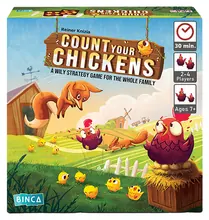
It is published by Binca Games, a games company in Mumbai that also makes Qwicket and Fletter, and the box back says Made in India. The box credits the design to Reiner Knizia.
Game facts
- Designed by
- Reiner Knizia
- Publisher
- Binca Games (Binca Games Pvt Ltd, Mumbai, India)
- In India
- Binca Games, a Mumbai games company that makes and sells Count Your Chickens
- First published
- 2023
- Players
- 2–4
- Barcode
- 8908005491989
- Language
- No reading – The tiles show chickens and foxes and the fences are plain coloured sticks, so nobody reads during play. Only the rules on the box and in the manual are in English, and the game is easy to explain in Hindi, Marathi, Malayalam or any language at home.
- Box size and weight
- 28.4 × 28.3 × 5.3 cm, 0.88 kg
Sources & photo creditsThe references behind this guide.
Facts on this page come from the publisher, the Indian maker or distributor, and the sources below. Photos are credited under each one.
- Binca - Count Your Chickens, Strategy Board Game (maker's product page: rules on the box back, contents, size)
- Binca - About us (founders, started 2015)
- Shanat's RealmO'Games - Bincas' Count your Chickens, How to play (English, January 2026)
- Shanat's RealmO'Games - Bincas' Count your Chickens, How to play (Malayalam, January 2026)
- Games for Young Minds - Count Your Chickens! (Kent Haines, May 2019)