
Strategy board games in India
Strategy board games.Compare decisions, luck and learning.
Compare a short spatial duel, card-buying plans, a shared map, negotiation and a longer economic game. Start with player count and the kind of interaction the group enjoys.
Compare the games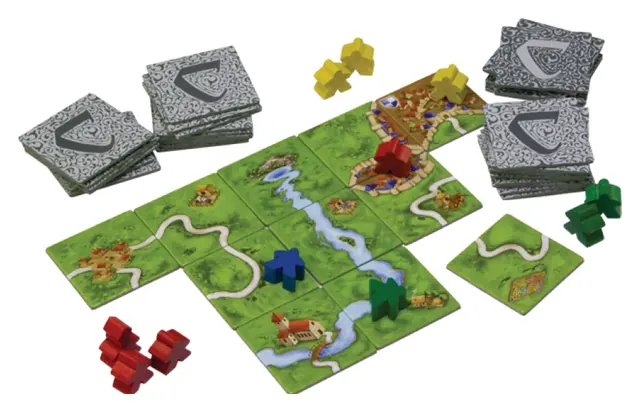
The short answer
Choose the decision, then the commitment.
Blokus Fast Fun is a short spatial contest for exactly two. Splendor rewards planning purchases; Carcassonne asks for adaptation as a map grows. Catan puts trading into the plan. Brass: Birmingham is the heavier economic option, with more rules and a longer first session.
See the possibilities
A short spatial duel for exactly two.
Build towards something
Small choices that improve later options.
Negotiation and trading
Negotiation and a more involved table.
Compare the decisions and the uncertainty
Learning and interaction are editorial assessments. These are different styles, not a ranking. Play times on the cards exclude the first explanation.
| Game | Main decision | Luck and interaction | Learning commitment |
|---|---|---|---|
| Blokus Fast Fun | Keep space for awkward shapes | No random draw; direct blocking | Short rules; spatial decisions remain demanding |
| Splendor | Buy bonuses that make later cards cheaper | Cards replenish randomly; compete for gems and cards | Learn the actions, discounts and scoring |
| Carcassonne | Place a tile and commit limited meeples | Random tile draws; a map everyone can contest | Learn feature scoring and when meeples return |
| Catan | Choose what to build and trade for | Dice change supply; players negotiate | Setup, trading and development-card rules |
| Brass: Birmingham | Coordinate industries, resources and connections | Card draws and shared resource networks | Most involved here: two eras and connected economic rules |
The boardgames.in shortlist
Five different styles of strategy
Player counts, ages and play times below come from the linked catalogue editions. Allow extra time for the first explanation.
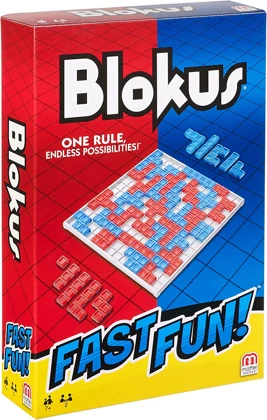
Place shapes while keeping routes into open space. There is no dice roll or card draw to change the position: the challenge comes from both players’ placements. Each new piece of a colour must touch that colour at a corner, never along an edge.
Reading: No reading on pieces.
Blocking can be sharp. It is a contest over space, even if it initially resembles a friendly puzzle.
Check the edition
Mattel Blokus Fast Fun FMW25: two colours, 21 pieces per player and a 14 × 14 board. The larger four-colour Blokus is a different edition.
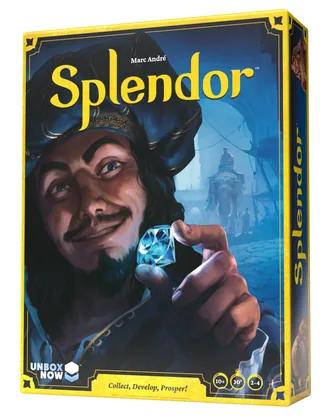
Acquire cards whose bonuses help with later purchases. Consider it if improving a plan appeals more than negotiating with other players.
Reading: Symbols and numbers during play.
Shared cards and limited resources still create competition. Watch the other players rather than treating it as a private puzzle.
Check the edition
Original Space Cowboys Splendor for 2–4 players. Splendor Duel is a separate two-player game; expansions need their matching base game.

Place a tile, then decide whether to commit one of the limited meeples. Consider it if you enjoy a landscape that develops through everyone’s decisions.
Reading: Picture tiles; scoring needs explanation.
Tiles arrive by draw, so plans need to adapt. A growing map also needs a clear table.
Check the edition
The linked Z-Man English base-game edition includes The River and The Abbot. The Big Box and standalone variants are different purchases.
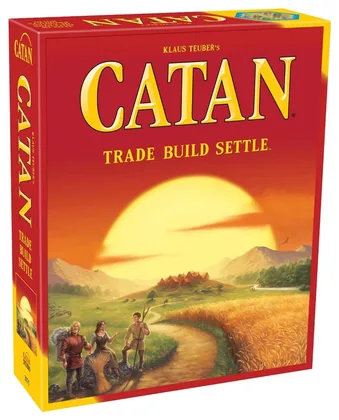
Build and trade with the other players. Consider it when three or four people want the conversation to be part of the strategy.
Reading: Learn resources, costs and development-card effects.
Dice affect resource supply, and trading depends on other people. Choose something else if you dislike bargaining or need a short session.
Check the edition
The linked Funskool base game supports 3–4 players. An extension is a separate purchase; do not assume two-player rules are included.
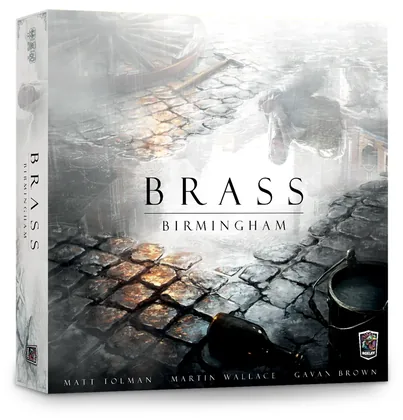
Build industries and connections while managing money and access to resources. Consider it for a group willing to learn an interdependent economy, where a useful network can also benefit an opponent.
Reading: Cards, symbols and resource rules need a thorough explanation.
This is the largest learning commitment here. Set aside time for setup and explanation beyond the listed 60–120 minutes; a first game can take longer.
Check the edition
Roxley’s English retail edition ROX402 includes the full game with cardboard money. Deluxe components are not required; Brass: Lancashire is a separate game.
No matches in this shortlist.
Try “Any style” or reset the filters. We would rather show fewer choices than recommend a game above the selected age.
Player counts, starting ages and times refer to the editions in our catalogue; timings are not first-session estimates. Fit and watch-out notes are our editorial judgement. Product photographs and source credits are on each game page.
A little know-how
Challenge is personal. Choose accordingly.
Separate learning from playing
Few rules can still produce difficult decisions. A longer rulebook is not proof of a more satisfying evening.
Choose the interaction
Blocking, trading and competing for a shared supply feel different. Make sure the group wants the same kind of contest.
Allow for the first teach
Published playing time is not the whole first evening. Read setup and learning notes before buying.
Strategy and luck can share a table.
A random draw or a dice roll does not remove the decisions. Ask whether you enjoy adapting when plans change. If unpredictability frustrates the group, choose around that preference rather than treating luck as a flaw.
Our game pages separate learning effort, luck and skill, interaction and setup. Read those together: one headline score cannot tell you how the evening will feel.
A first strategy game should invite another play.
For a first modern game, start with the beginner guide. If you only play as a pair, use the two-player guide: Catan’s standard base game is not designed for two.
If a more demanding game catches your eye, read a full game-specific guide before buying. A famous award or enthusiastic rating cannot tell you whether the group wants its theme, learning time or style of competition.
Before you roll
A few good questions.
Which strategy board game should a beginner try?
Compare Blokus Fast Fun for a two-player spatial puzzle with Splendor for planning purchases. Both have fewer systems to learn than Brass: Birmingham. Read the game-specific fit notes; a short rulebook can still produce difficult decisions.
Which strategy games work for two players?
Blokus Fast Fun is made for exactly two. Splendor, Carcassonne and Brass: Birmingham also support two, but differ greatly in playing time and learning. Standard Catan needs three or four. The two-player guide compares more dedicated duels.
Are strategy games only for adults?
No. Check the exact edition’s age and the tasks involved. Blokus Fast Fun is labelled 7+, while Brass: Birmingham is 14+ and asks for considerably more learning. Use the kids guide when choosing for younger players.
Behind the shortlist
A little homework. A clearer choice.
Reviewed on 18 October 2026 against publisher material and the current catalogue. Packing, learning and suitability notes are editorial assessments, not hands-on test results. The linked pages identify the editions; enabled buying links are not a guarantee of stock or delivery to every postcode.
Open the source shelf
- Mattel · Blokus Fast Fun FMW25 instructions ↗
- Space Cowboys · Splendor ↗
- Z-Man Games · Carcassonne ↗
- CATAN · Base game ↗
- Roxley · Brass: Birmingham retail edition ↗
Our game pages link further edition evidence. Where editions differ, use the actual box and rulebook as the final reference.