- Set-up
- About 3 min
- Reading
- None
The quick verdict
Full verdict ↓Great for Mixed-age families: children of 7 and up can match colours while the adults worry about the wobble
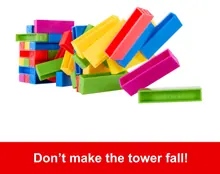
Think twice if You want a quiet game: the tower crashes loudly onto the table
How we rate it
Learning curve. If you know Jenga and UNO, there's almost nothing new to learn. The only rules to remember are what each action block does.
Luck & skill. A steady hand matters most, but the colour or number you're forced to pull, and how the tower happens to sit, bring plenty of luck.
Interaction. Each block you pull decides what the next player must match, and Draw Two and Skip blocks hit the next player directly.
Set-up. Shuffle the blocks and build the tower in layers of three, crossing each layer, then straighten it with the loading tray.
Reading. Blocks carry colours, numbers and symbols only; the rule sheet is the only text.
Learning curve: 1 = UNO or Connect 4; 3 = Catan; 5 = a heavy strategy game. These describe the experience, not an overall score.
Is UNO Stacko right for you?
Great if
- Mixed-age families: children of 7 and up can match colours while the adults worry about the wobble
- Big groups at a get-together: up to 10 can play
- Jenga fans who want a rule that decides which block they may pull
- A cheerful gift for an UNO-loving child
Skip it if
- You want a quiet game: the tower crashes loudly onto the table
- You only have a soft or wobbly surface to play on
- You want a game with lots of decisions: it is mostly steady hands and luck
How UNO Stacko plays
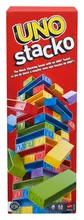
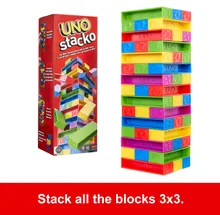
One player builds the tower: stack the 45 blocks in layers of three, each layer at right angles to the one below, and use the loading tray to push the tower straight. The tray also helps you load the blocks back into the box afterwards.
- Time to teach: about 5 minutes (less if you know Jenga and UNO).
- Reading and language: The blocks carry colours, numbers and action symbols only. Mattel's rule sheet is the only text, and the rules are easy to explain in any language.
UNO Stacko - How to Play · Cardboard Crash Course
Choose a video · Watch right here
If this creator doesn’t allow embedded playback, watch on YouTube ↗.
A turn, step by step
- 1Pull
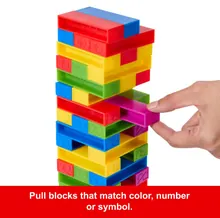
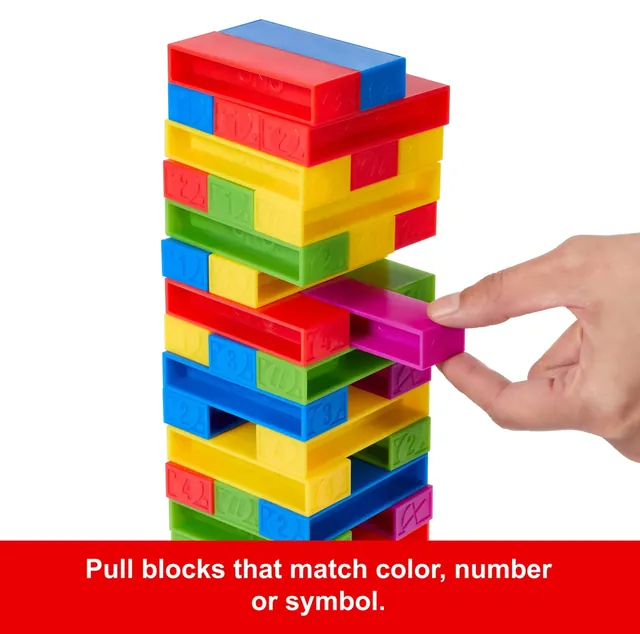
With one hand, pull a block from below the top layer that matches the last block by colour or number.
- 2Stack
Place it on top of the tower, finishing each layer of three before starting a new one crosswise.
- 3Act
Pulled an action block? Reverse, Skip or Draw Two changes who goes next or makes the next player pull two.
- 4Win
Whoever knocks the tower down loses; the last player to stack a block safely wins.
The full explanation: how a game of UNO Stacko goes
The first player pulls any block from below the top completed layer, using one hand, and places it on top; once the top layer has three blocks, start a new layer crosswise. From then on, each player must pull a block that matches the last one placed. Mattel's older rule sheet says by colour or number; its description of this 2025 box says colour, number or symbol.
Action blocks work like UNO's action cards. Reverse turns the order of play round, Skip makes the next player miss a turn, and Draw Two makes the next player pull and stack two blocks of that colour. In Mattel's earlier boxes, a Wild block let you name the colour the next player must pull. With only two players, a Reverse or Skip counts as a Draw Two.
Only one hand may touch the tower at a time. You may test blocks for looseness but must put them back. If someone uses both hands, any player can call 'UNO!', and the offender must pull two blocks of a colour the caller chooses. Whoever makes the tower fall loses, and the last player to pull and stack a block safely wins.
How it differs from classic UNO: there are no cards and no hands to empty. UNO's colours, numbers and action symbols only decide which block you are allowed to pull, so a steady hand matters as much as luck. Tip: when you're forced to pull an awkward colour, gently test a few blocks with one finger before you commit.
What's in the box
- 45Blocks
coloured blocks printed with UNO-style numbers and action symbols - 1Loading tray
straightens the tower and helps load the blocks back into the box - 1Instruction sheet
Contents as Mattel lists them for item JGT89: 45 blocks and a loading tray (the Amazon.in listing adds instructions). Mattel gives no breakdown by colour or symbol. Mattel's earlier sheet (item 43535) also lists 45 blocks, including Wild, Reverse, Skip and Draw Two action blocks; whether the 2025 box still has Wild blocks wasn't confirmed.
Where to buy
How to make sure you get a genuine copyEditions and the details worth checking.
What reviewers and players say
UNO Stacko has been around since the 1990s, but we found no full review of the 2025 box. Rules guides from Geeky Hobbies (February 2025) and GameRules.com describe it as Jenga with UNO's matching rules: the colour or number you must pull narrows your choices, and action blocks can force the next player to pull two. Geeky Hobbies rates it light on strategy with moderate to high luck. Mattel's description of the new box stresses that it gets harder as the stack grows, and lists it for 2 to 10 players aged 7 and up.
What people love
- Two familiar games in one: UNO's matching and Jenga's wobble
- Plays with up to 10, so the whole family can join in
- Action blocks add surprises, such as making the next player pull two
- The loading tray makes building the tower and packing up quicker
Common complaints
- Little strategy: steady hands and luck matter more than decisions
- Late in the game you may be forced to pull a risky block because it's the only match left
- The crash is loud, and blocks scatter across the floor
Based on 5 reviews and discussions
- Reference UNO Stacko Board Game: Rules for How to Play (Eric Mortensen, February 2025) · Geeky Hobbies
- Reference UNO Stacko (Mark Ball, November 2021, updated January 2024) · GameRules.com
- Reference UNO Stacko instruction sheet, item 43535 (Mattel) · Mattel
- Reference UNO Stacko Game, item JGT89 (Mattel, read October 2026) · Mattel Shop
- Reference UNO: Stacko (Refresh) (store page, read October 2026) · GameNerdz
Summarised in our own words from the sources above. We don't use Amazon reviews or ratings.
More like UNO Stacko
Which game is the best fit?
Our picks if UNO Stacko isn't quite right.
Swipe to compare every game
| Compare the games.The details that make a difference. |
YOU’RE VIEWING
 UNO Stacko |
ANOTHER WAY TO PLAY
 Jenga |
ANOTHER WAY TO PLAY
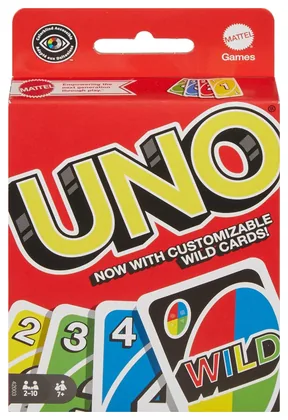 UNO |
ANOTHER WAY TO PLAY
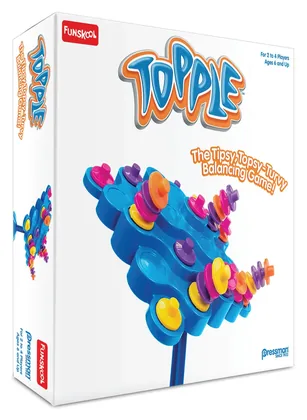 Topple |
|---|---|---|---|---|
| Why consider it | This game Pull matching UNO blocks, stack them on top, don't topple the tower | A different fit The original pull-and-stack tower: plain wooden blocks, and you may pull any loose one | A different fit The card game whose colours, numbers and action symbols decide which block you may pull | A different fit Another wobbly stacking game, built around rolling a die and scoring |
| Players | 2–10 | 1–8 | 2–10 | 2–4 |
| Best with | 3-6 | 3-5 | 4-6 | 3-4 |
| Play time | 10–20 min | 5–15 min | 10–30 min | 15–30 min |
| Age | 7+ | 6+ | 7+ | 6+ |
| Rules | Easy | Easy | Easy | Easy |
| Indian edition | Imported | Available | Imported | Available |
| On this page | Explore Jenga | Explore UNO | Explore Topple |
More from Mattel
Another way into their collection.
UNO
Match colours or numbers, then shout UNO before anyone catches you.
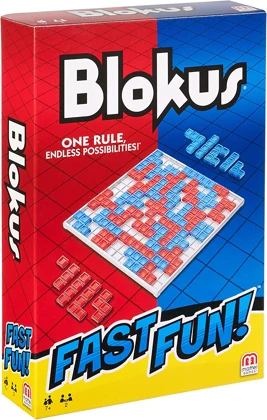
Blokus Fast Fun
A compact duel for two: fit your shapes, protect your corners, block your opponent

Pictionary
Sketch the clue for your team, no letters or talking

Phase 10
Rummy with a twist: clear ten set targets in order
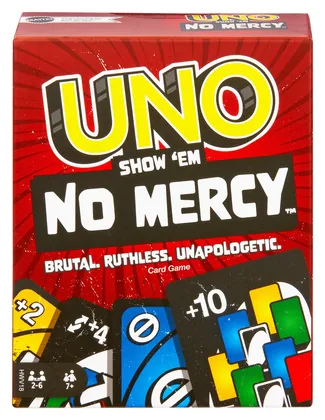
UNO Show 'em No Mercy
UNO with stacking, hand swaps, Wild Draw 10s and knockouts
More steady-hands games
Different games. A familiar kind of fun.
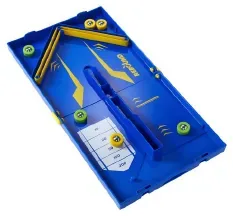
Travel Rebound
Slide, bounce and score: Rebound's puck game on a folding board
Jenga
Pull a block, stack it on top, don't topple the tower
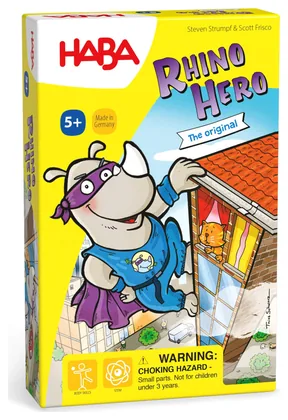
Rhino Hero
Build a wobbly card skyscraper without toppling the rhino
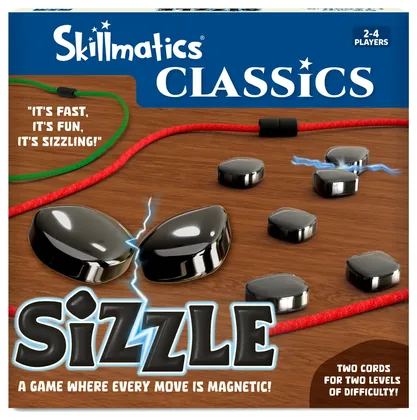
Sizzle
Place magnets inside a loop without letting them snap together.
Topple
Roll, stack and score on a tower that tips and sways
Also playable with two
For game nights with two players.
Travel Rebound
Slide, bounce and score: Rebound's puck game on a folding board
Sizzle
Place magnets inside a loop without letting them snap together.
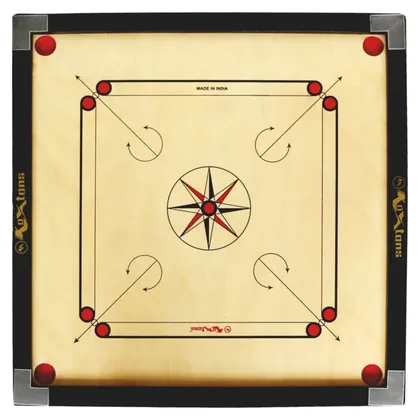
Carrom
Flick the striker, pocket your colour, then capture and cover the queen
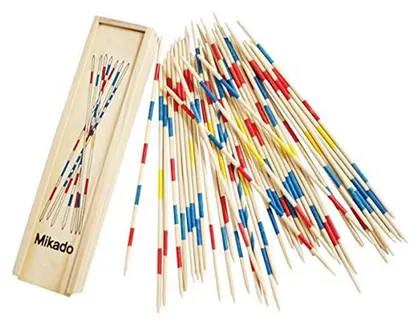
Mikado
Drop the sticks, then lift them one by one without a wobble
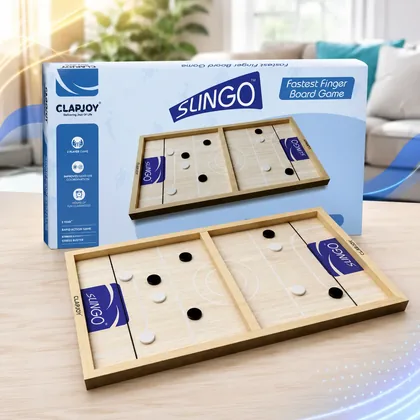
Sling Puck
Two players, ten pucks, one slot: clear your side first
Questions people ask about UNO Stacko
What is the difference between UNO and UNO Stacko?
UNO is a card game; UNO Stacko is a block-tower game in the style of Jenga. You don't hold a hand of cards: on your turn you pull a block from the tower that matches the last one by colour or number, and stack it on top. Action blocks such as Reverse, Skip and Draw Two work much like UNO's cards, and whoever knocks the tower down loses.
Is UNO Stacko the same as Jenga?
It uses the same idea of pulling blocks from a tower and stacking them on top, but the blocks are coloured and numbered, and you must pull one that matches the last block played. Action blocks can make the next player pull two blocks or miss a turn. In Jenga you can pull any loose block.
How is the new UNO Stacko box different from older ones?
The 2025 box (Mattel item JGT89) keeps 45 blocks and a loading tray but has new packaging. Mattel's description lets you match by symbol as well as colour or number, and its product notes, as retailers carry them, mention colour-blind symbols on the blocks. The idea is the same one Mattel has sold since the 1990s.
How many players can play UNO Stacko, and what age is it for?
Mattel says 2 to 10 players, ages 7 and up. With two players, Reverse and Skip blocks count as Draw Two, so the other player must pull two blocks.
Is UNO Stacko made in India?
No. Mattel's photo of this box's back says 'Made in Vietnam', and the Amazon.in listing names Mattel's Indian company as importer.
Game facts
- Publisher
- Mattel (Mattel Games)
- In India
- Mattel Toys (I) Pvt. Ltd. (named as importer on the Amazon.in listing)
- First published
- 2025
- Players
- 2–10
- Barcode
- 194735322428
- Language
- No reading – The blocks carry colours, numbers and action symbols only. Mattel's rule sheet is the only text, and the rules are easy to explain in any language.
Sources & photo creditsThe references behind this guide.
Facts on this page come from the publisher, the Indian maker or distributor, and the sources below. Photos are credited under each one.
- Mattel Shop (US) - UNO Stacko Game, item JGT89
- Mattel consumer service - UNO Stacko Game (43535) product page
- Mattel consumer service - UNO Stacko (42468) product page
- Mattel - UNO Stacko instruction sheet (43535-0720)
- Geeky Hobbies - UNO Stacko Board Game: Rules for How to Play (Eric Mortensen, February 2025)
- GameRules.com - UNO Stacko (Mark Ball)
- GameNerdz - UNO: Stacko (Refresh) (store page with Mattel's product notes)