
- Set-up
- About 2 min
- Reading
- None
The quick verdict
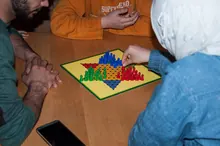
Full verdict ↓Great for Family get-togethers where up to six people want to play at once, or three teams of two
Think twice if There is a toddler at home: the 60 marbles are small parts and roll everywhere
How we rate it
Learning curve. One kind of step and one kind of jump, nothing captured: children pick it up in a couple of turns. The skill lies in spotting long chains of jumps and building ladders, which keeps adults interested.
Luck & skill. No dice and no cards: every move is chosen. With many players, other people's moves open and close your paths, which can feel like luck but isn't.
Interaction. Nothing is captured, but you use everyone's marbles as stepping stones, and players block the centre or each other's home points.
Set-up. Drop ten marbles into your point of the star; with six players the board is ready in about two minutes.
Reading. Nothing to read during play; the rules sheet is in English and is easy to teach by example.
Learning curve: 1 = UNO or Connect 4; 3 = Catan; 5 = a heavy strategy game. These describe the experience, not an overall score.
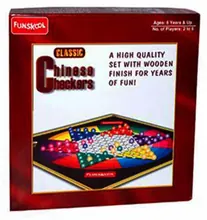
Another good set: Funskool Classic Chinese Checkers
Is Chinese Checkers right for you?
Great if
- Family get-togethers where up to six people want to play at once, or three teams of two
- Children from about 6 who are ready to plan a move or two ahead but not yet ready for chess
- Grandparents and grandchildren playing on equal terms: no dice, no cards and nothing to read
- A Diwali or birthday present that needs no batteries and no screen
Skip it if
- There is a toddler at home: the 60 marbles are small parts and roll everywhere
- You want lots of head-to-head conflict: nothing is ever captured, so it's gentler than checkers or Ludo
- You usually have exactly five players: the star doesn't split fairly between five
How Chinese Checkers plays
Despite the name, Chinese checkers didn't come from China and isn't a kind of checkers. It began in Germany in 1892 as Stern-Halma ('star Halma'), a star-shaped version of Halma, a square-board jumping game invented in 1883 or 1884 by the American surgeon George Howard Monks. The name 'Chinese checkers' was American marketing: the Pressman company brought it out in 1928 as 'Hop Ching Checkers'. In China itself the game is called tiaoqi, which simply means 'jumping game'.
- Time to teach: about 2 minutes.
- Reading and language: Nothing to read while you play. Funskool's rules sheet is in English, but the whole game can be taught by showing one step and one jump, so it works across languages and for children who can't read yet.
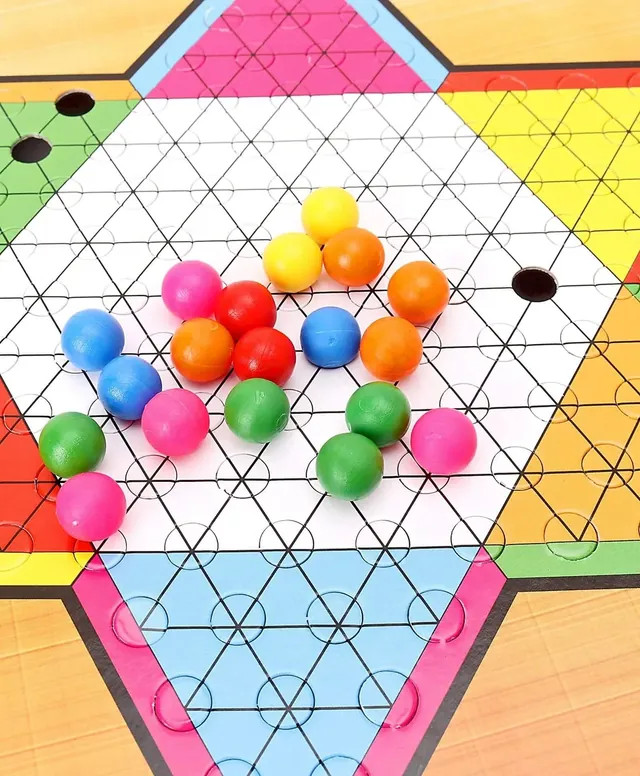
How to Play Chinese Checkers · Triple S Games
Choose a video · Watch right here
If this creator doesn’t allow embedded playback, watch on YouTube ↗.
A turn, step by step
- 1Set
Fill one point of the star with your ten marbles; with two or four players, use opposite points.
- 2Move
Move one marble: either one step into a next-door empty hole, or a chain of hops over single marbles into empty holes beyond.
- 3Ladder
Line up marbles with gaps between them so one marble can hop across half the board in a single turn.
- 4Win
Be the first to fill all ten holes of the point opposite your start.
The full explanation: how a game of Chinese Checkers goes
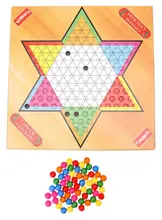
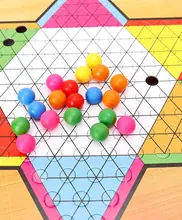
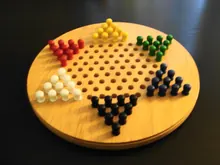
The board is a six-pointed star with 121 holes. Each player takes the ten marbles of one colour and fills one point of the star. With two or four players, use points directly opposite each other; with three, use every other point, so each player races into an empty point; with six, fill every point. Five players is awkward because one person would be racing into an empty point while the others race into occupied ones, so most families stick to 2, 3, 4 or 6.
On your turn you move one marble, in one of two ways. Either step it into a neighbouring empty hole, or jump: hop over one marble right next to it, your own or anyone else's, into the empty hole directly beyond, in a straight line. After a jump you may keep jumping with the same marble, changing direction between hops, as long as every hop lands in an empty hole. You can't mix a step and a jump in one turn, and nothing is ever captured: marbles you jump over stay where they are. Turns pass to the left.
The first player to fill all ten holes of the opposite point wins, and the others can play on for second and third place. Funskool's box suggests 10 to 15 minutes; with six players and a crowded centre, allow longer. The key skill is building 'ladders', lines of marbles with gaps between them that let one marble hop half the board in a single turn, while remembering that your rivals can use your ladders too. Clear your starting point early, and don't leave a lone marble behind at the end.
Agree house rules before the first move, because rule sheets differ. Can a marble rest in an unused point, or only hop through it? May a marble that has reached home move out again (most rules say no)? What happens if someone leaves a marble in your target point to block you? Funskool's sheet adds a scoring version for a series of games: the winner scores 10 points and everyone else scores one point for each marble already home. Some families play 'Super Chinese checkers', where a marble may jump over a distant marble as long as it lands the same distance beyond it, which makes the game much faster.
What's in the box
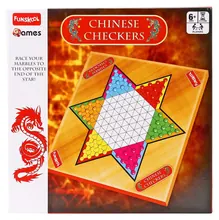
- 1Star game board
printed cardboard, six-pointed star for up to six players; push out the small punched circles from the holes before the first game - 60Marbles
10 each of 6 colours - 1Rules sheet
English, one page, with a points-scoring variation
Box: 34 × 31.5 cm, 0.437 kg. Handy to know for gifting and travel.
From the contents panel on the box back in Funskool's own photo (gameboard, 60 marbles in six colours, instructions) and Funskool's rules sheet, which asks you to remove the circles from the board's holes first. Funskool's Classic Chinese Checkers, the other good set we show, also has 60 marbles but comes with a wooden-finish board and a rules booklet.
Where to buy
Another good set
Funskool Classic Chinese Checkers
Funskool's Classic edition: a star board with a wooden finish, 60 marbles (10 in each of six colours) and a rules booklet, for 2 to 6 players aged 6 and up.
Good for: families who want a smarter-looking board with a wooden finish that lasts for years
How to pick a good setSize, pieces and the details worth checking.
What reviewers and players say
Chinese checkers is valued as a family game that anyone can learn in a couple of turns but that still rewards planning: chaining hops across the star is the heart of it, and Wikipedia notes that games between top players are rarely decided by more than a couple of moves. Rules writers stress that the name has nothing to do with China, and players often ask about the details rule sheets skip, such as whether you can stop in an unused point or how far a marble may hop. The usual sore point is blocking: a rules page we read notes that most rule sheets don't say what happens when an opponent's marble sits in your home point, so agree a rule first. Loose marbles going missing is the common practical gripe.
What people love
- Simple enough for a six-year-old, with no reading and no luck
- Long chains of hops across the board are the most satisfying moves
- Up to six can play together, or three teams of two
- A close race: good players often finish only a move or two apart
Common complaints
- Rule sheets leave gaps (resting in unused points, blocked home holes), which leads to arguments
- Families play different hop rules, so newcomers may learn a different game
- Sixty small marbles roll away and get lost, and they aren't safe around toddlers
Based on 5 reviews and discussions
- Players Why is it called 'Chinese Checkers'? (warspyking and others, October 2014) · Board & Card Games Stack Exchange
- Players Can I enter a non-target foreign home in Chinese Checkers? (June 2015) · Board & Card Games Stack Exchange
- Players Unusual Chinese Checkers jump that moves three spaces? (October 2014) · Board & Card Games Stack Exchange
- Reference The Rules of Chinese Checkers (May 2025, updated September 2026) · Masters Traditional Games
- Reference Chinese checkers · Wikipedia
Summarised in our own words from the sources above. We don't use Amazon reviews or ratings.
More like Chinese Checkers
Which game is the best fit?
Our picks if Chinese Checkers isn't quite right.
Swipe to compare every game
| Compare the games.The details that make a difference. |
YOU’RE VIEWING
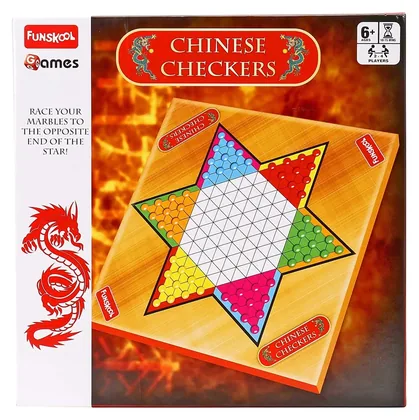 Chinese Checkers |
ANOTHER WAY TO PLAY
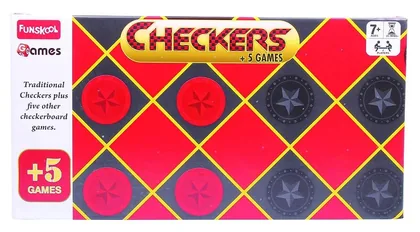 Checkers |
ANOTHER WAY TO PLAY
 Brainvita |
ANOTHER WAY TO PLAY
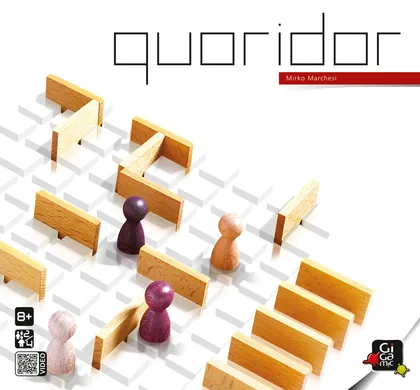 Quoridor |
|---|---|---|---|---|
| Why consider it | This game Hop all ten marbles across the star before anyone else | A different fit The other classic jumping game, for two, with captures and kings | A different fit A one-player marble-jumping puzzle that uses the same hopping skill | A different fit Another race to the far side where blocking your rivals matters |
| Players | 2–6 | 2 | 1 | 2–4 |
| Best with | 2-4 | 2 | 1 | 2 |
| Play time | 10–30 min | 15–30 min | 5–20 min | 10–20 min |
| Age | 6+ | 7+ | 6+ | 8+ |
| Rules | Easy | Easy | Easy | Easy |
| Indian edition | Available | Available | Available | Imported |
| On this page | Explore Checkers | Explore Brainvita | Explore Quoridor |
More from Funskool
Another way into their collection.
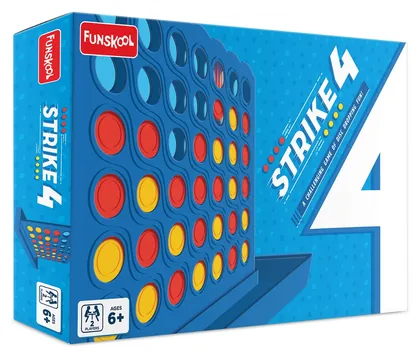
Strike 4
Drop discs, block your rival and line up four first
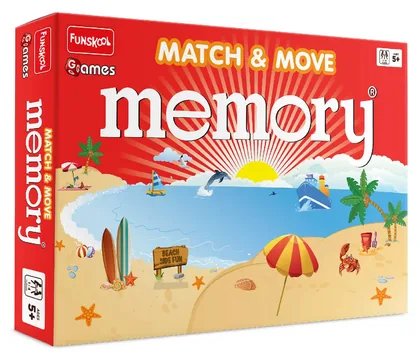
Match & Move Memory
Remember where each picture hides and race your piece home
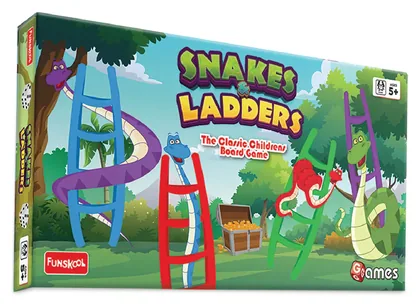
Snakes and Ladders
Climb the ladders, dodge the snakes, first to 100 wins
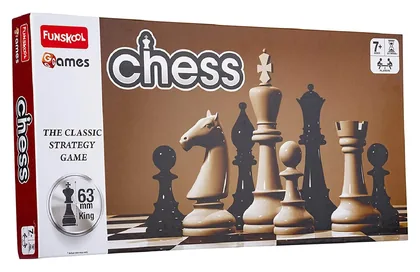
Chess
The two-player battle of wits that began in India as chaturanga
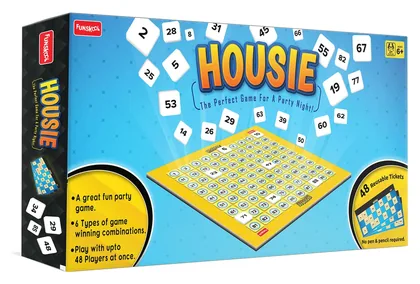
Housie (Tambola)
Strike off called numbers and shout first for lines and Full House
More pure strategy games
Different games. A familiar kind of fun.
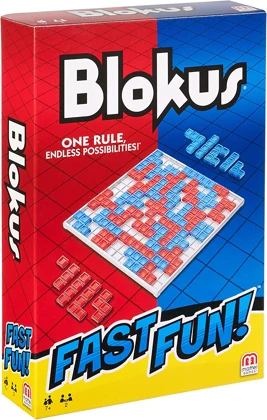
Blokus Fast Fun
A compact duel for two: fit your shapes, protect your corners, block your opponent
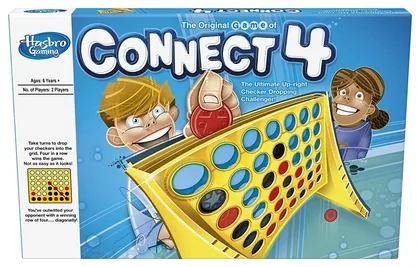
Connect 4
Drop discs, block your rival and get four in a row
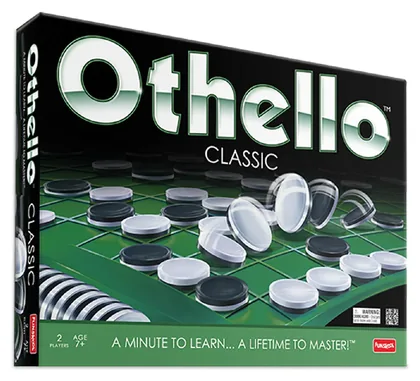
Othello
Trap a line of discs, flip them to your colour
Strike 4
Drop discs, block your rival and line up four first
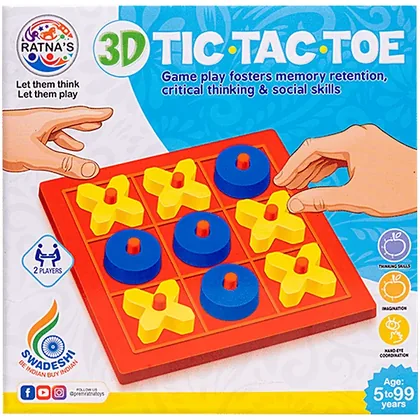
Tic Tac Toe
Three in a row wins: every child's first strategy game
Questions people ask about Chinese Checkers
Is Chinese checkers a Chinese game?
No. It was invented in Germany in 1892 as Stern-Halma, a star-shaped version of the American game Halma. The name 'Chinese checkers' came from an American company's marketing in 1928, and in China the game is simply called tiaoqi, the 'jumping game'.
How many marbles does each player get in Chinese checkers?
Ten each, placed in the ten holes of one point of the star. A full six-player set like Funskool's has 60 marbles, ten in each of six colours. Some two-player versions use 15 marbles each, but Funskool's rules use ten.
Can 5 people play Chinese checkers?
The standard game is for 2, 3, 4 or 6 players. With five, one player races into an empty point while the others race into occupied ones, so it isn't fair; families who do it usually treat it as a casual game. With six, you can also play three teams of two, partners sitting opposite.
Can you jump over your own marbles in Chinese checkers?
Yes. You can hop over any single marble next to yours, your own or an opponent's, and keep hopping with the same marble as long as each landing hole is empty. Nothing is removed from the board, and you can't combine a jump with a one-hole step in the same turn.
What's the difference between Funskool's Chinese Checkers and Classic Chinese Checkers?
Both are Funskool sets for 2 to 6 players with 60 marbles. Our main Amazon.in link goes to the standard set (item 9416000), which has a cardboard star board; the Classic (item 9514000), our other good set, has a board with a wooden finish and is meant to look smarter and last longer.
Game facts
- Publisher
- Funskool
- In India
- Funskool (India) Ltd, Chennai
- Players
- 2–6
- Language
- No reading – Nothing to read while you play. Funskool's rules sheet is in English, but the whole game can be taught by showing one step and one jump, so it works across languages and for children who can't read yet.
- Box size and weight
- 34 × 31.5 cm, 0.437 kg
Sources & photo creditsThe references behind this guide.
Facts on this page come from the publisher, the Indian maker or distributor, and the sources below. Photos are credited under each one.
- Funskool - Chinese Checkers (product code 9416000)
- Funskool - Classic Chinese Checkers (product code 9514000)
- Funskool - Chinese Checkers instruction sheet (PDF)
- Funskool - Travel Chinese Checkers (product code 4997700)
- Masters Traditional Games - The Rules of Chinese Checkers
- Chinese checkers - Wikipedia
- Halma - Wikipedia
- Board & Card Games Stack Exchange - Why is it called 'Chinese Checkers'?
- Board & Card Games Stack Exchange - Can I enter a non-target foreign home in Chinese Checkers?
- Board & Card Games Stack Exchange - Unusual Chinese Checkers jump that moves three spaces?