

- Set-up
- Under a minute
- Reading
- None
The quick verdict
Full verdict ↓Great for Couples and friends who want a quick, tense two-player game after dinner
Think twice if You need a game for three or more: this box is for two players
How we rate it
Learning curve. The rules are about as short as Othello's: move up to three marbles, push with more than your opponent has. Learning to play well takes much longer, but getting started is a 1 on our scale.
Luck & skill. No dice, cards or hidden information: both players see everything, so the better player wins almost every time.
Interaction. Every turn you push against your opponent's marbles or defend your own; there is no playing alone.
Set-up. Put each player's 14 marbles in the two back rows and the middle three holes of the third row. It takes well under a minute.
Reading. No words on the board or marbles; someone reads the short rules sheet once.
Learning curve: 1 = UNO or Connect 4; 3 = Catan; 5 = a heavy strategy game. These describe the experience, not an overall score.
Is Abalone right for you?
Great if
- Couples and friends who want a quick, tense two-player game after dinner
- A parent and child from about 7: the rules are short, and children improve fast
- Othello, checkers or Chinese Checkers fans who want more pushing and shoving
- A gift that looks good on the table and needs no reading or language
Skip it if
- You need a game for three or more: this box is for two players
- You prefer some luck to even things out; with none, the stronger player usually wins
- There are toddlers at home: the marbles are small
How Abalone plays
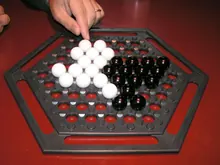
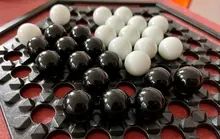
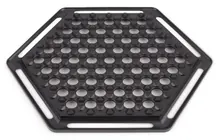
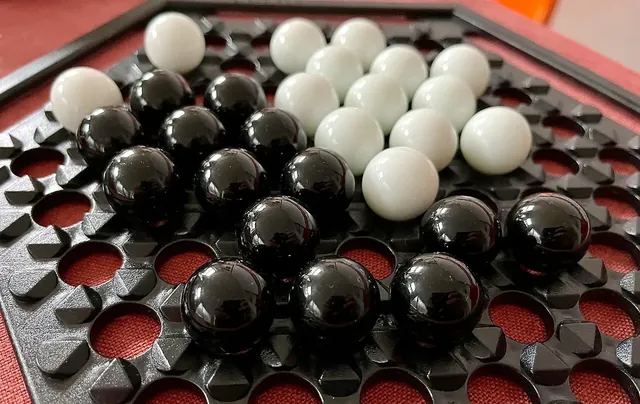
The board is a hexagon of holes, five on each side. Each player has 14 marbles, white or black, which start in the two rows nearest them plus the middle three holes of the third row. Black moves first, and players take turns.
- Time to teach: about 5 minutes.
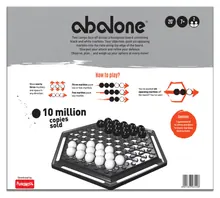
- Reading and language: Nothing to read during play: the board and marbles carry no words. The back of the box shows the moves in pictures, and the rules sheet is in English.
How to play Abalone | Complete Rules Overview · GameRules Studio
Choose a video · Watch right here
If this creator doesn’t allow embedded playback, watch on YouTube ↗.
A turn, step by step
- 1Move
Move one, two or three of your marbles in a line one space, forward along the line or sideways together.
- 2Push
Push your opponent's marbles back one space with a bigger line: two push one, three push one or two.
- 3Win
Push six of your opponent's marbles off the edge of the board to win.
The full explanation: how a game of Abalone goes
On your turn you move one, two or three of your marbles, in a straight line, one space. A line of marbles can either slide forward along its own direction or step sideways together, like soldiers moving in a row. Marbles can move in any of the six directions.
Pushing is how you attack. If your line points straight at your opponent's marbles and has more marbles than theirs, you can push them back one space: two push one, three push one or two. Equal numbers can't push each other, you can never push more than three, and a push is blocked if one of your own marbles sits behind theirs.
A marble pushed over the edge of the board is out of the game. The first player to push six of the other player's marbles off wins. Many games are decided by who controls the middle: marbles at the edge are easy targets.
A tip from experienced players: keep your marbles together in a compact group, hold the centre and keep up pressure rather than only defending. Once you know the game, you can try one of the alternative starting layouts that players use, such as the Belgian daisy.
What's in the box
- 1Game board
hexagonal board - 14White marbles
- 14Black marbles
- 1Instructions
From the contents list on the back of Funskool's box (Funskool's own photo); an Indian store's listing gives the same list. The Amazon.in listing title says 24 marbles, but the box and the listing's own details say 14 of each colour.
Where to buy
How to make sure you get a genuine copyEditions and the details worth checking.
What reviewers and players say
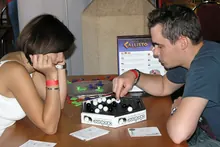
Reviewers and players describe Abalone as quick to learn and hard to master. The Brick Castle's reviewer, playing with her 9-year-old and her partner, called it a lot of fun and enjoyed the moments of spotting a trap or a clever pattern; games with her child took about 20 minutes, while her slower-thinking partner stretched one to nearly an hour. On Board Game Arena's forum, experienced players advise beginners to stay together, hold the centre and keep attacking, and they call over-defensive play dull. With no luck at all, the stronger player usually wins.
What people love
- Rules you can teach in minutes, with real depth once you start spotting traps
- No luck: every win is earned
- Games are quick, often around 20 minutes
- Children pick it up fast and soon start giving adults a proper game
Common complaints
- A slow, careful thinker can drag a game out to an hour
- Very defensive play makes for dull games; experienced players call it 'anti-game'
- The standard game is strictly for two
Based on 5 reviews and discussions
- Review Abalone game review (Jenny, May 2018) · The Brick Castle
- Players strategy / tips = onlineabalone (six billes, December 2023) · Board Game Arena forum
- Reference Abalone (board game) · Wikipedia
- Reference Abalone rules (Amber Crook, updated February 2024) · Game Rules
- Reference Abalone (Funskool, read October 2026) · Funskool
Summarised in our own words from the sources above. We don't use Amazon reviews or ratings.
More like Abalone
Which game is the best fit?
Our picks if Abalone isn't quite right.
Swipe to compare every game
| Compare the games.The details that make a difference. |
YOU’RE VIEWING
 Abalone |
ANOTHER WAY TO PLAY
 Othello |
ANOTHER WAY TO PLAY
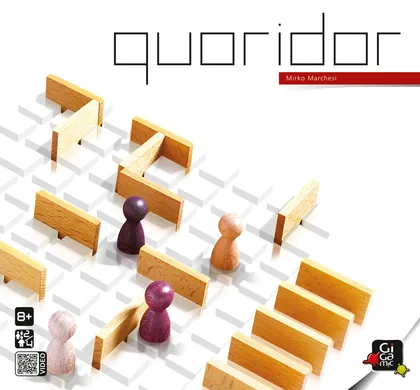 Quoridor |
ANOTHER WAY TO PLAY
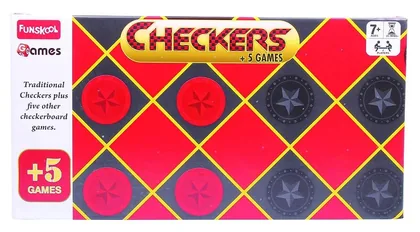 Checkers |
|---|---|---|---|---|
| Why consider it | This game Push six of your rival's marbles off the hexagon to win | A different fit Funskool's other classic for two: no luck, short rules, and a lead that can flip in a few moves | A different fit A quick two-player duel of racing and blocking on a wooden board | A different fit Another capture-the-pieces classic for two, with jumps instead of pushes |
| Players | 2 | 2 | 2–4 | 2 |
| Best with | 2 | 2 | 2 | 2 |
| Play time | 15–60 min | 15–30 min | 10–20 min | 15–30 min |
| Age | 7+ | 8+ | 8+ | 7+ |
| Rules | Easy | Easy | Easy | Easy |
| Indian edition | Available | Available | Imported | Available |
| On this page | Explore Othello | Explore Quoridor | Explore Checkers |
More pure strategy games
Different games. A familiar kind of fun.
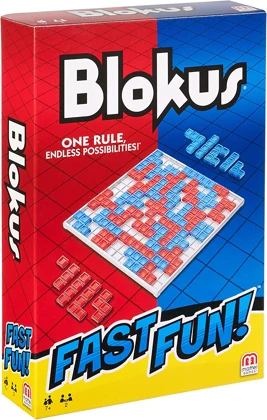
Blokus Fast Fun
A compact duel for two: fit your shapes, protect your corners, block your opponent
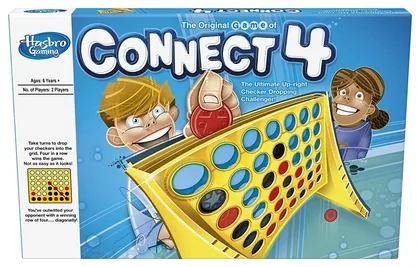
Connect 4
Drop discs, block your rival and get four in a row
Othello
Trap a line of discs, flip them to your colour
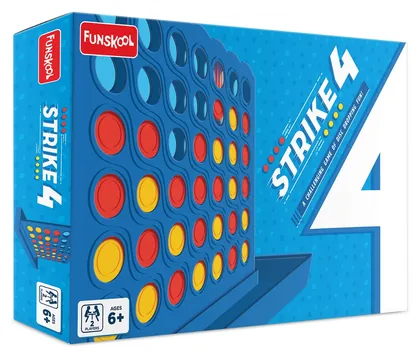
Strike 4
Drop discs, block your rival and line up four first
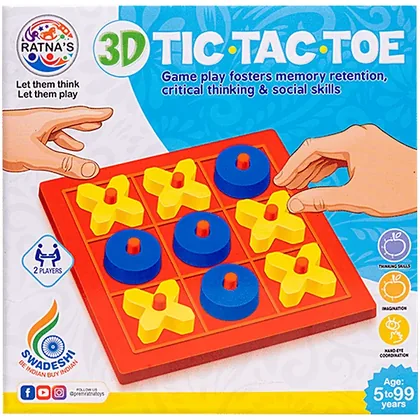
Tic Tac Toe
Three in a row wins: every child's first strategy game
Questions people ask about Abalone
How many marbles come with Funskool Abalone?
Twenty-eight: 14 white and 14 black, one colour for each player. That is the standard Abalone set. The '24 marbles' in one Amazon.in listing title is a mistake; the box, Funskool's description and the listing's own details all say 14 of each.
Is Abalone hard to learn?
No. You can learn the moves in a few minutes: move up to three marbles one space, and push with more marbles than your opponent has. Playing well takes much longer, because you have to plan pushes and avoid traps near the edge.
What age is Abalone for?
The box says 7 and up. A reviewer who played with her 9-year-old agreed with that age and found that younger players start at a disadvantage but catch up quickly. There is no reading, so language is never a barrier.
How long does a game of Abalone take?
Usually 15 to 30 minutes, but a careful player who thinks long over each move can stretch it to an hour. Setting up takes less than a minute.
Can more than two people play Abalone?
Funskool's box is for two players. Variants for three or more players with fewer marbles each exist, but they are not described on Funskool's box, so plan on Abalone as a two-player game.
Game facts
- Designed by
- Michel Lalet, Laurent Lévi
- Publisher
- Asmodee (Funskool files Abalone under its Asmodee range); Funskool distributes this box in India
- In India
- Funskool (India) Ltd, Chennai, Asmodee's long-term distribution partner in India
- First published
- 1987
- Players
- 2
- Barcode
- 8901383961228
- Language
- No reading – Nothing to read during play: the board and marbles carry no words. The back of the box shows the moves in pictures, and the rules sheet is in English.
Sources & photo creditsThe references behind this guide.
Facts on this page come from the publisher, the Indian maker or distributor, and the sources below. Photos are credited under each one.
- Funskool - Abalone (product code 9612200)
- Toycra - Funskool Abalone Strategy Game (SKU 9612200, barcode, contents)
- Abalone (board game) - Wikipedia
- Game Rules - Abalone rules
- The Brick Castle - Abalone game review (May 2018)
- Board Game Arena forum - strategy / tips (Abalone, December 2023)
- Toy World - Funskool's distribution partnerships, including Asmodee (April 2018)
- Mediainfoline - Funskool India and Asmodee partnership brings Dobble to India (October 2023)