
Two-player game
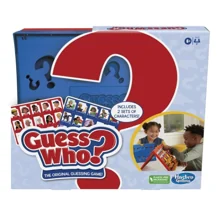
Guess Who?
Ask yes-or-no questions to unmask your opponent's mystery person
- Set-up
- Under a minute
- Reading
- Little
The quick verdict
Full verdict ↓Great for Children aged 6 to 9 playing with a parent, grandparent or older sibling
Think twice if You need a game for three or more; it is strictly for two
How we rate it
Learning curve. Ask a yes-or-no question, then flip faces down. A six-year-old learns it in a couple of minutes, so it sits at 1 on our scale with UNO and Connect 4.
Luck & skill. Asking questions that split the remaining faces roughly in half is a real skill, and a player who does it will usually beat one who asks about a single face at a time. Between two players who both know that trick, going first and a lucky early question often decide the round.
Interaction. You question each other and answer every turn, and your opponent's flipped-down faces show how close they are. But you can't block or slow each other down.
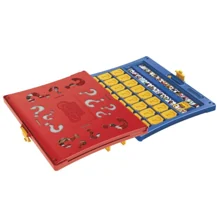
Set-up. An adult prepares the frames. Choose a matching side of the two sheets, slide them in, open the doors and select secret characters.
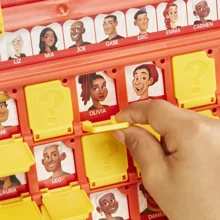
Reading. Each face has an English first name printed on it, but nobody needs to read to play: questions are spoken, so you can play in Hindi, Tamil or any language, and you can point at a face to make your guess. The rules leaflet is in English.
Learning curve: 1 = UNO or Connect 4; 3 = Catan; 5 = a heavy strategy game. These describe the experience, not an overall score.
Paid link · We may earn a commission, at no extra cost to you.
Is Guess Who? right for you?
Great if
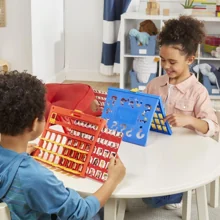
- Children aged 6 to 9 playing with a parent, grandparent or older sibling
- Building observation and simple logic: children learn that one good question can rule out half the board
- Families who speak Hindi or another language at home, since the questions can be asked in any language
- A short game before bed or while waiting for dinner
Skip it if
- You need a game for three or more; it is strictly for two
- Older children or adults want more depth; once you know the good questions, games start to feel alike
How Guess Who? plays
Choose the same character set: classic people or superheroes. Slide a sheet into each frame, open the doors and use the selector to choose a secret character.
- Time to teach: about 3 minutes.
- Reading and language: Questions are spoken, so you can play in Hindi, Tamil or any language your family uses. Each face card has an English first name printed on it, and the rules leaflet is in English, but children don't need to read to play.
A turn, step by step
- 1Choose
Choose the same character set: classic people or superheroes. Slide a sheet into each frame, open the doors and use the selector to choose a secret character.
- 2Ask
The youngest player starts. Take turns asking one yes-or-no question about the other player’s character.
- 3Eliminate
Close every door that the answer rules out. Ask about useful shared features to narrow the possibilities.
- 4Guess
Use your turn to name the mystery character when you are ready. A correct guess wins. Follow the leaflet in your box for the wrong-guess rule.
The full explanation: how a game of Guess Who? goes
The youngest player starts. Take turns asking one yes-or-no question about the other player’s character.
Close every door that the answer rules out. Ask about useful shared features to narrow the possibilities.
Use your turn to name the mystery character when you are ready. A correct guess wins. Follow the leaflet in your box for the wrong-guess rule.
For a longer match, play to five wins and keep score using the frame’s sliding score tracker.
What's in the box
- 2Easy-load frames
Fold-up frames with doors, a character selector and sliding score tracker - 2Double-sided character sheets
Classic people on one side, superheroes on the other - 1Instructions
Adult assembly required
This is Hasbro F6105. The characters are printed on sheets; this edition does not use the older pack’s separate face cards, mystery-card deck or loose scoring pegs.
Where to buy
Paid link · We may earn a commission, at no extra cost to you.
How to make sure you get a genuine copyEditions and the details worth checking.
What reviewers and players say
Guess Who? is many children's first deduction game, and reviewers still like how quickly a six-year-old picks it up and how much it teaches: noticing details, describing faces and asking questions that rule out half the board. An occupational therapist recommends it for language and turn-taking practice. The common complaints are that it is strictly for two, and that once children learn the 'split the board in half' trick, games start to feel alike. Older editions were rightly criticised for having 19 men and only 5 women; Hasbro's 2018 classic cast is evenly split. These reviews describe the Guess Who? game across editions. We have not independently tested the F6105 frames.
What people love
- The rules take a couple of minutes to learn and a round lasts only a few minutes
- It builds observation, describing words and simple logic, and therapists use it for language and turn-taking practice
- Flipping the little doors down is satisfying, and you can see at a glance how close each player is
- There is a real strategy to discover: questions that split the faces in half win far more often than lucky guesses
Common complaints
- It is strictly for two players
- Once children learn that half-and-half questions win, the mystery fades and older children tend to outgrow it
- One reviewer says the small plastic doors in newer sets can pop out of their frames if pushed too hard
Based on 8 reviews and discussions
- Review Guess Who? (Mary Stoffel, occupational therapist, April 2024) · Child(ish) Advice
- Review Guess Who board game review (Screenwise, no author or date given; read October 2026) · Screenwise
- Reference History of Guess Who?: Timeline of the Changes to the Classic Board Game (Eric Mortensen, February 2024) · Geeky Hobbies
- Reference How to Win Guess Who Within Six Turns (Eric Mortensen, February 2016, updated March 2024) · Geeky Hobbies
- Reference Cracking the Guess Who? board game (Rafael Prieto Curiel, May 2016) · Chalkdust magazine
- Players Thread on whether you can beat 'halve the board' play in Guess Who? (thaumasiotes and gobdovan, April 2026) · Hacker News
- Reference Hasbro: Being a boy is normal, being a girl is a 'characteristic' (Alex Hern, November 2012) · New Statesman
- Reference Guess Who? · Wikipedia
Summarised in our own words from the sources above. We don't use Amazon reviews or ratings.
More like Guess Who?
Which game is the best fit?
Our picks if Guess Who? isn't quite right.
Swipe to compare every game
| Compare the games.The details that make a difference. |
YOU’RE VIEWING
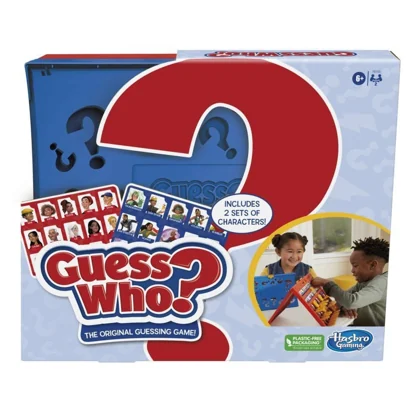 Guess Who?
|
ANOTHER WAY TO PLAY
 Guess in 10
|
ANOTHER WAY TO PLAY
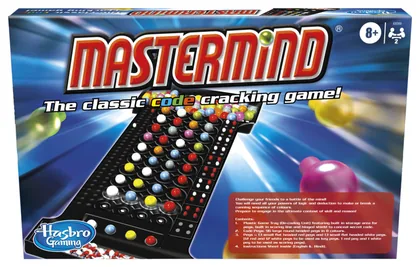 Mastermind
|
ANOTHER WAY TO PLAY
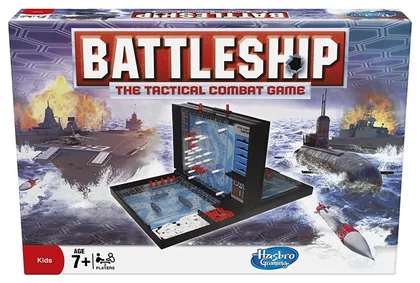 Battleship
|
|---|---|---|---|---|
| Why consider it | This game Ask yes-or-no questions to unmask your opponent's mystery person | A different fit Yes-or-no questions with picture cards, for more players, made in India | A different fit Two-player deduction with coloured pegs, a step up in thinking | A different fit Another two-player guessing classic, for ages 7 and up |
| Players | 2 | 2–6 | 2 | 2 |
| Best with | 2 | 4-6, in two teams | 2 | 2 |
| Play time | 10–20 min | 20 min | 10–30 min | 20–30 min |
| Age | 6+ | 6+ | 8+ | 7+ |
| Rules | Easy | Easy | Easy | Easy |
| Indian edition | Available | Available | Available | Available |
| On this page | Explore Guess in 10 | Explore Mastermind | Explore Battleship |
More from Hasbro
Another way into their collection.
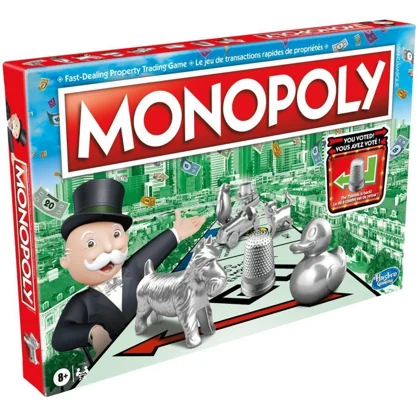
Monopoly
Roll, buy property, collect rent, and bankrupt everyone else

Jenga
Pull a block, stack it on top, don't topple the tower

Taboo
Get your team to guess the word without saying the obvious ones
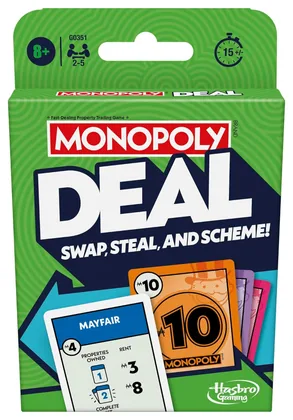
Monopoly Deal
Monopoly as a 15-minute card game of rent, raids and sets
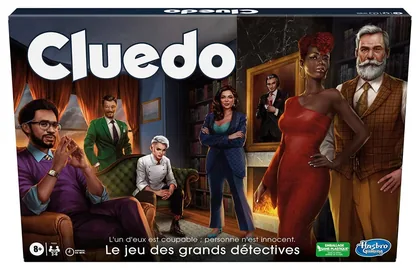
Cluedo
Work out who did it, where, and with which weapon
More from Hasbro India
Also made or sold in India by Hasbro India.
Jenga
Pull a block, stack it on top, don't topple the tower
Taboo
Get your team to guess the word without saying the obvious ones
Monopoly Deal
Monopoly as a 15-minute card game of rent, raids and sets
Cluedo
Work out who did it, where, and with which weapon

The Game of Life
Spin through college, jobs, family and retirement; richest player wins
More deduction games
Different games. A familiar kind of fun.
Guess in 10
Ten yes-or-no questions to name the hidden animal.
Cluedo
Work out who did it, where, and with which weapon
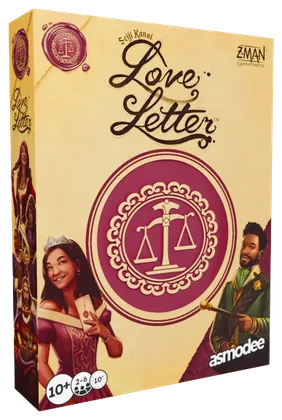
Love Letter
Hold one card, guess your rivals' cards, reach the princess

Outfoxed!
Young detectives team up to catch a pie-stealing fox
Battleship
Hide your fleet, call out coordinates, sink every enemy ship
Questions people ask about Guess Who?
What age is Guess Who? suitable for?
Hasbro rates it for ages 6 and up, for 2 players. Children need to notice details like hats, glasses and hair colour and keep their own character secret. Younger children can play with an adult helping them choose questions.
What are good questions to ask in Guess Who?
Questions that split the remaining faces roughly in half work best, because every answer then rules out about half the board. Early on, ask about features many characters share, such as hats, glasses or hair colour. Asking about one rare feature is a gamble that usually rules out only a few faces.
Is Funskool's Who's It the same as Guess Who?
They share the yes-or-no guessing idea, but are separate products. Guess Who? is Hasbro’s game; the linked F6105 set has classic and superhero sheets. Who’s It is sold under Funskool’s own brand.
What happens if you guess wrong in Guess Who?
The F6105 English download contains conflicting instructions about a wrong guess. Follow the leaflet in your own box and agree the rule before starting. A correct guess wins the round.
Game facts
- Designed by
- Ora Coster, Theo Coster
- Publisher
- Hasbro (first published by Milton Bradley in 1979)
- In India
- Hasbro India Toys Pvt. Ltd. (Mumbai)
- First published
- 1979
- Players
- 2
- Language
- Little reading – Questions are spoken, so you can play in Hindi, Tamil or any language your family uses. Each face card has an English first name printed on it, and the rules leaflet is in English, but children don't need to read to play.
Sources & photo creditsThe references behind this guide.
Facts on this page come from the publisher, the Indian maker or distributor, and the sources below. Photos are credited under each one.
- Hasbro F6105 product details
- Hasbro - Guess Who? Classic Game official instructions page (C2124)
- Hasbro - Guess Who? C2124 rules (PDF)
- Hasbro - Guess Who? Original Guessing Game F6105 instructions page
- Guess Who? - Wikipedia
- Toycra - Hasbro Gaming Guess Who? Game (E8263)
- Crossword - Guess Who? Classic Mystery Guessing Game
- Hamleys India - Hasbro Guess Who Original Classic Guessing Game
- Toycra - Hasbro Guess Who? Original Guessing Game (F6105)
- Funskool - Who's It