



Family game
Match & Move Memory
Remember where each picture hides and race your piece home
- Set-up
- About 2 min
- Reading
- None
The quick verdict
Full verdict ↓Great for Children of 5 to 8 who are ready for a real game with simple rules and no reading
Think twice if You want the classic pairs memory game: this one has no pairs, and Funskool's pairs games are separate boxes
How we rate it
Learning curve. One idea, turn over a card and move if it matches, which a five-year-old can follow after one round. It sits at 1 on our scale with UNO and Connect 4.
Luck & skill. The first few flips are pure luck. After that, remembering where cards are decides who moves, so a sharp-eyed child usually wins.
Interaction. You can't block or attack anyone, but every card another player turns up tells you something, so everyone watches every turn.
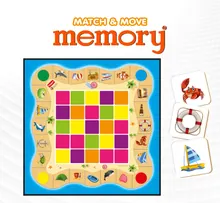
Set-up. Mix the 25 cards and lay them face down in the grid printed in the middle of the board, then put each piece on a coloured corner circle.
Reading. No words on the cards or board; only the rules need explaining.
Learning curve: 1 = UNO or Connect 4; 3 = Catan; 5 = a heavy strategy game. These describe the experience, not an overall score.
Paid link · We may earn a commission, at no extra cost to you.
Is Match & Move Memory right for you?
Great if
- Children of 5 to 8 who are ready for a real game with simple rules and no reading
- A first game for a child to play alone, or with a parent after school
- Practising concentration and visual memory without it feeling like homework
- An inexpensive return gift or birthday present for a classmate
Skip it if
- You want the classic pairs memory game: this one has no pairs, and Funskool's pairs games are separate boxes
- Your children are 9 or older; with only 24 picture cards, older children remember the whole grid quickly
- There are toddlers under 3 at home, as the cards and pieces are small parts
How Match & Move Memory plays
Set up: lay the 24 picture cards and the wild card face down in the 5-by-5 grid in the middle of the board, after mixing them up. Each player puts a playing piece on one of the four coloured starting circles in the corners. A path of picture spaces runs round the board, with beach and sea pictures such as a shark, a lifebuoy, a crab and a sailing boat.
- Time to teach: about 3 minutes.
- Reading and language: There are no words on the cards or the board, only pictures and colours, so children who can't read yet can play in any language. Only the rules leaflet is in English, and the rules are short enough for a parent to explain in Hindi, Tamil or any home language.
MEMORY BOARD GAME || How to Play || Funskool || Match and Move || Lets Sit and Play · Lets Sit & Play
Choose a video · Watch right here
If this creator doesn’t allow embedded playback, watch on YouTube ↗.
A turn, step by step
- 1Flip
Turn over one card from the face-down grid in the middle of the board so everyone sees it.
- 2Match
If it matches the picture on the space just ahead of your piece, move forward onto it. If not, turn it back face down; the '?' wild card gives you a free turn.
- 3Win
Keep going clockwise round the path. The first player to land back on their own coloured starting circle wins.
The full explanation: how a game of Match & Move Memory goes
On your turn, turn over one card in the grid so everyone can see it. If it matches the picture on the space just ahead of your piece, move your piece forward onto it. If it doesn't match, your piece stays where it is and the card goes back face down. Turning up the wild card gives you a free turn. Pieces move clockwise along the path.
The first player to travel all the way round the path and land back on their own starting circle wins. The picture cards include four coloured circles that match the corners, so the last card you need is the one in your colour.
The real skill is watching every card that anyone turns up, not just your own. Early turns are mostly luck, but by the middle of the game a child who remembers 'the crab was in the corner' can move several spaces while others guess. A child can also play alone, trying to get round the board in as few turns as possible.
How it differs from classic memory: in the classic game (also called Concentration or Pairs) all the cards come in matching pairs. You turn over two cards on each turn, keep them if they match and go again, and the player with the most pairs at the end wins. Match & Move uses single cards and a race round the board instead, so it rewards the same memory skill with a different goal.
What's in the box
- 1Game board
square board with a 5-by-5 card grid in the middle and a picture path round the edge, with four coloured starting circles in the corners - 4Playing pieces
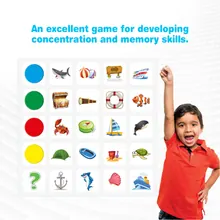
one for each player - 24Picture cards
20 beach and sea pictures plus 4 coloured circles that match the starting corners (from Funskool's photos) - 1Wild card
marked with a question mark
Box: 37 × 25 × 5 cm, 0.62 kg. Handy to know for gifting and travel.
The contents list is printed on the box back and repeated on Funskool's 'What's Inside' panel and Indian store listings. The split of the 24 picture cards (20 pictures and 4 coloured circles) comes from Funskool's photo of all the cards laid out. The box back doesn't list a rules sheet; Funskool shows the rules as a panel on its product page. The older box design contains the same parts.
Where to buy
Paid link · We may earn a commission, at no extra cost to you.
How to make sure you get a genuine copyEditions and the details worth checking.
What reviewers and players say
Few reviews of Funskool's version are written down, so this summary leans on the game's design and Funskool's own description. It is a simple, bright memory game that young children can play alone or in a small group, and that teaches them to watch and remember every card, not just their own. The race round the board gives it more of a goal than plain pairs, which keeps children of 5 to 7 interested. Older children will find 24 cards easy to memorise, so it has a short shelf life past about 8.
What people love
- Short rules and no reading, so children of 5 can play without an adult running the game
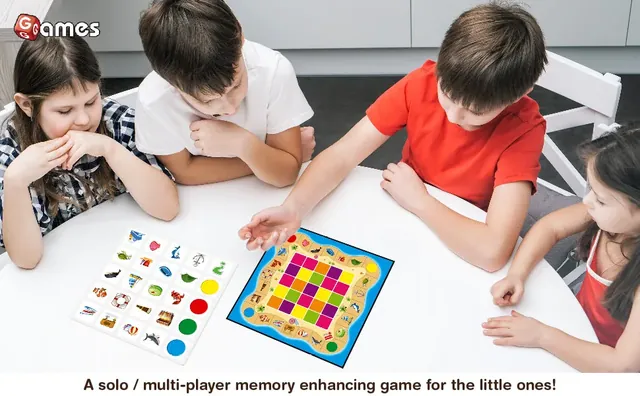
- It works as a solo game as well as for up to four players
- A race to get home gives the memory practice a clear goal and a winner
- Bright beach and sea pictures that young children recognise and can name
Common complaints
- With only 24 picture cards, older children soon remember the whole grid and the game loses its challenge
- Early turns are pure luck, which can frustrate a child who falls behind at the start
- Small cards and pieces are easy to lose, and the box warns they are a hazard for children under 3
Based on 5 reviews and discussions
- Video Ep. 335 Match and Move Advanced Memory Board Game Review (Milton Bradley 1986) (Board Game Museum) · YouTube
- Video MEMORY BOARD GAME || How to Play || Funskool || Match and Move (Lets Sit & Play, about 2022) · YouTube
- Reference Memory Match & Move product page (Funskool) · Funskool
- Reference Concentration (card game) · Wikipedia
- Reference Memory Match & Move (1986) · Tarsasjatekok.com (Hungarian board game database)
Summarised in our own words from the sources above. We don't use Amazon reviews or ratings.
More like Match & Move Memory
Which game is the best fit?
Our picks if Match & Move Memory isn't quite right.
Swipe to compare every game
| Compare the games.The details that make a difference. |
YOU’RE VIEWING
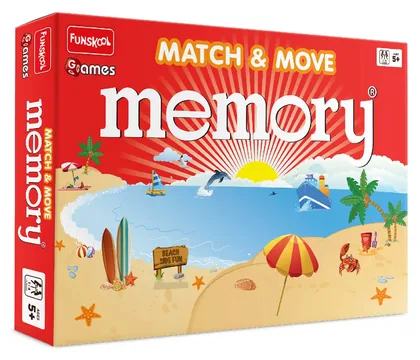 Match & Move Memory
|
ANOTHER WAY TO PLAY
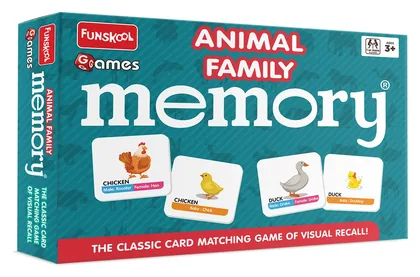 Memory Animal Family
|
ANOTHER WAY TO PLAY
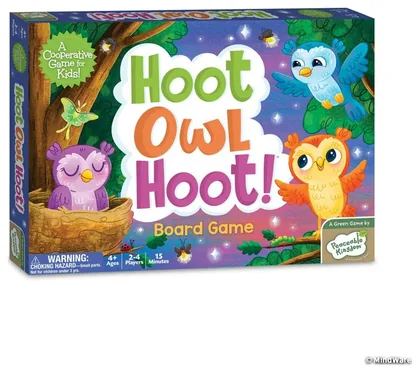 Hoot Owl Hoot!
|
ANOTHER WAY TO PLAY
 Outfoxed!
|
|---|---|---|---|---|
| Why consider it | This game Remember where each picture hides and race your piece home | A different fit Funskool's classic pairs game: match each animal's parents to its baby | A different fit Another first board game for young children, played together as a team | A different fit A step up for 5 to 8 year olds: memory plus clue-finding, played as a team |
| Players | 1–4 | 1–4 | 2–4 | 2–4 |
| Best with | 2-3 | 2-3 | 2-4 | 2-4 |
| Play time | 15–20 min | 10–20 min | 15 min | 20 min |
| Age | 5+ | 3+ | 4+ | 5+ |
| Rules | Easy | Easy | Easy | Easy |
| Indian edition | Available | Available | Imported | Imported |
| On this page | Explore Memory Animal Family | Explore Hoot Owl Hoot! | Explore Outfoxed! |
More from Funskool
Another way into their collection.
More memory games
Different games. A familiar kind of fun.
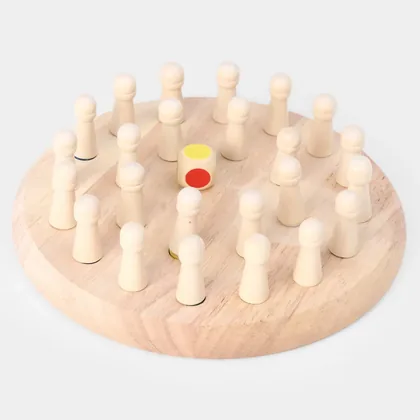
Memory Chess
Remember where the colours hide and pull out the right peg

SKYJO
Swap and flip cards to finish each round with the lowest score
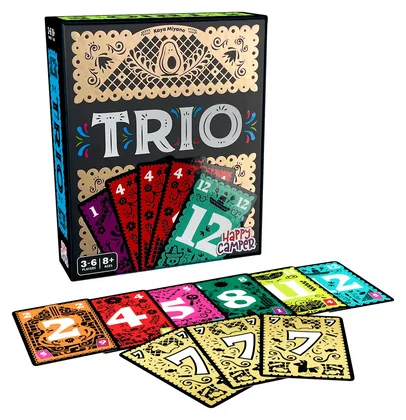
Trio
Find three of a kind by asking for highest and lowest cards
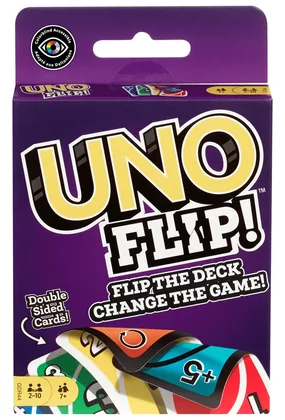
UNO Flip!
Flip every card over to UNO's nastier Dark Side and back again
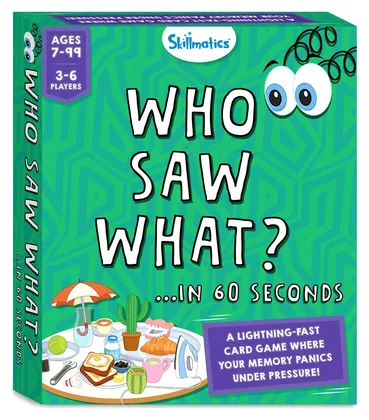
Who Saw What? in 60 Seconds
Study a busy picture for 60 seconds, then shout what you saw
Questions people ask about Match & Move Memory
How do you play the classic memory card game?
Lay all the cards face down in rows. On your turn, flip any two. If they match, keep the pair and go again; if not, turn them back face down and let the next player try. When all the pairs are found, the player holding the most pairs wins, so the trick is remembering every card anyone has turned up.
Is Match & Move Memory the same as the classic memory game?
No. It uses the same skill of remembering where hidden pictures are, but there are no pairs. You turn up one card at a time to find the picture on the next space of a path, and you win by being first to get your piece round the board and home.
Can my child play Match & Move Memory alone?
Yes. Funskool says it works for 1 to 4 players, and a child playing alone can try to get round the board in fewer turns each time. With two to four players it becomes a race, and everyone benefits from watching each other's cards.
What age is Funskool Match & Move Memory for?
The box says 5 and up. Many four-year-olds can follow it with help, but the box warns it is not suitable for children under 3 because of small parts. With only 24 picture cards, children of 9 or more usually find it too easy.
Is Match & Move Memory made in India?
Yes. Funskool's product page and the box back both give India as the country of origin, with Funskool (India) Ltd, Chennai, as the company behind it.
Game facts
- Publisher
- Funskool (India) Ltd
- In India
- Funskool (India) Ltd, Chennai
- First published
- 1986
- Players
- 1–4
- Barcode
- 8901383460318
- Language
- No reading – There are no words on the cards or the board, only pictures and colours, so children who can't read yet can play in any language. Only the rules leaflet is in English, and the rules are short enough for a parent to explain in Hindi, Tamil or any home language.
- Box size and weight
- 37 × 25 × 5 cm, 0.62 kg
Sources & photo creditsThe references behind this guide.
Facts on this page come from the publisher, the Indian maker or distributor, and the sources below. Photos are credited under each one.